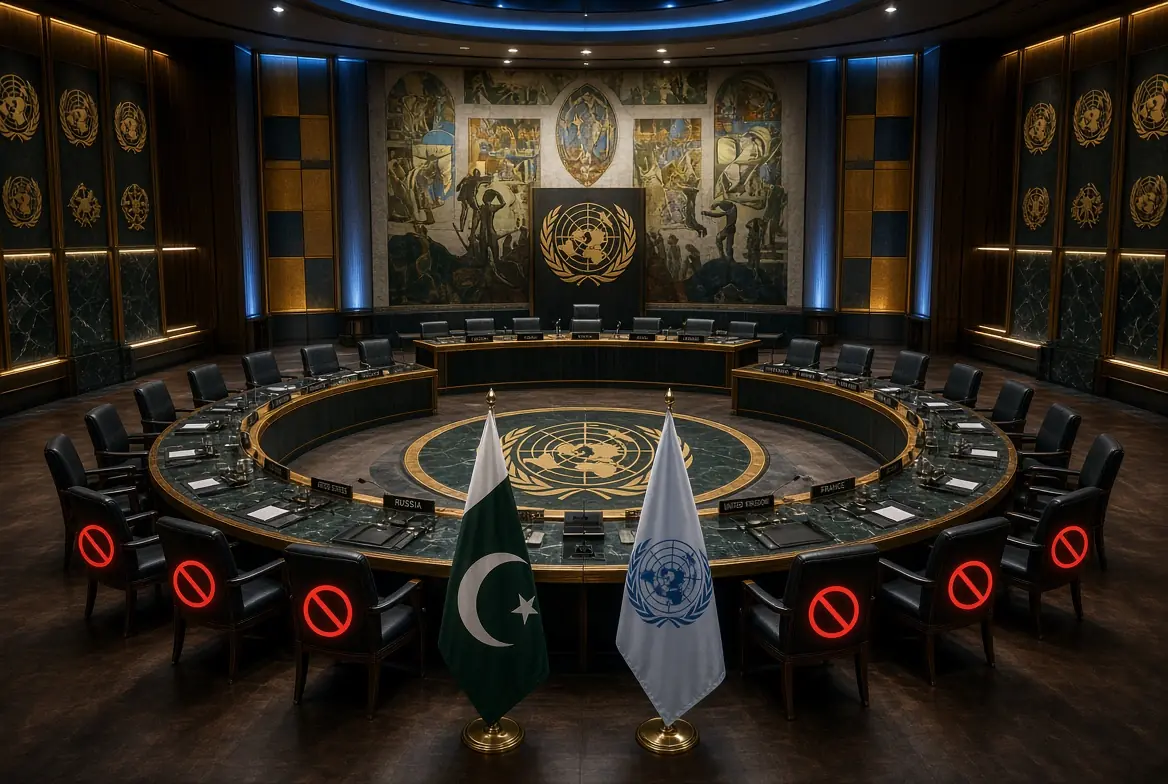

Pakistan has strongly urged the United Nations to either abolish or tightly restrict the veto power used by the five permanent members of the Security Council. Speaking at a special session of the UN General Assembly, a senior Pakistani diplomat warned that the current system creates serious problems and blocks real progress on global peace.
Gul Qaiser Sarwani, political coordinator at Pakistan’s mission to the UN, said the misuse of the veto damages the Security Council’s ability to act and weakens the overall credibility of the United Nations. He pointed out that the permanent five countries, the United States, Russia, China, France and the United Kingdom, enjoy unmatched influence across the entire UN system because of this power.
The meeting took place under a resolution that requires the General Assembly to discuss every veto cast in the Security Council. Sarwani made it clear that Pakistan does not support adding more permanent members with veto rights. He argued that expanding the number of permanent seats would only deepen existing inequalities and create new centers of power. In his words, the problems of the current system cannot become the solution.
Pakistan, along with the Uniting for Consensus group that includes Italy, firmly opposes any increase in individual permanent members. Instead, Sarwani stressed that the veto power should be abolished or at least severely limited. He suggested that greater representation of elected members and a higher threshold for decisions could create a healthier balance and reduce the negative impact of the veto.
UN General Assembly President Khalilur Rahman of Bangladesh opened the session by noting that the veto initiative has become an important tool for transparency and accountability. He reminded delegates that when the Security Council fails to act, the heaviest cost is paid by people living through conflict and humanitarian crises. Rahman expressed hope that the Council would find ways to act more decisively so that such special sessions become less necessary.
Several speakers during the debate highlighted how decisions taken in New York affect distant regions and communities. They called for a more democratic and responsive Security Council that better serves its main purpose of maintaining international peace and security. Pakistan’s position remains firm: the veto must be restrained, not expanded, if the United Nations is to regain effectiveness and fairness.