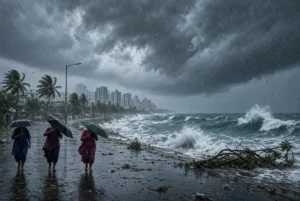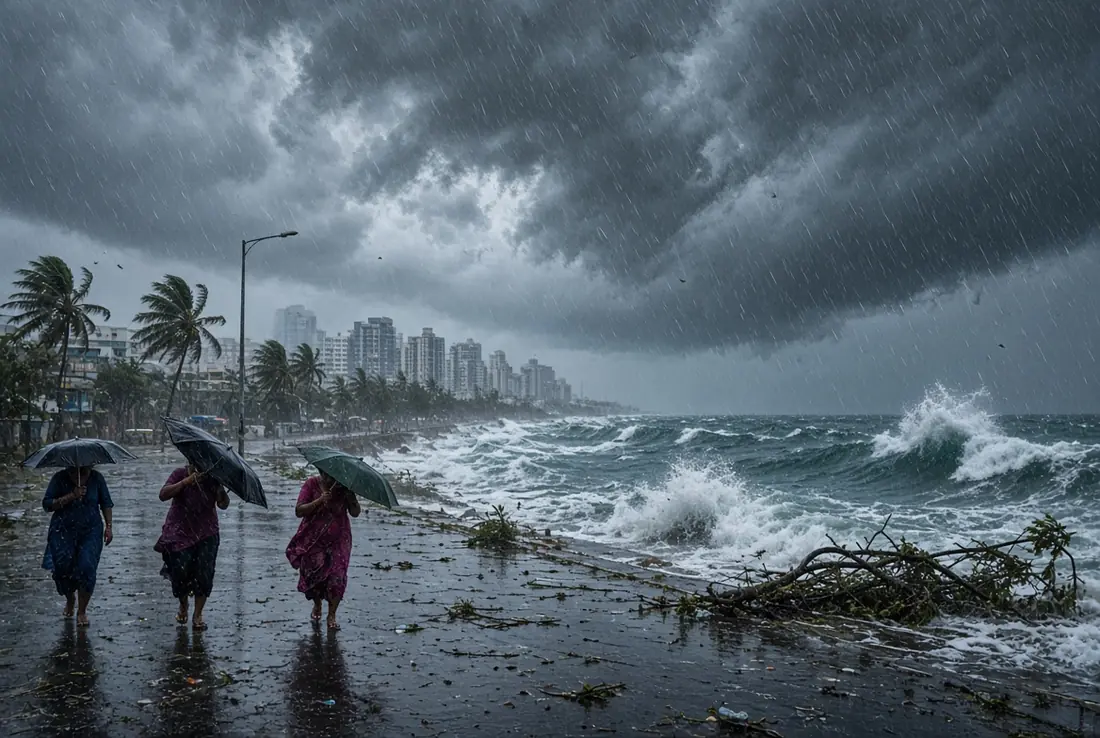

Cyclone Arnab struck the southeastern coast of India with intense force on Wednesday, bringing strong winds and heavy rainfall to Andhra Pradesh. Officials confirmed that the storm made landfall as a very severe cyclonic storm, packing winds of 115 to 125 kilometres per hour and gusts up to 140 kph. The India Meteorological Department issued clear warnings about possible flash floods along the coastal stretch between Bapatla and Visakhapatnam.
Despite the powerful weather, Andhra Pradesh Chief Minister Nara Chandrababu Naidu reported that no deaths had occurred. He praised government teams for working through the night and taking timely steps that helped protect lives. Authorities asked around 50,000 people in Andhra Pradesh and another 48,000 in neighbouring Odisha to move to safer locations. Many residents followed the advice and shifted to government shelters.
In the port city of Kakinada, close to the centre of the storm, overnight gales toppled trees and heavy rain flooded streets. Powerful waves crashed against the shore. By morning, people came out to check the situation and found the damage less severe than expected. One local businessman said he felt relieved that the impact stayed limited. Another resident explained that early warnings allowed families to lock their homes and move to safer places before conditions turned dangerous.
A 65-year-old woman named Rajeshwari, who stayed in a government shelter near Kakinada, described how homes often flood during such storms and force people to remain in water. Schools across the affected areas received a two-day holiday so that families could stay indoors and remain safe.
The Bay of Bengal regularly faces cyclones, and recent warmer ocean conditions linked to El Nino have made some storms stronger. Neighbouring Sri Lanka closed schools after its weather department warned of flash floods and mudslides. Nepal’s disaster authority also alerted people that the system could move inland toward the Himalayas, raising risks of heavy rain, snowfall, and avalanches. Nepal is still recovering from a major flood earlier in the year that caused widespread loss of life.
Overall, proactive preparations and clear communication appear to have limited the immediate human impact of Cyclone Arnab along India’s southeastern coast.