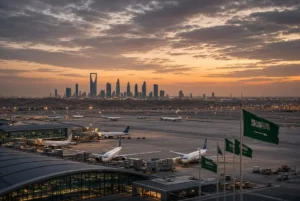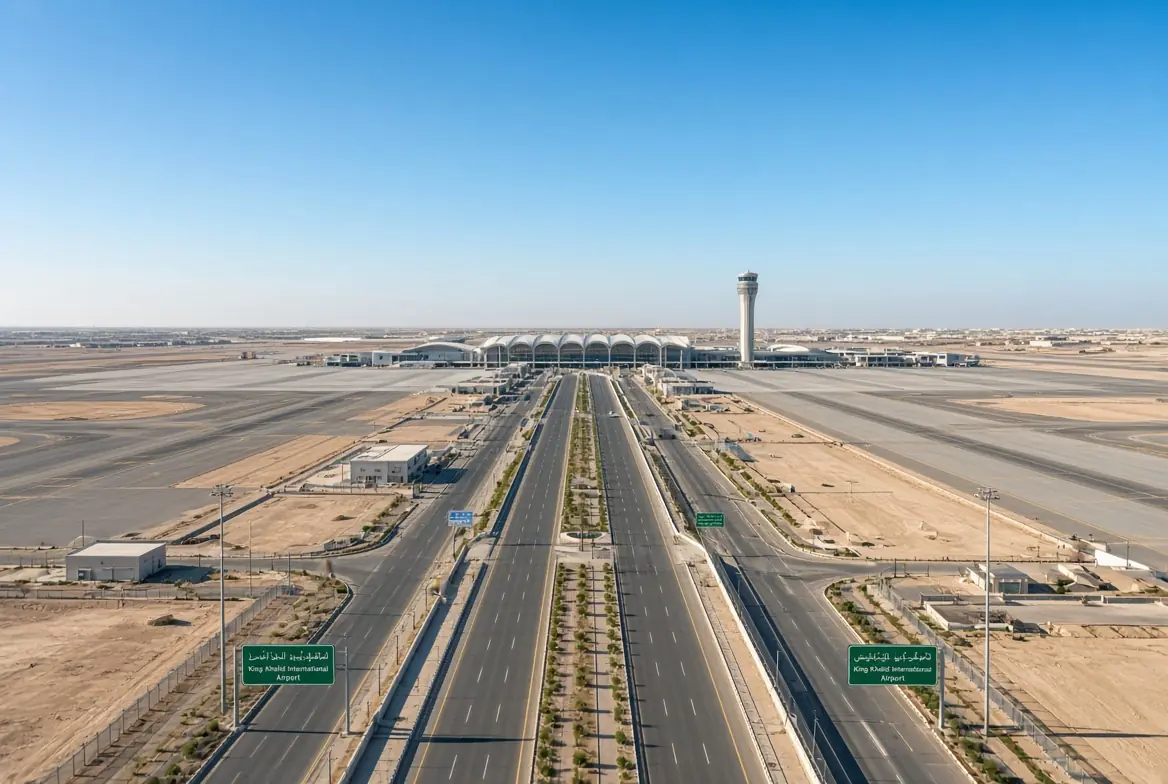

Riyadh Airport Closure continues after deadly weekend attacks by Yemen’s Houthis left the Saudi capital’s main international airport nearly empty. King Khalid International Airport, the kingdom’s second busiest after Jeddah, stayed shut on Monday so teams could finish safety checks and confirm every facility was ready for use again.
The first strike on Saturday killed 13 people and injured more than 300, the deadliest incident in Saudi Arabia in over a decade. A second attack on Sunday claimed one more life and wounded nearly a dozen others. By midday Monday the airport had cancelled 82 percent of its scheduled flights, according to aviation data firm Cirium. Across all Saudi airports the cancellation rate reached 46.4 percent.
Flight trackers showed almost no planes landing or taking off near Riyadh, although aircraft still crossed Saudi airspace and operated normally at Jeddah on the west coast. European and Asian carriers responded quickly. Lufthansa Group cancelled every flight to Riyadh until 16 October. Air France extended its suspension through the end of the month. Etihad Airways dropped around 20 services to Riyadh, Jeddah and Dammam over Monday and Tuesday.
US authorities urged carriers to exercise caution when flying to or over Saudi Arabia. Europe’s aviation safety body widened its earlier warning about missile and drone risks in the same airspace. The sudden disruption adds pressure to an industry already dealing with regional conflict and higher jet fuel costs.
Saudi Arabia’s real GDP is expected to shrink 3.6 percent this year, partly because of lower oil activity. Events planned for Riyadh this month, including the kingdom’s flagship investment conference and the WPC Energy Congress, now face uncertainty after several top oil executives were removed from the programme.
Officials say the airport suspension will remain in place until every safety procedure is complete. Travellers and airlines continue to watch for further updates as the situation evolves.