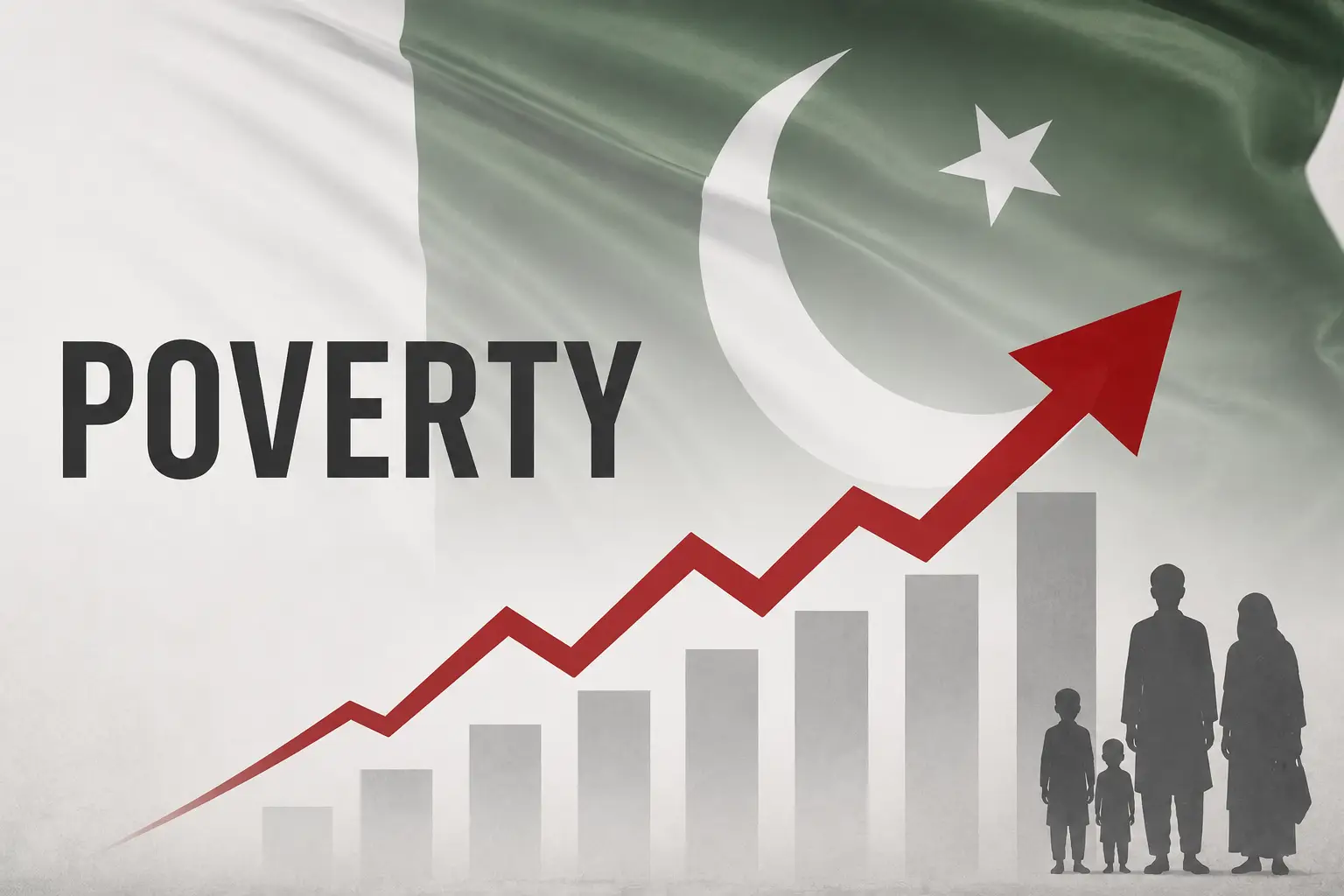

Pakistan is facing a growing socio-economic challenge as the poverty rate has increased significantly while education spending has dropped to its lowest level in recent years. According to the Pakistan Economic Survey 2025-26, the national poverty rate climbed to 28.9% in FY2024-25, compared to 21.9% in 2018-19, indicating that millions of Pakistanis have fallen below the poverty line.
The survey highlights that rising inflation has played a major role in worsening living conditions. The poverty threshold increased from Rs3,757 per month in 2018-19 to Rs8,484 per month in 2024-25, reflecting the sharp increase in the cost of living. Rural communities continue to be the most affected, with rural poverty rising from 28.2% to 36.2%, while urban poverty increased from 11% to 17.4% during the same period.
Provincial data shows that Balochistan remains the poorest province, with nearly 47% of its population living below the poverty line. Poverty levels also increased in Khyber Pakhtunkhwa, Sindh, and Punjab, highlighting a nationwide decline in economic welfare. At the same time, income inequality has widened considerably, with the national Gini coefficient increasing from 28.4 to 32.7, indicating a growing gap between rich and poor households.
The survey also revealed a concerning decline in education expenditure. Total spending on education dropped to Rs962 billion in FY2025, down from Rs1.25 trillion in the previous reporting period. Education spending now represents only 0.8% of GDP, compared to 1.5% of GDP in FY2023. Significant budget reductions were recorded in Punjab and Khyber Pakhtunkhwa, while Sindh and Balochistan reported increases in education allocations.
Despite some improvements in school enrollment, major challenges remain. Pakistan’s literacy rate stands at 63%, with female literacy at 54%, and nearly one-third of children remain out of school. Limited access to electricity, sanitation facilities, and quality infrastructure continues to affect educational outcomes, particularly in underserved regions.
The survey stresses that sustained investment in education, poverty reduction initiatives, and economic stability are essential to improving living standards and creating long-term development opportunities for Pakistan’s growing population.