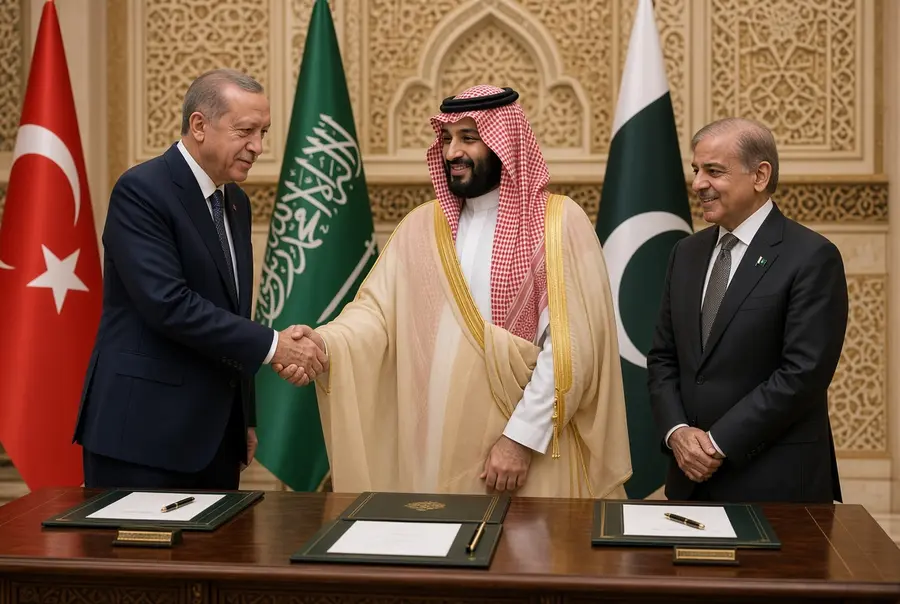

Turkish President Recep Tayyip Erdogan has made it clear that the new defence agreement signed with Pakistan and Saudi Arabia does not target any specific country. The deal, known as the Makkah Joint Defence Agreement, was finalised on 7 August during a summit in the holy city of Makkah.
Under the pact, an armed attack on any one of the three nations will be treated as an attack on all of them. Erdogan stressed that the agreement is based on collective deterrence and remains open to other friendly countries that want peace and stability in the region. He also pointed out that it fully respects the right of self defence under Article 51 of the UN Charter.
The Turkish leader said the partnership will boost security cooperation, encourage joint defence industry projects, and help fight terrorism. He repeated Turkiye’s preference for solving regional problems through dialogue and diplomacy while respecting international law.
Saudi Foreign Minister Prince Faisal bin Farhan welcomed the agreement as a major step that reflects the deep strategic ties among the three countries. He explained that it brings their efforts together against shared security challenges and will create a safer environment for development and prosperity across the region.
Pakistan’s Foreign Office also issued a statement confirming that the deal strengthens collective security. It aims to improve every area of defence cooperation and sends a clear message of unity against any aggression.
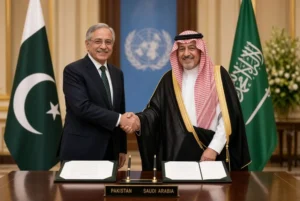
The signing ceremony brought together Prime Minister Shehbaz Sharif, Saudi Crown Prince Mohammed bin Salman, and President Erdogan. Officials from all sides described the pact as a milestone that serves the interests of their people and supports wider regional stability.
While the agreement focuses on mutual defence, leaders have carefully avoided naming any particular adversary. Instead, they have framed it as a positive step toward peace, stronger partnerships, and long term security in a complex region. The three nations now plan to turn the written commitments into practical cooperation in the months ahead.