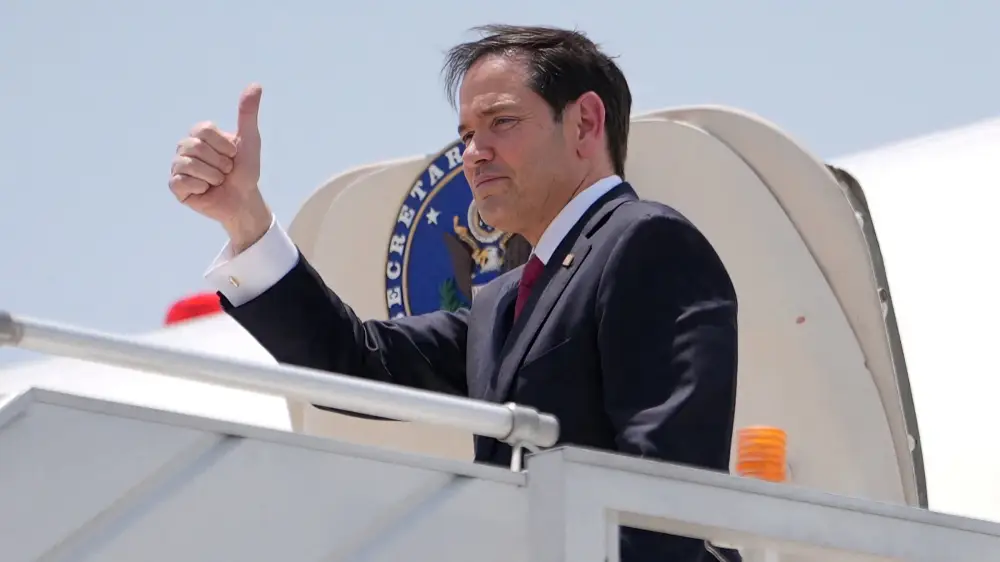

US Secretary of State Marco Rubio has begun a key diplomatic tour of the Gulf region, aiming to reassure American allies affected by the recent Middle East conflict and ongoing negotiations between the United States and Iran. His first stop was Abu Dhabi, where he met regional leaders and emphasized Washington’s commitment to security and stability in the Gulf.
Rubio’s visit comes at a sensitive time following the recent memorandum of understanding signed between Washington and Tehran. The agreement is intended to create a pathway toward a permanent peace deal after months of conflict. However, many Gulf nations remain concerned about the long term impact of the war and Iran’s future role in the region.
One of Rubio’s strongest messages focused on the Strait of Hormuz, a critical global shipping route through which a significant portion of the world’s oil and liquefied natural gas passes. He stated clearly that Iran would not be permitted to impose tolls or fees on vessels using the international waterway. According to Rubio, international law does not allow any country to charge transit fees on such routes, and regional partners largely support this position.
The recent conflict severely disrupted Gulf economies. Iran’s temporary closure of the Strait of Hormuz affected energy exports across the region, while missile and drone attacks raised security concerns among neighboring countries. As a result, Gulf states are seeking assurances that future agreements will protect their economic and strategic interests.
Rubio is also expected to hold talks in Kuwait and Bahrain, where he will participate in meetings with members of the Gulf Cooperation Council. Discussions are likely to focus on regional security, economic recovery, and the future of US engagement in the Middle East.
While Gulf nations continue to value their partnership with Washington, analysts suggest they are increasingly diversifying their security relationships. Questions also remain regarding proposed reconstruction funding for Iran, with some regional governments stating they have no involvement in the reported plans.
The visit highlights the United States’ efforts to rebuild confidence among Gulf allies while advancing negotiations aimed at achieving lasting peace and stability across the region.