
Karachi is facing a significant water shortage after a fault in a K-Electric cable disrupted power supply to a key pumping station, affecting water distribution across several parts of the city. According to the Karachi Water and Sewerage Corporation (KWSC), the interruption has resulted in a shortfall of approximately 54 million gallons per day (MGD), raising concerns about water availability for residents.
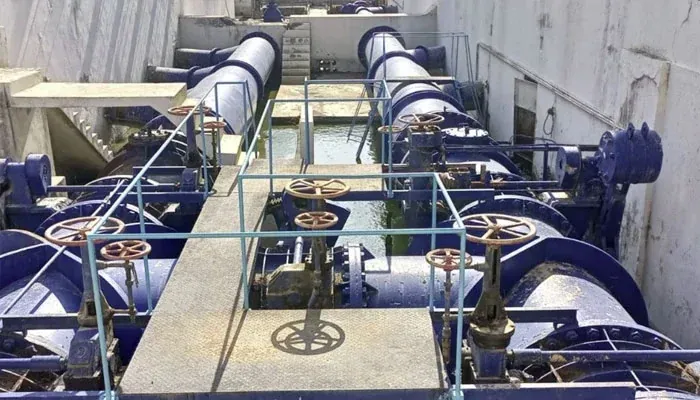
The issue began early Sunday morning when electricity supply to the North East Karachi (NEK) Pumping Station was interrupted due to a fault in K-Electric’s main cable. As a result, operations at the K-II Pumping Station were affected, leading to a partial disruption in Karachi’s water supply network.
KWSC officials stated that emergency measures were immediately implemented to minimize the impact. A temporary backfeed arrangement was established through the K-III feeder, allowing partial restoration of power to the pumping station. Although electricity supply resumed under this arrangement, the available capacity was not sufficient to fully restore pumping operations, resulting in reduced water transmission to the city.
The corporation warned that if the cable fault is not repaired quickly and permanently, the city could experience an even greater water shortfall, potentially disrupting scheduled water distribution in multiple neighborhoods. KWSC has urged K-Electric to prioritize repairs and restore normal power supply as soon as possible to prevent further inconvenience to citizens.
Meanwhile, K-Electric responded by clarifying that overall power supply to the NEK Pumping Station remained operational. According to the utility company, only four of the station’s eleven pumping motors were affected by the cable fault. K-Electric further stated that repair work was completed and electricity supply to all pumping motors had been fully restored.
KWSC officials continue to monitor the situation closely and are utilizing all available resources to stabilize the system. Residents are advised to remain prepared for temporary fluctuations in water supply until the infrastructure is fully normalized and pumping operations return to full capacity.