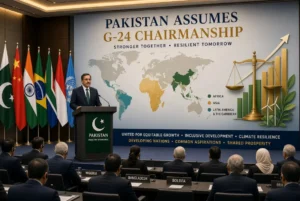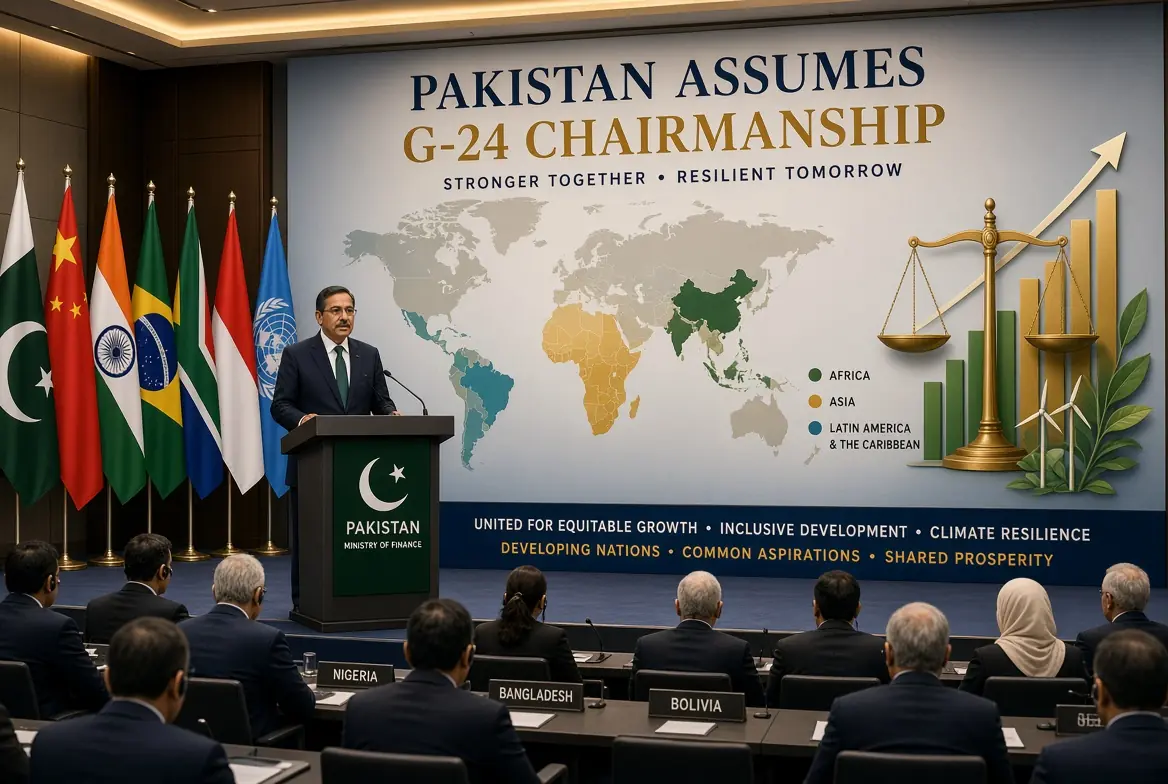

Pakistan has officially assumed the chairmanship of the Intergovernmental Group of Twenty-Four, known as the G-24. Finance Minister Muhammad Aurangzeb called this role a profound responsibility. He said the move strengthens the collective voice of developing economies and pushes for a fairer international financial system.
Aurangzeb stressed that the future of developing economies sits at the center of the global economy, not on its edges. These nations drive investment, innovation, entrepreneurship and overall growth. He outlined three clear priorities for Pakistan’s term. First comes development-led growth. Macroeconomic stability must support investment, higher productivity, more jobs and shared prosperity so countries can move past constant crisis management toward lasting progress.
Second, Pakistan will push for stronger representation of developing economies inside major institutions. This means more inclusive decision-making and fairer governance at the Bretton Woods bodies so they respond better to the real needs of their members. Third, the country will work on reforming the international financial architecture itself. Key goals include affordable development financing, workable debt solutions, stronger global safety nets, climate resilience and greater flows of both public and private capital.
Drawing on Pakistan’s own recent experience with economic stabilisation and reform, Aurangzeb underlined the need to link short-term financial stability with long-term development goals. Reforming economies need both the money and the policy space to grow sustainably. He thanked Nigeria for its leadership as the outgoing chair and pledged to build on that progress through consultation, consensus and collective advocacy.
Pakistan will work closely with fellow members from Africa, Asia, Latin America and the Caribbean, as well as the IMF, World Bank and other partners. The real test of this leadership, Aurangzeb said, will not be the strength of the group’s voice alone but the concrete difference that voice makes for people on the ground. Pakistan’s chairmanship aims to turn collective voice into real influence and that influence into meaningful results for developing nations worldwide.