
A powerful 6.1 magnitude earthquake struck off the northwest coast of Cuba on Monday, sending tremors across parts of Mexico, Florida, and western Cuba. According to the United States Geological Survey (USGS), the earthquake occurred at a relatively shallow depth of 26 kilometers, making its effects more noticeable across a wider region.
The epicenter was located approximately 104 kilometers west northwest of Mantua, Cuba, an area not typically associated with major seismic activity. Experts described the event as highly unusual because it occurred within a tectonic plate rather than along a plate boundary, where earthquakes are more common.
Seismologists noted that this was the strongest earthquake recorded in the region in nearly 150 years. Historical records indicate that no earthquake of similar strength had occurred within 200 miles of the area since 1880, making this a significant geological event.
Residents across western Cuba reported intense shaking and panic. Many people rushed out of homes and buildings fearing structural collapse. In Pinar del Rio, locals described the tremor as unlike anything they had experienced before. Concerns remain high because many buildings in Cuba have deteriorated due to years of economic hardship and limited maintenance.
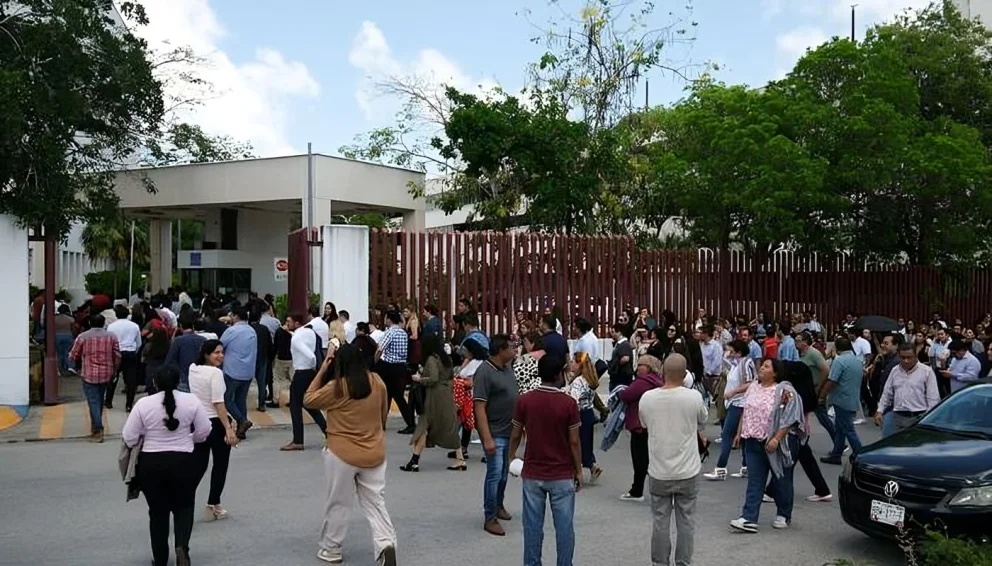
The earthquake was also felt in the popular Mexican tourist destinations of Cancun, Playa del Carmen, and Tulum. Authorities activated emergency response protocols, and several office buildings were temporarily evacuated as a precaution. In Florida, some residents also reported feeling light shaking.
Despite the strength of the quake, officials have not reported any major damage, fatalities, or injuries. Emergency teams continue to assess affected areas while monitoring for possible aftershocks.
Importantly, authorities confirmed that no tsunami warning was issued following the earthquake. Scientists will continue studying the event due to its rare location and unusual geological characteristics. The earthquake serves as a reminder that significant seismic activity can occur even in regions not commonly known for powerful earthquakes.