
Pakistan has warned against using shared water resources as a means of political pressure, saying water should never become an instrument of coercion, leverage or conflict between neighbouring countries.
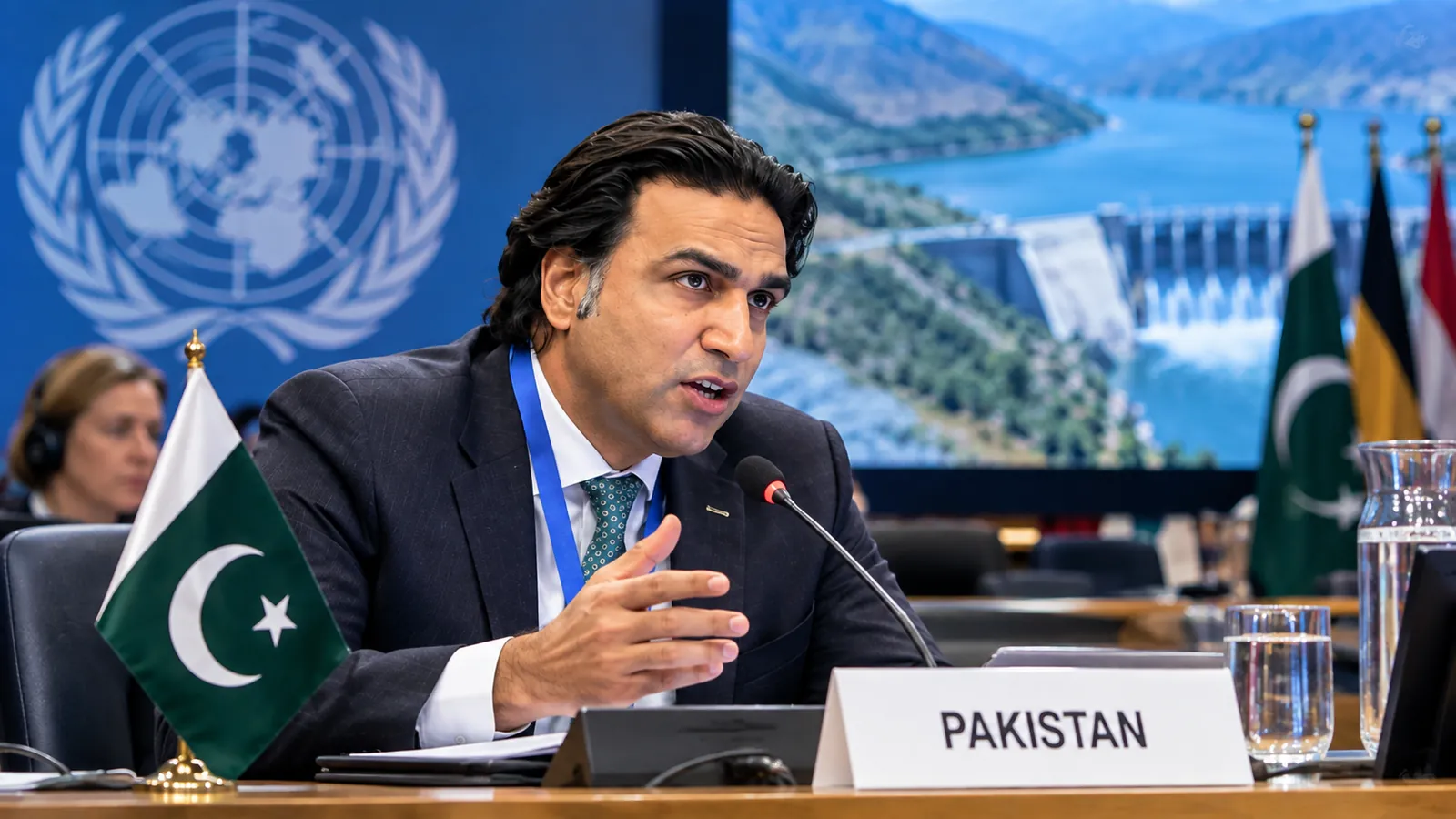
Pakistan’s First Secretary Adeel Mumtaz Khokhar raised the issue during the 63rd session of the UN Human Rights Council, where members considered a resolution on the human right to safe drinking water and sanitation.
Khokhar highlighted Pakistan’s concerns over India’s actions concerning the Indus Waters Treaty, describing what Islamabad sees as the weaponisation of water. He stressed that countries sharing water resources also have shared responsibilities to ensure their sustainable and cooperative management.
“Where water is shared, responsibilities are also shared,” Khokhar said, emphasizing that cooperation over transboundary rivers should be treated as a mutual obligation rather than a favour or concession.
The resolution, presented by Germany and Spain, was ultimately adopted without a vote. Pakistan said it had worked to retain a specific reference to transboundary water cooperation in the final text.
According to Islamabad, India had attempted to remove that reference, arguing that cooperation over shared water resources was outside the scope of a resolution focused on human rights. Pakistan countered that access to shared water is directly connected to the human rights to safe drinking water and sanitation.
During his intervention, Khokhar said no upstream country should use water as a tool of political influence or pressure. Pakistan also welcomed the decision to retain the transboundary water cooperation reference in the resolution.
Two proposed amendments, identified as L.39 and L.40, were rejected before the main resolution was adopted. Both amendments received 10 votes in favour, 17 against and nine abstentions.
The Human Rights Council session was held in Geneva from September 7 to October 7, 2026. The debate comes amid continued tensions between Pakistan and India over the management and future of shared river waters under the Indus Waters Treaty.