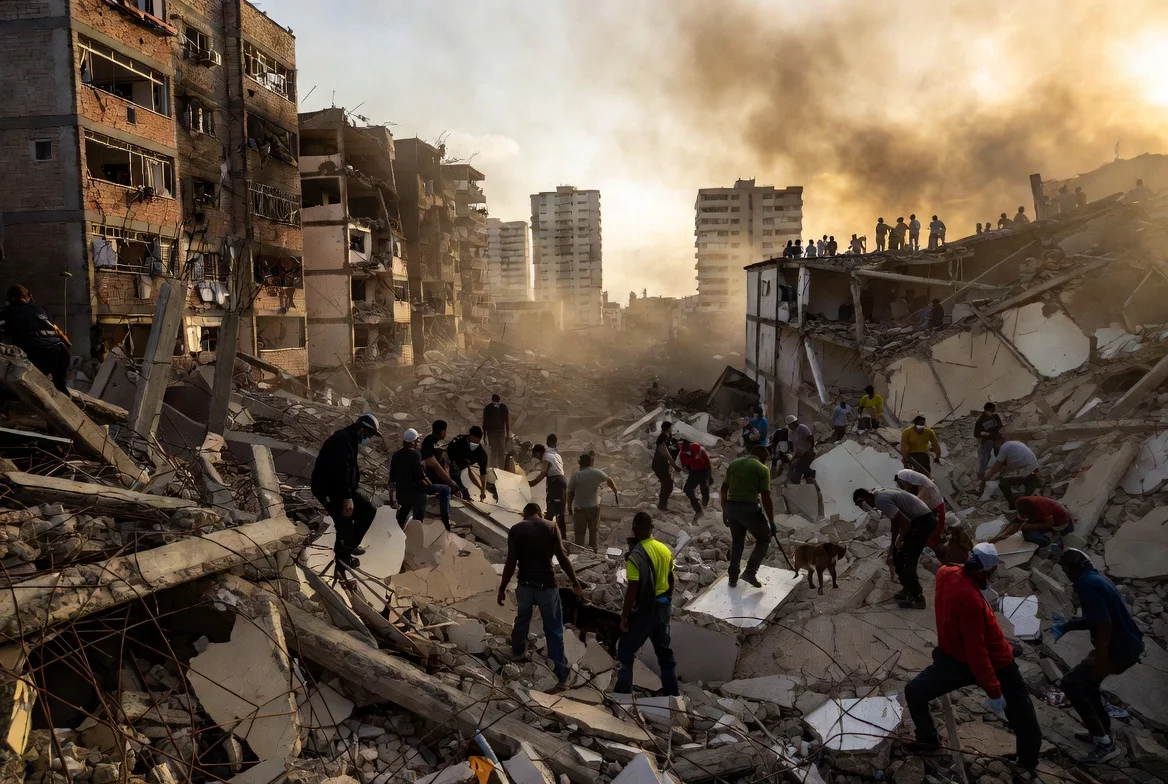

Desperate rescue efforts continue in Venezuela after powerful twin earthquakes struck the country, flattening buildings and leaving communities in ruins. With the confirmed death toll nearing 1,000 and hundreds still trapped under debris, emergency teams are racing against time to save lives.
The magnitude 7.2 and 7.5 earthquakes hit approximately 160 km west of Caracas on June 26, 2026. La Guaira, a coastal city near the capital, suffered the heaviest damage, with over 100 buildings—including high-rise apartment complexes—collapsing completely. Residents like Jennifer Palacios, whose six-year-old son and other relatives remain buried in the rubble of the Hugo Chavez housing complex, are pleading for heavy machinery. “We need cranes to move these slabs,” she said, highlighting the lack of equipment slowing rescue operations.
The government reports 920 confirmed fatalities and over 3,360 injuries, with hundreds more believed to be trapped. A public website set up for missing persons already lists more than 50,000 reports. The United Nations warns that millions of people could be affected by this disaster. International help has started arriving, with rescue teams from Mexico, El Salvador, Spain, Colombia, and others bringing specialized equipment, dogs, and drones to search for survivors.
Despite pledges from interim President Delcy Rodriguez to militarize the affected areas and deliver aid, many residents complain about patchy government response. Volunteers on motorcycles have been delivering essential supplies from nearby cities, while people dig through rubble with their bare hands.
This tragedy strikes a nation already strained by years of economic and political challenges. Basic infrastructure is weak, and many families have lost everything. Foreign governments, including the United States, have pledged significant aid and eased sanctions to support relief efforts. Energy companies report that Venezuela’s oil sector avoided major damage.
The last major deadly earthquake in Venezuela occurred in 1967, claiming 240 lives. Experts fear this disaster could rank among the deadliest in Latin America in recent history if the toll continues to rise.