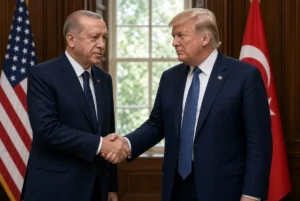

US President Donald Trump has ordered a major cutback in joint military exercises with South Korea. In a social media post on Sunday, he explained that Seoul had declined his invitation to join efforts against Iran, and he also pointed to his strong personal ties with North Korean leader Kim Jong Un.
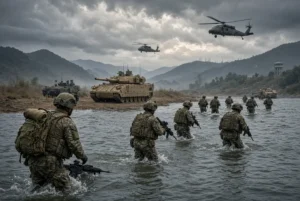
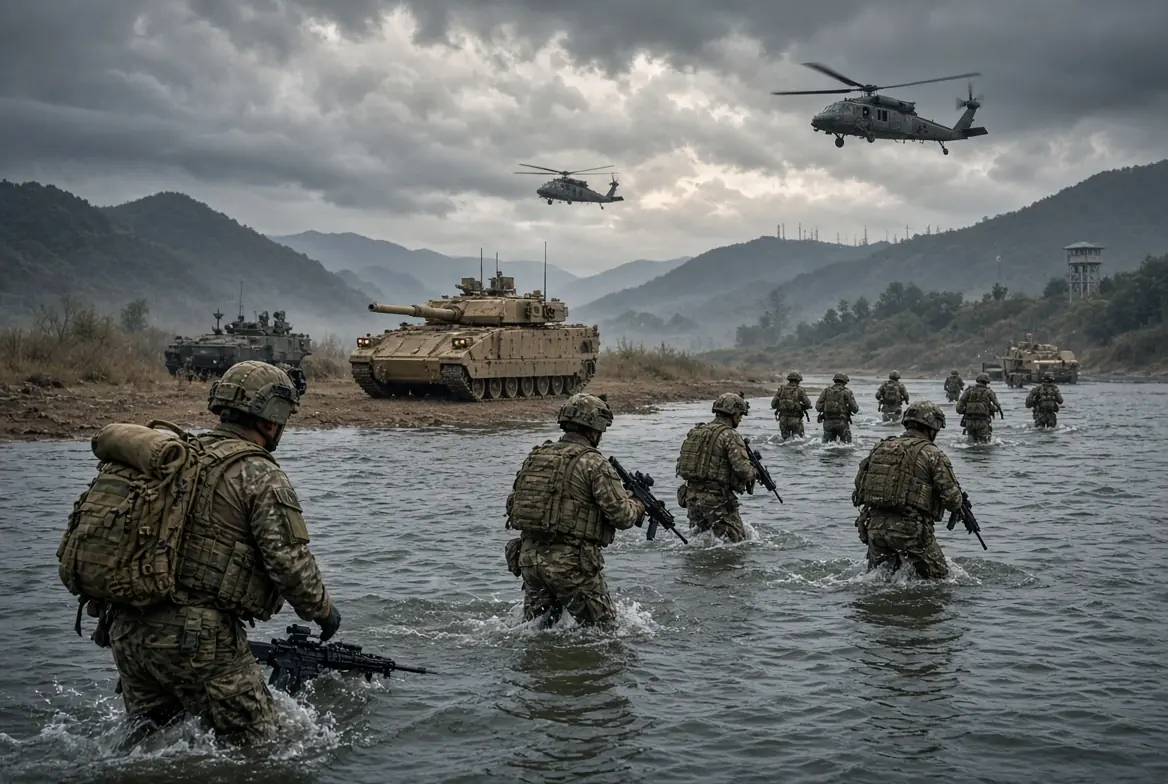
The annual Ulchi Freedom Shield drills were set to start on August 17 and run through August 27. Around 18,000 South Korean troops were expected to take part. The training focuses on modern threats such as drones, GPS disruption, and cyberattacks that match North Korea’s latest capabilities. Trump said it was too late to cancel the exercises completely, yet he remained unhappy that the United States had earlier agreed to join them.
He described the drills as expensive and as sending an “inappropriate and hostile” signal to a country that has stayed unthreatening and respectful throughout his presidency. Trump stressed his “very good relationship” with Kim Jong Un and argued that large-scale war games undermine the progress made in reducing tensions.
Separately, Trump revealed that he had asked the South Korean president whether the country would support the denuclearisation of Iran. The answer was a clear “No thanks.” He linked this refusal to his decision to scale back the joint exercises, even while noting the two issues might seem only loosely connected.
North Korea has reacted in its usual way. It fired a ballistic missile from its eastern coast toward the Sea of Japan last Wednesday, just six days after another short-range launch on August 6. Pyongyang always condemns the US-South Korea drills as practice for invasion.
American officials also note that North Korean soldiers who fought alongside Russian forces in Ukraine have gained experience with unmanned systems, electronic warfare, and cyber operations. Ukraine recently reported that North Korean-made missiles were used in a Russian strike on a steel plant in Zaporizhzhia that killed seven workers.
Neither the White House nor the Pentagon offered immediate comment on the reduced scale of the exercises. The decision marks a clear shift in how the United States approaches its long-standing military partnership with South Korea while Trump prioritises personal diplomacy with Kim Jong Un and seeks broader support for actions against Iran.