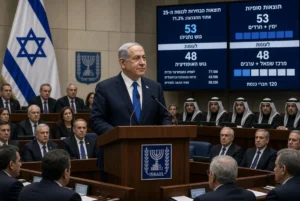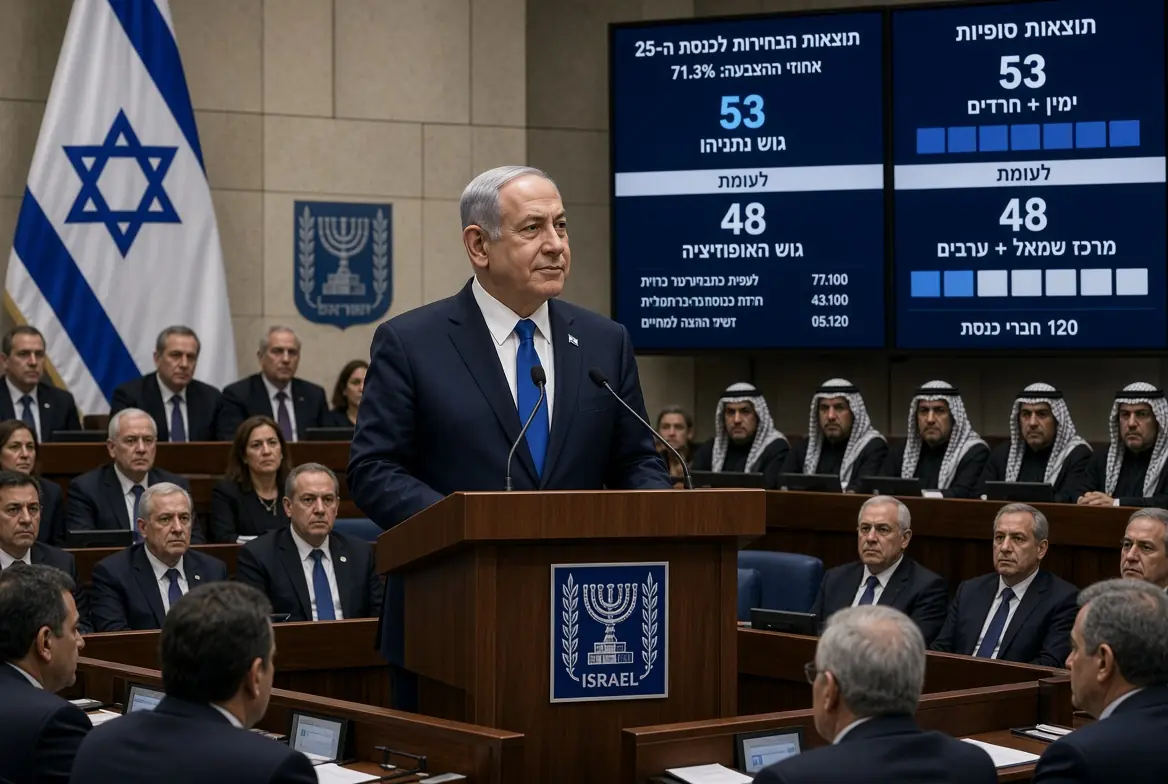

Israeli Prime Minister Benjamin Netanyahu and his allies are increasing pressure on Arab political leaders after this week’s election left both major camps short of a clear majority. With nearly 93 percent of the votes counted, Netanyahu’s right-wing bloc sits on 53 seats while the opposition led by former military chief Gadi Eisenkot holds 48. Both remain well below the 61 seats needed to form a government in the Knesset.
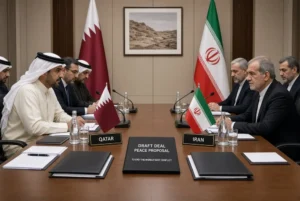
Arab parties, which together are projected to win an unprecedented 19 seats, now find themselves in the middle of the struggle. Netanyahu’s camp has accused the Raam party of receiving foreign funding, specifically from Qatar. Supreme Court Justice Noam Sohlberg, who heads the Central Election Commission, has asked the Shin Bet to investigate the claims. Netanyahu’s Likud party called the situation a “political earthquake” and claimed the elections had been stolen. No concrete evidence has been made public.
Raam leader Mansour Abbas welcomed a full investigation and stated that his party has no connection to the allegations. Qatar also rejected the accusations as ridiculous and dangerous. President Isaac Herzog called for a proper probe while warning against stigmatizing the entire Arab Israeli community, which turned out in record numbers this time.
Opposition figures have pushed back. Left-wing candidate Yair Golan accused Netanyahu of launching a delegitimization campaign after failing to secure a majority. Eisenkot promised “utmost vigilance” against any interference but also warned that political actors should not delay the seating of the new Knesset. Avigdor Lieberman, one of Eisenkot’s allies, described the claims as dramatic and demanded a swift investigation.
Arab turnout rose sharply after strong statements from figures such as National Security Minister Itamar Ben Gvir. Some observers believe the new accusations make Arab parties even more difficult for Eisenkot to work with, which could ultimately help Netanyahu. Yousef Jabareen of the Joint List said he is willing to help remove Netanyahu from power but would not join a government.
Meanwhile, the threat of military action against Iran hangs over the talks. Netanyahu has repeatedly spoken of striking Iran, and an attack could push parties toward an emergency unity arrangement or simply buy more time before new elections. President Herzog will soon decide who gets the first chance to form a government once official results are confirmed.