
FIFA has firmly rejected allegations of biased officiating during Argentina’s dramatic 3 2 victory over Egypt in the FIFA World Cup Round of 16. FIFA refereeing chief Pierluigi Collina defended the decisions made by the match officials and insisted that referees operate with complete independence, free from outside influence.
Speaking in an interview published by FIFA, Collina acknowledged that debates over refereeing decisions are a normal part of football. However, he strongly criticized accusations questioning the integrity of officials, describing such claims as harmful to the sport. According to him, no individual, including FIFA President Gianni Infantino, has any influence over refereeing decisions during World Cup matches.
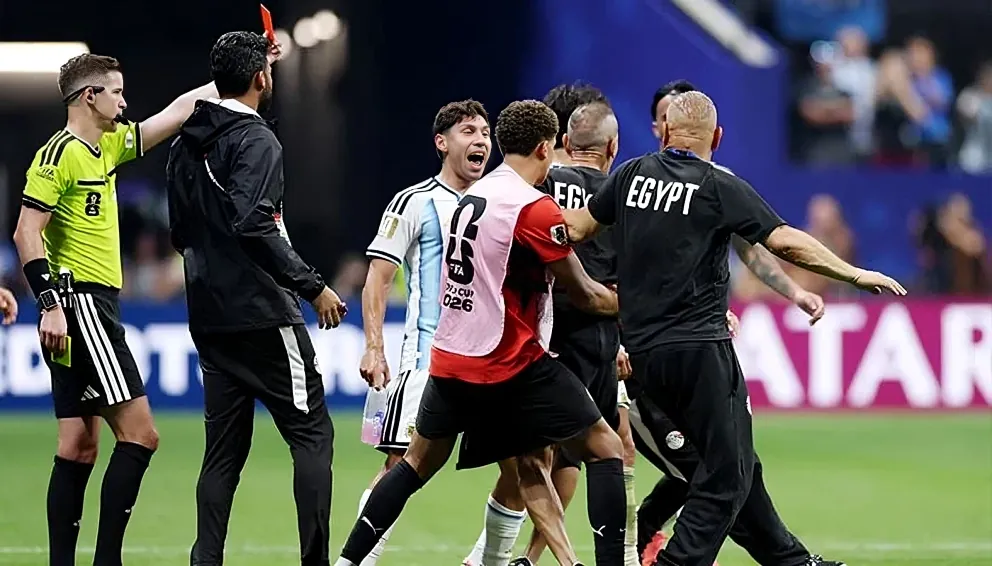
The controversy followed Egypt’s heartbreaking exit from the tournament after Argentina staged a remarkable comeback from two goals down. Enzo Fernandez scored the winning goal deep into stoppage time, sending the defending champions into the quarter finals and leaving Egypt frustrated with several controversial decisions.
Egypt head coach Hossam Hassan suggested after the match that external pressure may have influenced the referee’s decisions. Meanwhile, the Egyptian Football Association released a statement claiming several key incidents affected the fairness of the match. The association questioned the disallowed goal scored by Mostafa Zico, arguing there was no foul in the buildup. Egypt also believed Mohamed Salah should have been awarded a foul moments before Argentina’s winning attack.
Collina responded by explaining that the Video Assistant Referee (VAR) correctly advised referee Francois Letexier to overturn Zico’s goal because Marwan Attia committed a foul on Lisandro Martinez during the attacking phase. He emphasized that a foul remains a foul regardless of how obvious it appears, and VAR is responsible for correcting missed incidents.
Regarding Egypt’s appeal for a penalty involving Salah, Collina stated both the referee and VAR reviewed the challenge and agreed it was normal football contact rather than a foul.
Although Collina admitted some refereeing decisions involve an element of subjectivity, he maintained that FIFA remains satisfied with how VAR has been implemented throughout the World Cup, stressing that protecting the credibility and independence of match officials is essential for the integrity of the game.