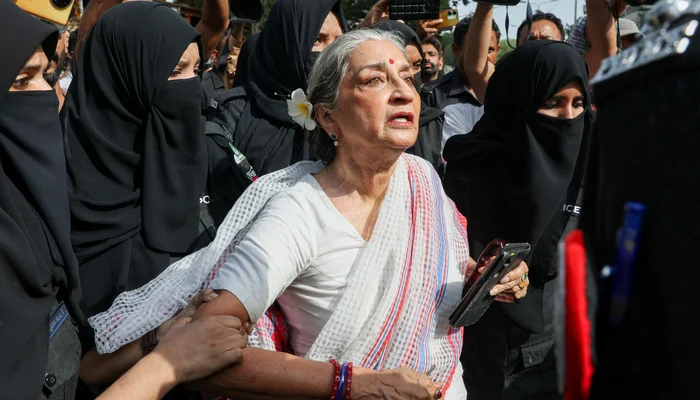

The Karachi Police briefly detained several prominent Aurat March leaders and volunteers outside the Karachi Press Club on Tuesday. The incident occurred as the activists gathered to conduct a scheduled press conference. Among those taken into custody was the renowned artist and human rights defender Sheema Kermani, alongside transgender activist Shehzadi Rai and several other organizers. This sudden police action sparked immediate concern regarding the shrinking space for civil society and freedom of expression within the city.
Following the detentions, the activists were shifted to a nearby police station. However, their stay was short-lived, as South Superintendent of Police (SSP) Manzoor Ali later confirmed that all individuals were released shortly after the incident. Despite the release, the heavy police presence around the Karachi Press Club remained heightened for several hours, creating a tense atmosphere for journalists and human rights workers attempting to document the event.
The Human Rights Commission of Pakistan (HRCP) issued a strong condemnation of the move, describing the arrests as a systematic attempt to silence peaceful voices. In an official statement, the commission noted that this was not an isolated incident of police overreach but part of a wider, troubling pattern of denying civic space to citizens. They emphasized that the right to peaceful assembly is a fundamental constitutional guarantee that must be protected by the state.
The HRCP further highlighted that preventing women and marginalized groups from even addressing the media reflects a repressive approach to local governance. Treating dissent as a threat to security rather than a democratic necessity undermines the core values of the constitution. While the Aurat March organizers maintained they were only there for a media talk, the incident has reignited a national debate on the protection of human rights and the importance of maintaining open forums for public grievances. The mission of these activists remains focused on asserting their rights despite these ongoing challenges.