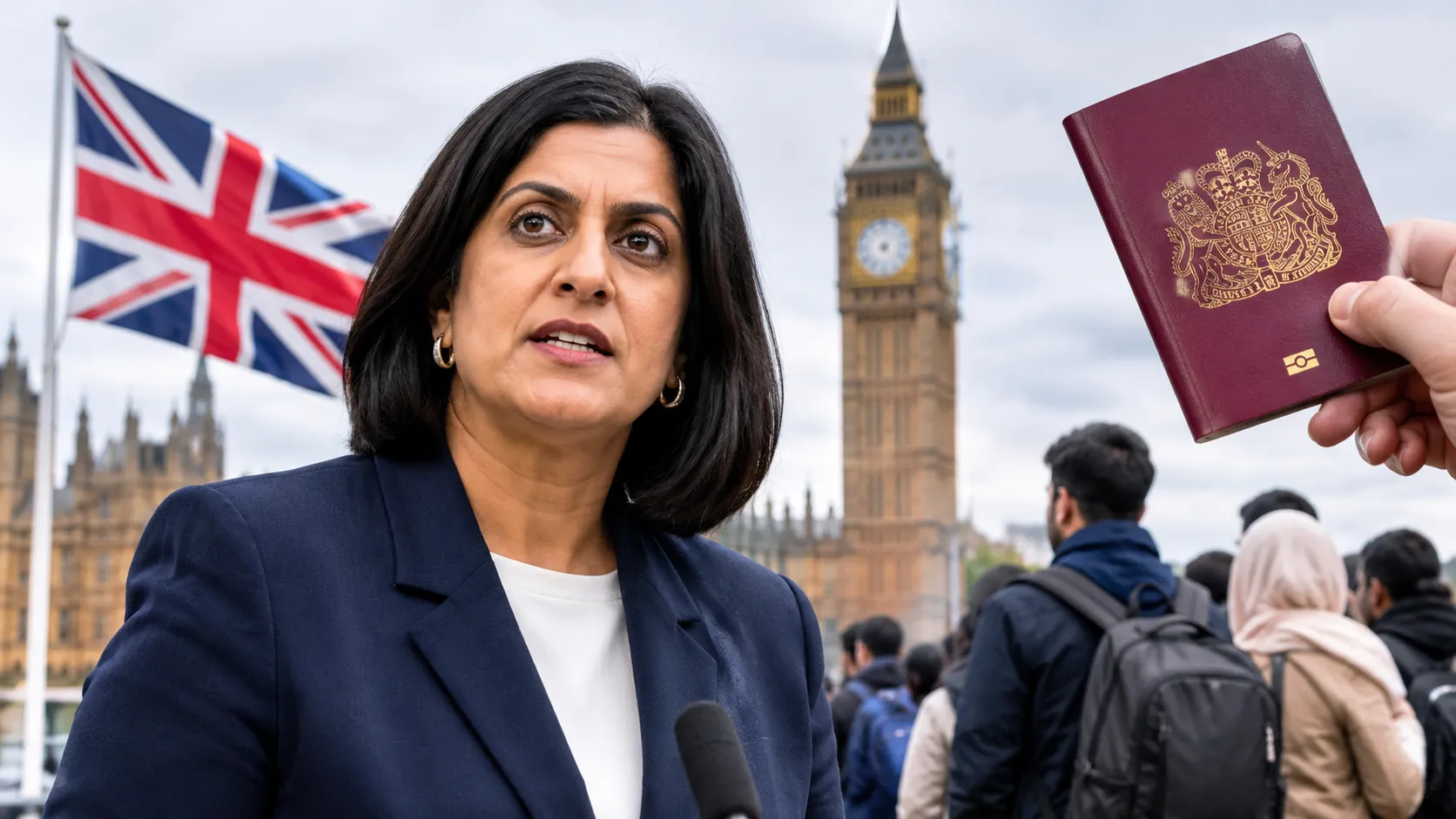

Britain has announced major changes to its immigration and settlement policies, introducing longer waiting periods for migrants seeking permanent residency. Under the revised rules, most migrants will now need to wait 10 years before becoming eligible to apply for permanent settlement in the UK.
The announcement was made on Monday by Home Secretary Shabana Mahmood as the government continues its efforts to reduce immigration and tighten residency requirements.
Previously, most legal migrants could apply for Indefinite Leave to Remain (ILR) after living in the UK for five years. However, the new policy increases the standard qualifying period to 10 years, affecting a large number of foreign workers and their families.
Despite the tougher measures, the government has introduced some important exceptions following criticism from trade unions and members of the Labour Party.
Under the revised rules, healthcare and care workers will retain their existing five-year route to permanent settlement, provided they meet specific requirements. These include demonstrating a good level of English, having no criminal record and maintaining a record of National Insurance contributions.
Meanwhile, high earners will benefit from a faster route. Individuals earning more than £125,000 annually, along with certain visa holders, may qualify for permanent settlement after just three years.
The strictest measures will apply to people who enter Britain illegally through small boat crossings. According to the announced reforms, some individuals in this category could face waiting periods of up to 30 years before becoming eligible for settlement.
The government says these changes are necessary because approximately 350,000 lower-skilled workers and their dependants who arrived after Brexit are expected to become eligible for permanent residency in the coming years.
The reforms also reflect growing public pressure for stricter immigration controls, particularly as Nigel Farage’s Reform UK continues to push for tougher migration policies.
The government hopes the revised approach will balance its commitment to reducing immigration with the need to protect essential workers in Britain’s healthcare and care sectors.