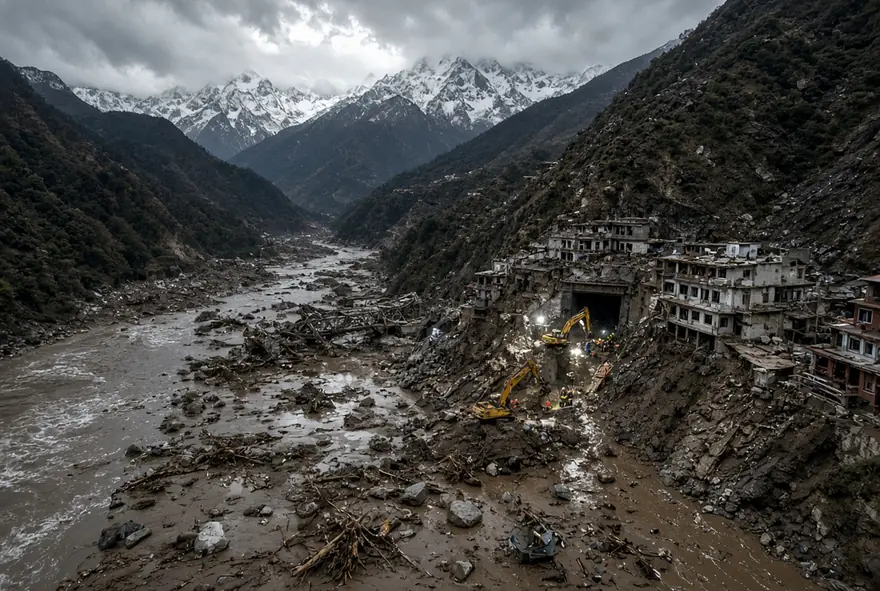

Nepal flood rescue efforts continue as teams work desperately to free hundreds of workers trapped inside blocked hydropower tunnels after devastating Himalayan floods. The sudden rush of ice, rock, mud and debris from a glacier collapse near the Nepal-Tibet border has left a trail of destruction across valley towns and villages.
Rescue teams from Nepal, supported by Chinese and Indian experts, have been operating through the night. They use heavy earth-moving machines and torchlights to dig through thick layers of mud and rocks that sealed the tunnel entrances. Officials confirmed that 933 workers remain missing from several hydropower projects in the flood-hit region. The overall death toll has now crossed 900, while nearly 5,000 people are still unaccounted for. On the Chinese side of the border, 16 people died and more than 500 are missing.
Hundreds of unidentified bodies have already been buried in shallow graves because the humid weather caused rapid decomposition after the torrent swept them down the mountains. The Red Cross estimates that more than 90,000 people have been affected by the disaster. Nearly 21,000 security personnel, along with civilian volunteers, are involved in the ongoing search and rescue operations.
Prime Minister Balendra Shah described the event as an unprecedented natural disaster and said complete damage assessment remains difficult due to the massive debris and challenging terrain. Chinese authorities have also mobilised thousands of rescuers and provided significant resources, including life-detection equipment and airdropped supplies. They linked the glacier collapse to the long-term effects of global warming on the Tibetan plateau.
Rescue work has been interrupted several times by bad weather and the threat of new flooding from temporary lakes formed by landslides. Authorities continue to monitor high-risk zones along the river for further landslides that could create additional dangerous water bodies. Despite the difficult conditions, teams remain focused on opening the tunnels and saving as many lives as possible.