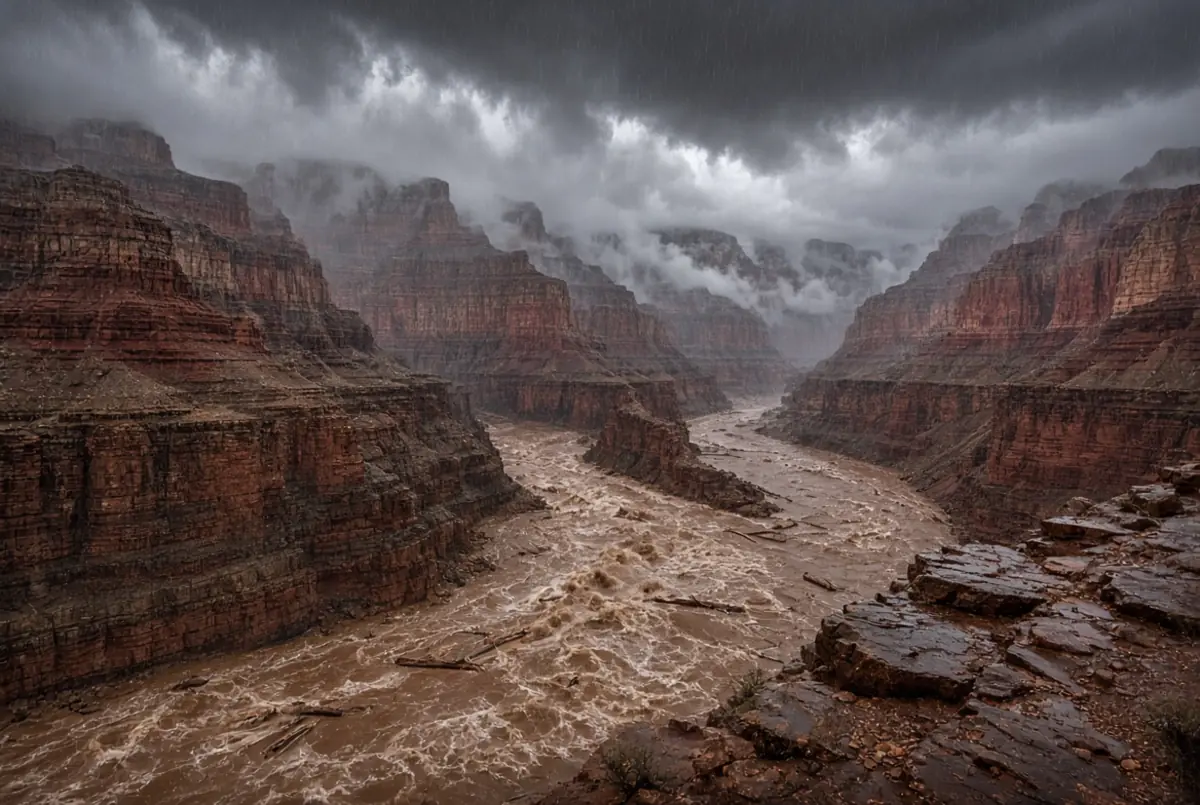

Heavy rainstorms tore through the Grand Canyon on Monday and made rescue efforts even harder. Search teams are still looking for more than a dozen people who went missing after sudden flash floods hit the park over the weekend. Two bodies have already been found.
The floods struck Bright Angel Canyon and the Phantom Ranch area on Saturday afternoon. Dozens of people had to leave quickly. The only water pipeline that serves the area was badly damaged. On Sunday evening, rescuers recovered the body of a 46 year old man. On Monday the National Park Service confirmed a second body had also been found. Officials warned that more bad weather could slow down the search.
Thick low clouds covered the deep canyon on Monday afternoon. The National Weather Service issued fresh flood warnings. More rain and thunderstorms were expected. Flash flooding remains possible in creeks, dry washes, and narrow side canyons. Strong currents can form very quickly and become deadly.
A few visitors still stood on the South Rim under umbrellas and rain ponchos. Many were foreign tourists taking photos while trying to see the Colorado River far below. Weekend videos from hikers showed muddy water racing past trails and under footbridges. Logs and debris floated in the swollen rivers with a loud roaring sound.
Park staff worked with Arizona authorities to move people out and check who was still missing. By Sunday morning 62 people had been evacuated. About 15 people were still unaccounted for. A press conference was planned later on Monday so officials could share the latest update.
The floods destroyed or damaged 40 percent of the Transcanyon Waterline. This long pipeline carries water from the North Rim to the South Rim. The park immediately placed water restrictions on the busiest area and banned wood and charcoal fires. Footbridges were washed away and parts of Bright Angel Creek became impossible to cross.
Trails from the South Rim stayed open but staff kept warning visitors about sudden storms. Flash floods are common in northern Arizona during monsoon season from July to mid September because the dry land cannot absorb heavy rain. Nearly five million people visit the Grand Canyon every year. The current search continues under difficult and changing conditions.