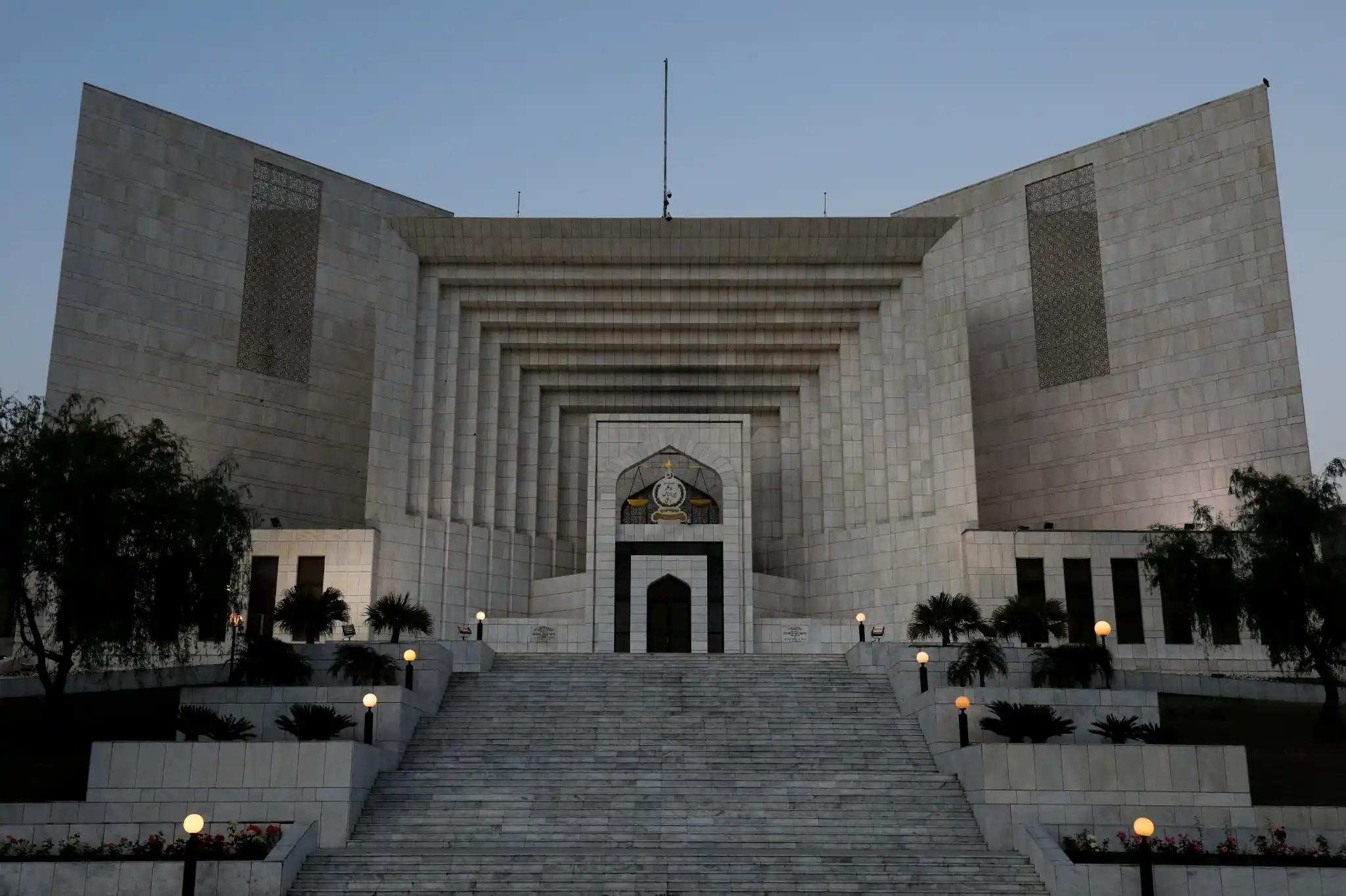

The Supreme Court of Pakistan has ruled that judges whose reputation and credibility are seriously damaged should be dismissed from service rather than granted compulsory retirement with benefits. The court observed that retaining judges with questionable integrity weakens public confidence in the judicial system and compromises the dignity of the institution.
The ruling was issued in a detailed judgment by a three member bench headed by Justice Shahid Waheed, alongside Justice Naeem Akhtar Afghan and Justice Muhammad Shafi Siddiqui. The case concerned former Additional District and Sessions Judge Afzal Zahid, who had served in Mailsi, Punjab.
According to the judgment, a judge’s integrity cannot be measured merely by the absence of proven corruption charges. The court emphasized that judicial officers are expected to maintain an unblemished character, exemplary conduct, and an honorable public reputation. It stated that judges must remain above suspicion because the judiciary derives its strength from public trust and moral authority, not from coercive power.
The court observed that citizens approach courts seeking justice from individuals who represent conscience, fairness, and accountability. If doubts arise regarding a judge’s integrity, confidence in the entire justice system can be shaken. The judgment further noted that allowing judges with damaged reputations to retire with benefits sends a negative message that judicial integrity can be compromised without serious consequences.
Drawing upon Quranic teachings, Hadith, and Islamic jurisprudence, the court described the office of a judge as a sacred trust rather than an ordinary profession. It cited Islamic scholars who stressed that judges whose integrity becomes questionable should be removed promptly to preserve the sanctity of justice.
The case stemmed from several complaints against Afzal Zahid, including allegations of corruption and misconduct. Although a departmental inquiry did not establish direct evidence of corruption, supervisory reports found his reputation to be tarnished. The Supreme Court ultimately held that maintaining public confidence in the judiciary requires not only actual honesty but also the perception of integrity, reaffirming that the justice system depends heavily on credibility and ethical standards.