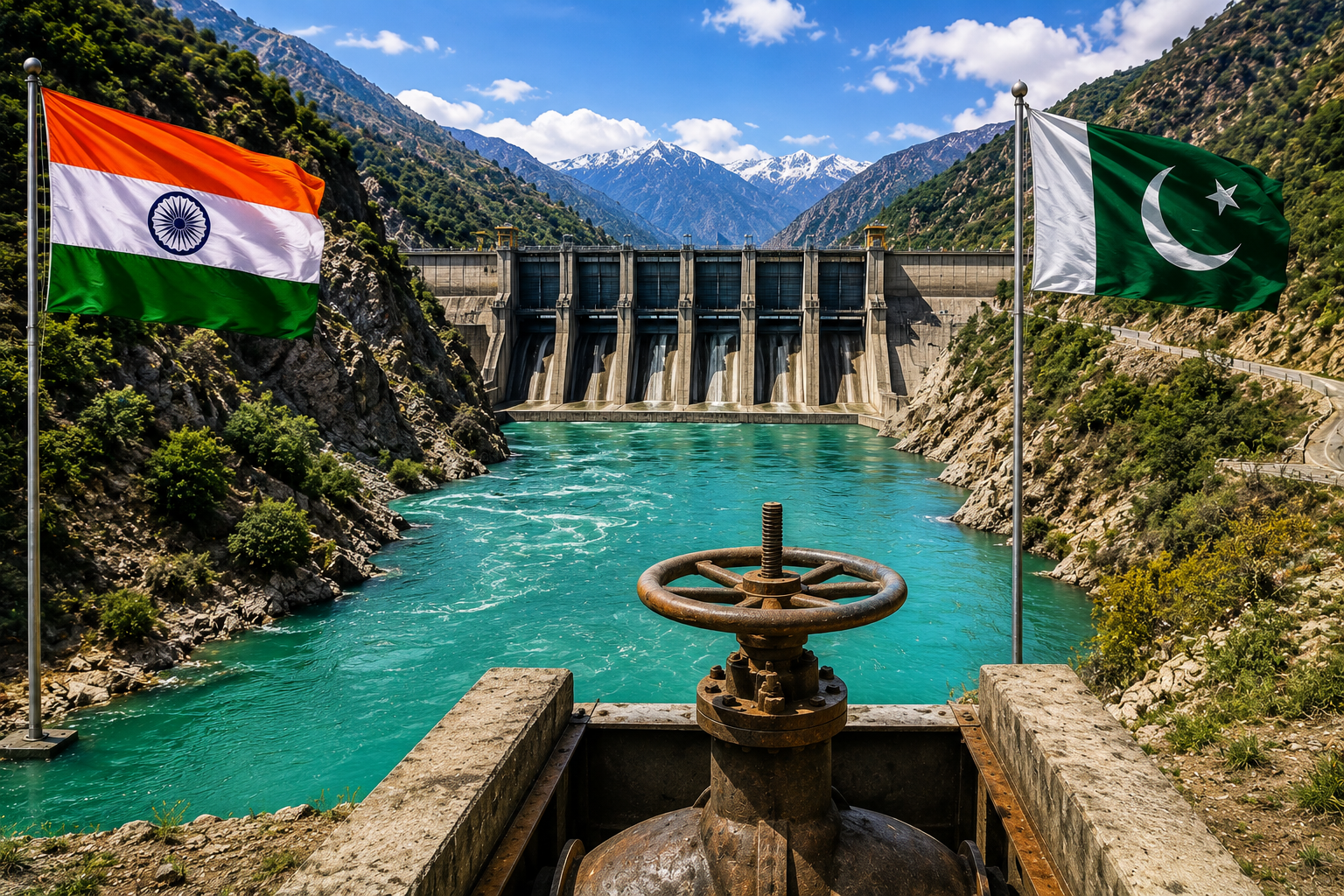

Fresh tensions have emerged between India and Pakistan after India’s water minister stated that the government is actively pursuing measures to prevent water from flowing into Pakistan. The remarks have reignited concerns over the future of the Indus Waters Treaty, a landmark water-sharing agreement that has governed the distribution of river resources between the two countries since 1960.
Speaking to local media, Indian Water Minister CR Patil said that authorities are working on plans to ensure that “not a single drop of water” reaches Pakistan in the coming years. According to the minister, the initiative is being pursued under the direction of Prime Minister Narendra Modi, following India’s decision to suspend participation in the treaty in 2025.
The Indus Waters Treaty regulates the use of six major rivers that originate in India and flow into Pakistan, supplying water to millions of people and supporting agriculture, industry, and daily life. The agreement has long been considered one of the few successful examples of cooperation between the two neighboring countries despite decades of political tensions.
Pakistan has strongly opposed any attempt to alter water flows, maintaining that the treaty remains legally valid and cannot be suspended unilaterally. Pakistani officials have repeatedly warned that restricting water supplies would violate international commitments and threaten the rights of downstream nations that depend heavily on shared river systems.
Recent developments have intensified concerns after India announced projects related to the Chenab River, including a proposed tunnel system and maintenance work at hydroelectric facilities. While these projects have sparked debate, experts note that existing infrastructure does not currently allow India to completely stop river flows into Pakistan.
Water experts believe that any large-scale diversion project would require several years of construction and substantial investment before having a significant impact. Analysts also warn that major changes to river flows could affect agriculture, food security, and economic stability in the region.
As both countries continue to exchange statements on the issue, the future of the treaty remains uncertain. The dispute highlights the growing importance of water security in South Asia and the need for dialogue to prevent further escalation between the two nuclear-armed neighbors.