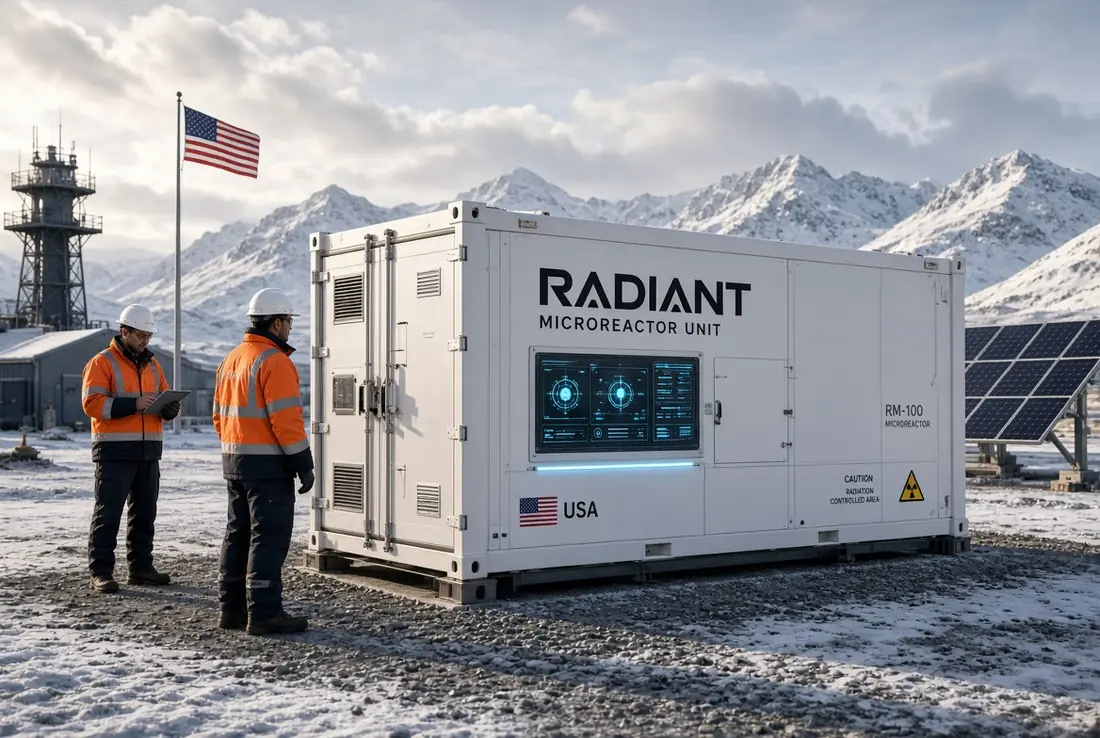

Radiant Microreactors are moving from military trials toward commercial use as the company scales production to serve data centres by around 2030. These compact nuclear units offer a practical way to deliver reliable power in remote or high-demand locations without the massive infrastructure of traditional plants.
Critics argue that microreactors will cost more than large conventional reactors. Jeff Waksman of the Janus programme openly agrees that few expect them to undercut big plants on price. Instead, the focus is on finding ways to lower those costs through better design, manufacturing, and deployment. The Janus effort aims to map out practical steps that can bring expenses down over time while proving the technology in real-world settings.
The US military currently spends about 40 cents per kilowatt-hour to keep Arctic bases running. Officials hope Radiant Microreactors will cut that figure significantly. The Army also expects private investors to fund a larger share of the projects than the government itself. Successful early deployments should help attract that outside capital by showing clear operational value.
Radiant’s containerised design gives the technology a clear edge. The reactors can be transported directly to the site, which removes expensive long-distance transmission charges. Company executive Starrett estimates the delivered cost of electricity will land between 20 and 30 cents per kilowatt-hour once the units are in place. That range already looks attractive for isolated military posts and could become competitive for commercial users as production volumes rise.
Looking ahead, data centres represent a major growth opportunity. These facilities need steady, carbon-free power around the clock, and many operators are searching for alternatives to strained grids. Radiant Microreactors could sit right beside the servers, supplying electricity on demand without the delays of new transmission lines. The company plans to expand manufacturing capacity so it can meet that demand by the end of the decade.
Success will depend on continued cost reductions, regulatory support, and proven performance in the field. If the Janus programme and private partners can demonstrate reliable operation at lower delivered prices, microreactors may move from niche military tools to mainstream energy solutions. For now, the focus remains on refining the technology, attracting investment, and preparing for the commercial market that is expected to open around 2030.