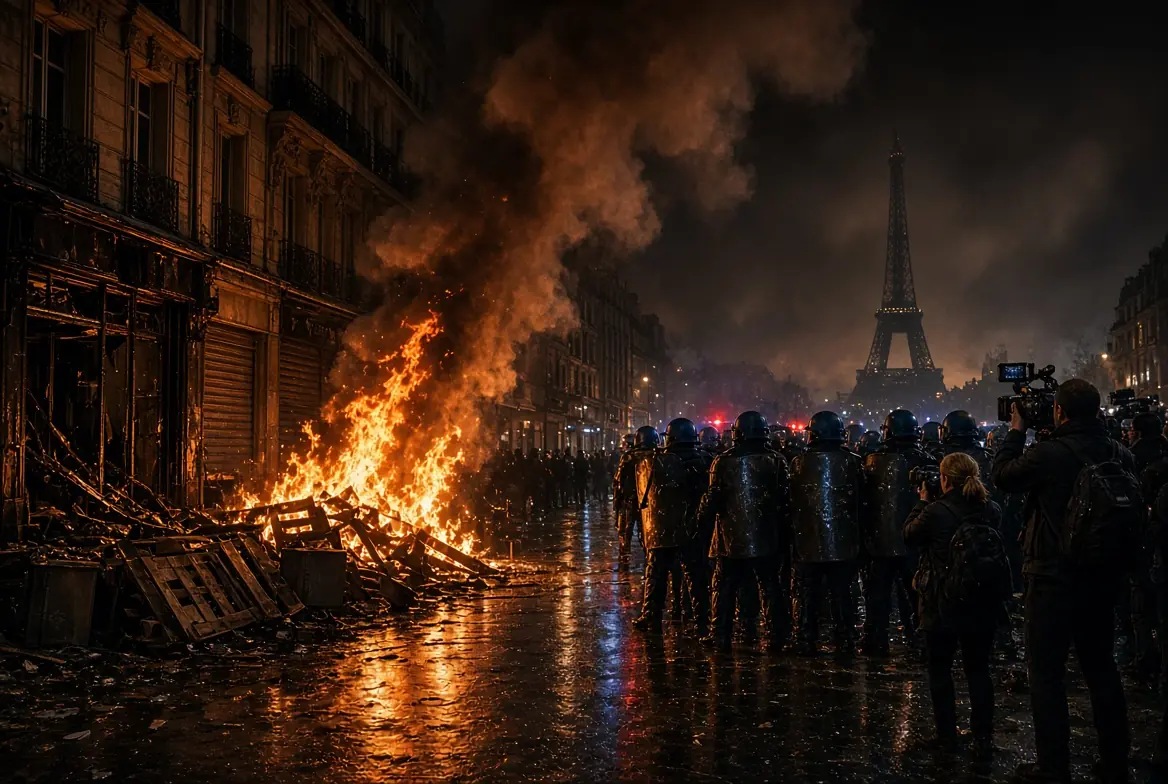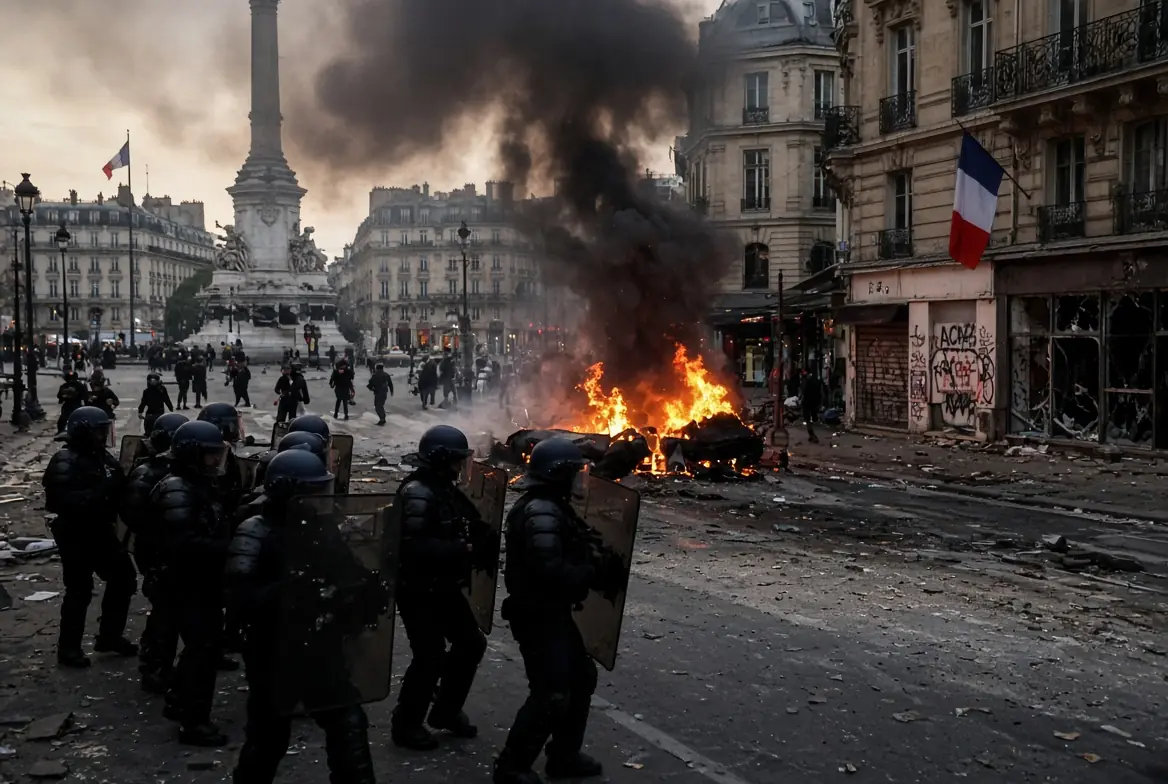

Fresh clashes erupted again in Paris on Sunday as France continued to deal with the aftermath of its worst civil unrest in years. Protests against the rising cost of living and fuel prices had turned violent a day earlier, leaving one demonstrator dead, more than 2,000 people arrested, and hundreds of shops damaged across the country.
Nationwide demonstrations on Saturday drew over half a million people. What began as marches quickly escalated into riots in several cities. Violent groups set a town hall on fire, looted stores, covered buildings with graffiti, and clashed with police. In Paris, one protester suffered a cardiac arrest and later died. More than 600 police officers were injured during the confrontations.
Interior Minister Laurent Nunez confirmed that several hundred shops suffered damage. Cities from Lille in the north to Marseille in the south faced widespread destruction. In Limoges, the 143-year-old town hall was largely destroyed by arson, an act the local mayor described as clearly premeditated. Bordeaux reported up to 100 stores looted, while Marseille announced emergency aid for affected businesses. Retail giant Carrefour said 50 of its shops were damaged, with losses running into tens of millions of euros.
Tensions remained high in the capital on Sunday. Police fired tear gas at Place de la Republique while protesters set bikes ablaze. A Dutch visitor who had to evacuate his hotel described the area as looking like a war zone. Clean-up operations began across the country as authorities worked to restore order.
The government blamed hard-left groups and criminals for the violence and looting. Far-right leader Jordan Bardella called the events a national humiliation and demanded that President Emmanuel Macron step down. Macron is scheduled to address the nation later on Sunday. The unrest has increased pressure on his government just months before the next presidential election.
Economy Minister Roland Lescure promised support for business owners who suffered losses and warned that those who caused the damage would be held accountable. The protests originally started last month over poor school conditions and teacher shortages in working-class areas before expanding into a wider movement against inequality, public spending cuts, and the high cost of living.