
Pakistan is facing a significant challenge in terms of electricity demand, with projections suggesting a need for an additional 62,660 to 70,720 MW by 2035. This surge in demand is driven by economic recovery and industrial growth, as the country rebounds from earlier economic setbacks. The Indicative Generation Capacity Expansion Plan (IGCEP) 2025–2035 outlines this growing demand, emphasizing the need for both generation and transmission capacity to meet future energy needs.
The 10-year roadmap, developed with collaboration from the Independent System and Market Operator (ISMO), the National Electric Power Regulatory Authority (Nepra), and other stakeholders, focuses on expanding the country’s energy infrastructure, including the K-Electric network. Based on GDP growth scenarios ranging from 3.5% to 6.4%, the additional power generation required varies. Under a low-growth scenario, Pakistan would need 62,657 MW, while the high-growth scenario calls for as much as 70,720 MW.
Interestingly, despite the demand surge, power consumption has been declining across the country, largely due to economic pressures and the rising adoption of rooftop solar and net metering systems. These developments are decreasing the demand for grid electricity, though it is expected that this trend is temporary. Experts believe that demand will stabilize over time, especially as measures aimed at improving system efficiency and managing demand are implemented.
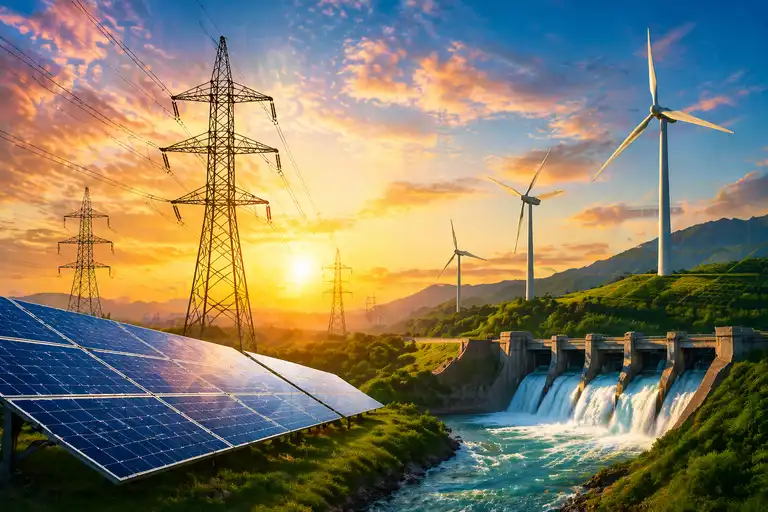
One notable shift in Pakistan’s energy mix is the increased reliance on renewable energy. By 2035, hydropower is expected to comprise 34% of the installed capacity, while solar and wind energy will contribute 27%. This marks a major pivot from reliance on imported fuels, with furnace oil being phased out entirely and RLNG and imported coal accounting for a reduced share.
The expansion plan outlines ambitious goals, including 21,400 MW of hydropower, 13,200 MW of solar, and up to 11,500 MW of wind energy. However, the financial requirements for this infrastructure expansion are substantial, with $46 billion to $54 billion estimated for generation alone, and an additional $4.6 billion to $6 billion needed for transmission.
As the country moves forward with these energy developments, careful planning and strategic investments will be crucial to avoid the risks of excess capacity and higher costs for consumers.