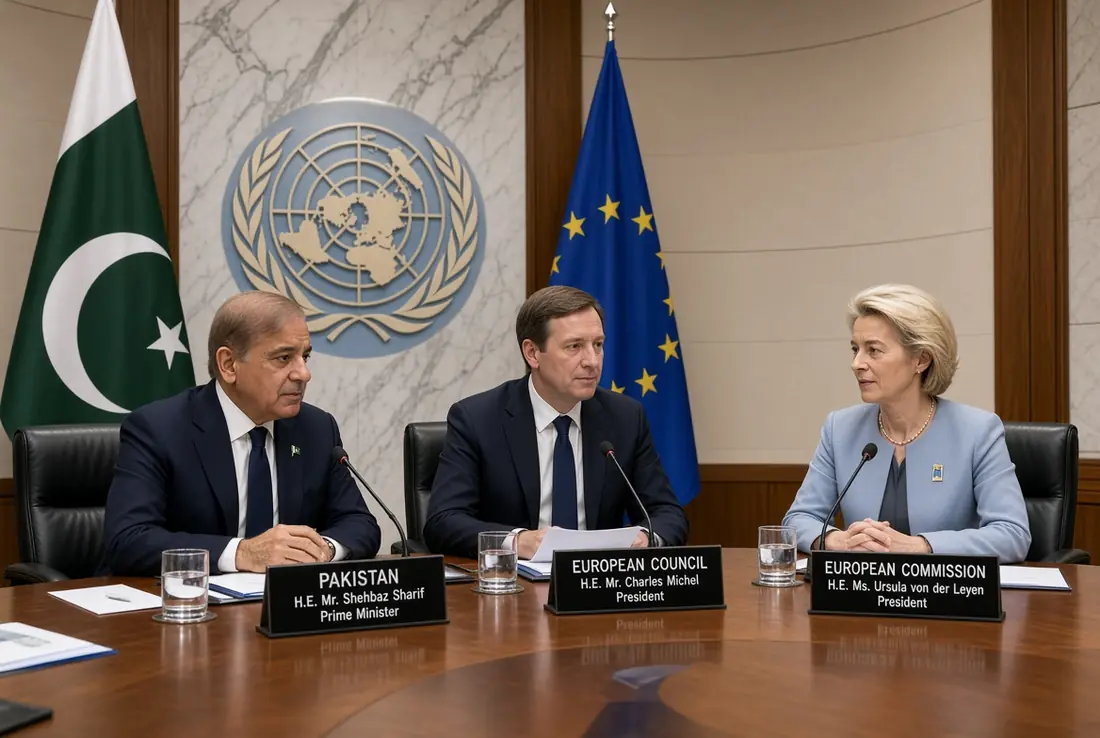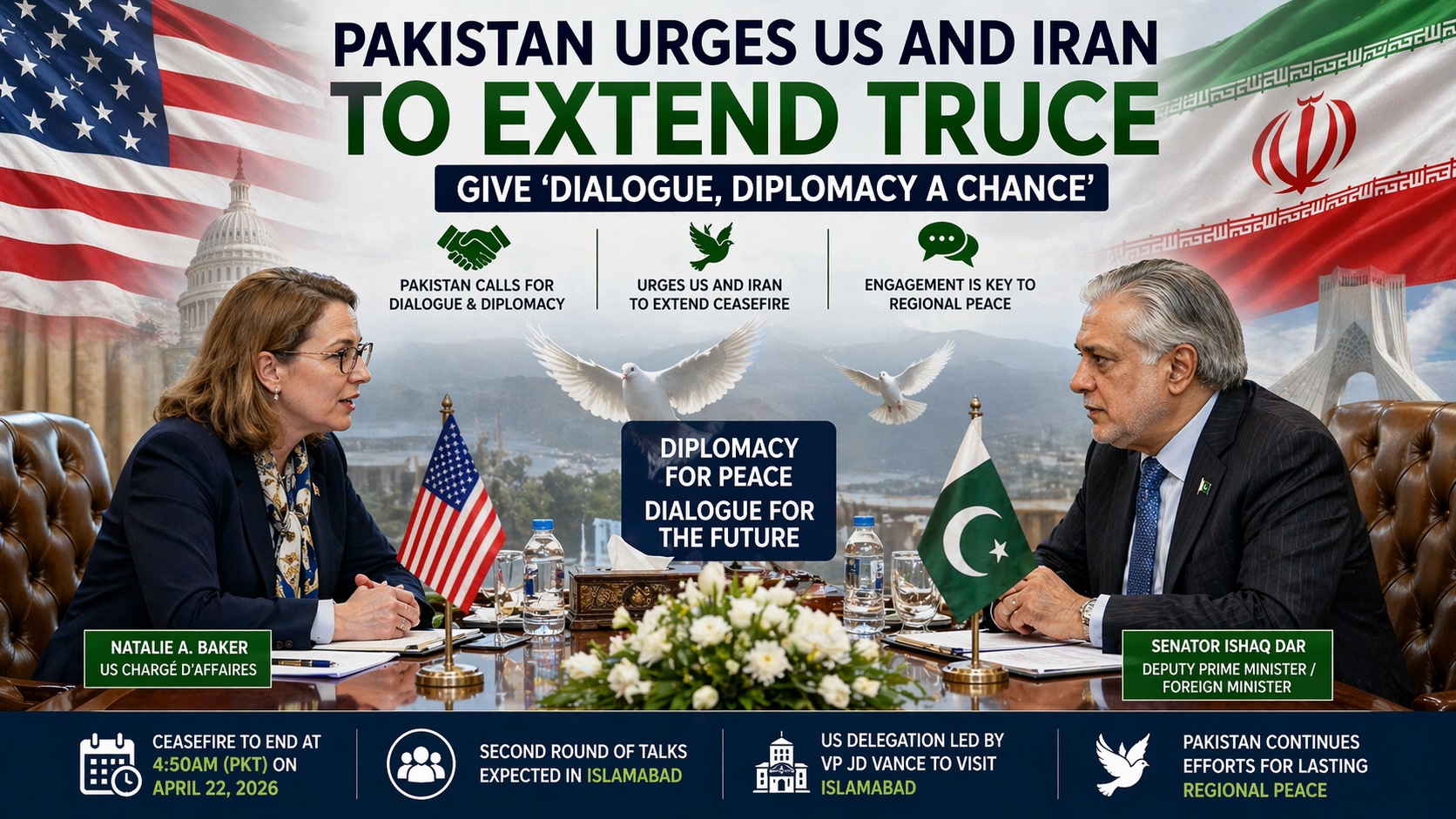

Pakistan has urged the United States and Iran to extend their ceasefire, stressing that dialogue and diplomacy remain the only practical path toward resolving the ongoing conflict. The appeal was made by Deputy Prime Minister and Foreign Minister Ishaq Dar during a key meeting with US Chargé d’Affaires Natalie A. Baker in Islamabad.
During the discussion, Dar highlighted Pakistan’s consistent stance on promoting peaceful engagement and emphasized the urgent need for direct communication between Washington and Tehran. He called on both sides to continue the truce and avoid further escalation, noting that sustained dialogue is essential for achieving long term regional stability.
The US envoy acknowledged Pakistan’s efforts and appreciated its constructive role in facilitating peace talks. Islamabad has been actively mediating between the two countries, including brokering a two week ceasefire on April 8, following weeks of intense conflict in the Middle East.
However, despite initial progress, the first round of negotiations in Islamabad, which lasted over 20 hours, failed to produce a breakthrough. Both sides remained divided over critical issues such as Iran’s nuclear and missile programs, US sanctions, and control of the Strait of Hormuz.
The situation remains uncertain as the current ceasefire is set to expire at 4:50am Pakistan time on April 22. Information Minister Attaullah Tarar confirmed that Pakistan is in continuous contact with Iranian authorities, but a formal confirmation of Iran’s participation in the second round of talks is still awaited.
Meanwhile, the United States has confirmed that a delegation led by Vice President JD Vance will soon arrive in Islamabad. Reports suggest that other senior figures may also join the delegation, signaling the importance of the upcoming discussions.
Pakistan continues to push for a diplomatic solution, urging both nations to seize this opportunity for peace. Officials believe that extending the ceasefire could provide the necessary time and space to reach a meaningful and lasting agreement, preventing further instability in the region.