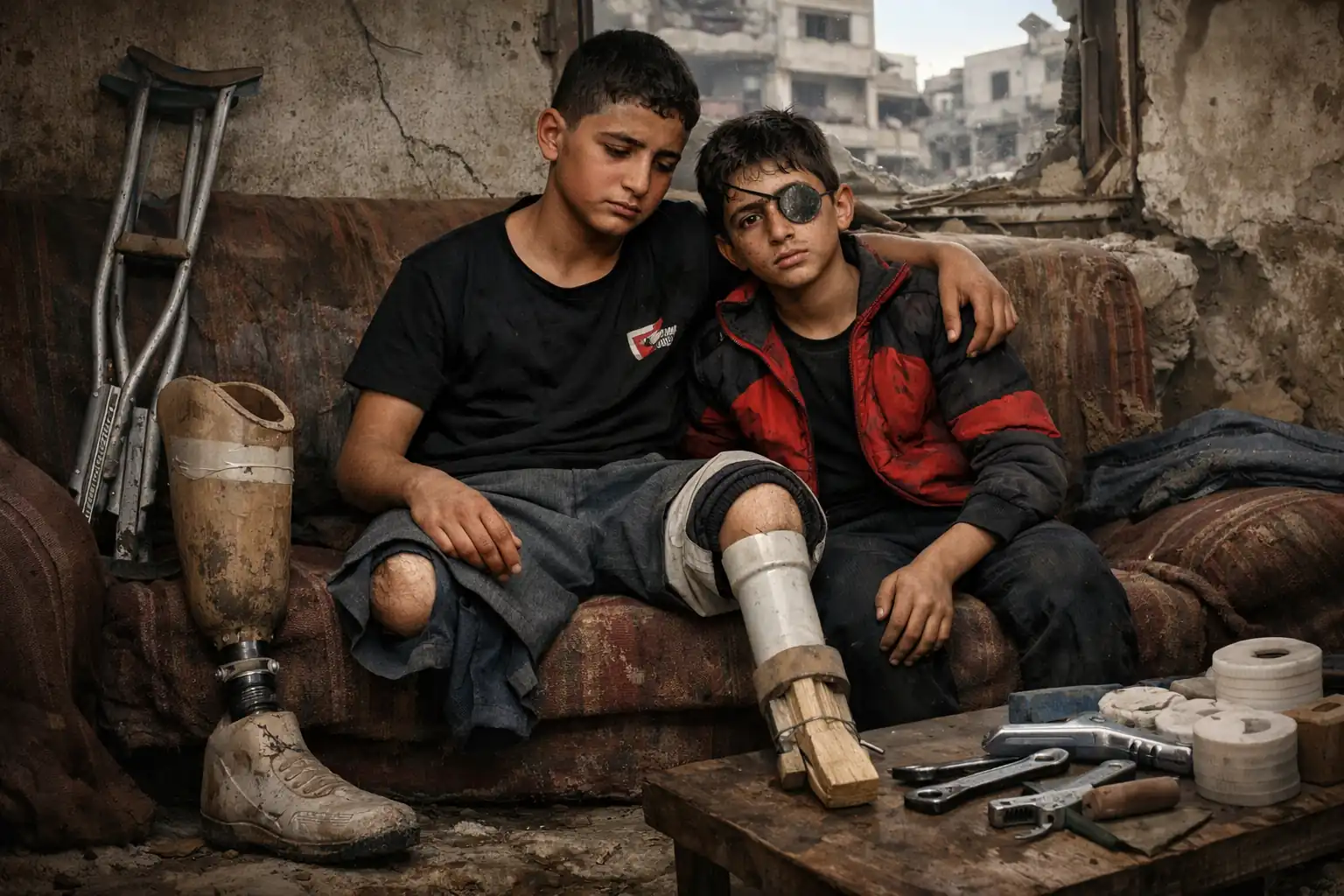

The ongoing crisis in Gaza has created a devastating situation for thousands of war amputees, many of whom are struggling to rebuild their lives without access to proper medical care. Among them is 14-year-old Fadel Al-Naji, who lost both of his legs in a drone strike. Once passionate about football, he now spends most of his time confined to his home, facing both physical and emotional challenges.
Medical experts report that nearly 5,000 amputees in Gaza urgently need prosthetic limbs, with a significant portion being children. However, strict restrictions on medical materials have severely limited the production of prosthetics. Essential items such as plaster and specialized components are either delayed or blocked, leaving hospitals unable to meet growing demand.
Due to these shortages, doctors have been forced to use improvised solutions, including plastic pipes, wooden planks, or even recycled prosthetic limbs taken from deceased individuals. While these temporary measures provide minimal mobility, they also carry serious risks such as infections and long-term damage to patients.
Hospitals like the Artificial Limbs and Polio Centre and Sheikh Hamad Hospital are struggling to operate with limited supplies. Many patients remain on waiting lists, hoping for proper treatment that may not arrive soon. According to health professionals, the lack of prosthetics not only delays physical recovery but also deepens psychological trauma, especially for children who require frequent adjustments as they grow.
The situation is further complicated by limited medical expertise. Only a small number of trained prosthetic specialists remain in Gaza, making follow-up care extremely difficult. Meanwhile, movement restrictions and damaged infrastructure continue to prevent patients from accessing necessary treatment.
Experts warn that without immediate access to materials and medical support, thousands of amputees will face lifelong disability. For many, the loss of a limb represents more than just a physical injury, it means losing independence, dignity, and hope for the future.
The ongoing crisis in Gaza has created a devastating situation for thousands of war amputees, many of whom are struggling to rebuild their lives without access to proper medical care. Among them is 14-year-old Fadel Al-Naji, who lost both of his legs in a drone strike. Once passionate about football, he now spends most of his time confined to his home, facing both physical and emotional challenges.
Medical experts report that nearly 5,000 amputees in Gaza urgently need prosthetic limbs, with a significant portion being children. However, strict restrictions on medical materials have severely limited the production of prosthetics. Essential items such as plaster and specialized components are either delayed or blocked, leaving hospitals unable to meet growing demand.
Due to these shortages, doctors have been forced to use improvised solutions, including plastic pipes, wooden planks, or even recycled prosthetic limbs taken from deceased individuals. While these temporary measures provide minimal mobility, they also carry serious risks such as infections and long-term damage to patients.
Hospitals like the Artificial Limbs and Polio Centre and Sheikh Hamad Hospital are struggling to operate with limited supplies. Many patients remain on waiting lists, hoping for proper treatment that may not arrive soon. According to health professionals, the lack of prosthetics not only delays physical recovery but also deepens psychological trauma, especially for children who require frequent adjustments as they grow.
The situation is further complicated by limited medical expertise. Only a small number of trained prosthetic specialists remain in Gaza, making follow-up care extremely difficult. Meanwhile, movement restrictions and damaged infrastructure continue to prevent patients from accessing necessary treatment.
Experts warn that without immediate access to materials and medical support, thousands of amputees will face lifelong disability. For many, the loss of a limb represents more than just a physical injury, it means losing independence, dignity, and hope for the future.