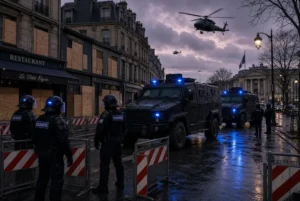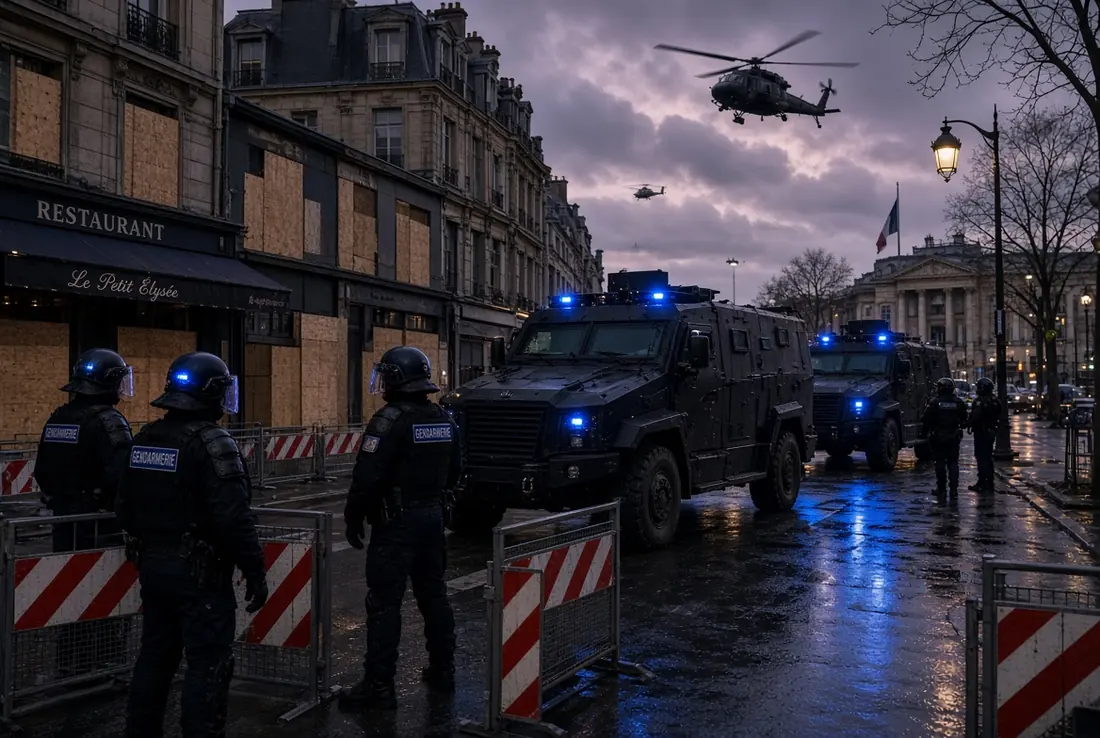

France has put major cities under heavy security as the country prepares for a new wave of protests on Saturday. Authorities deployed police, helicopters and armoured vehicles to avoid a repeat of the violence and looting that marked last weekend’s demonstrations.
Around 70,000 security personnel will be on the streets across the country, Interior Minister Laurent Nunez confirmed. Prime Minister Sebastien Lecornu warned that the threat of trouble remains high. In Paris, shops and restaurants in the centre have boarded up their windows. The famous Louvre and Musee d’Orsay museums are closed, and a curfew covers parts of the capital.
The protests began with high school students unhappy about learning conditions. The movement quickly grew into a wider expression of anger over the rising cost of living. Last weekend more than half a million people took part, but serious urban violence broke out on the edges of the marches. Courts have already jailed 217 people over those incidents, half of them first-time offenders.
Security measures are especially strict in several cities. In Lyon, central areas will stay off-limits to demonstrators. In Orleans, where far-right leader Marine Le Pen is holding her National Rally party congress, authorities expect large counter-protests and have barred marches from the city centre. Paris police also changed the planned route for a major union march, a decision unions say they will challenge.
These restrictions have drawn sharp criticism. Amnesty International said the government’s steps are “jeopardising the right to demonstrate peacefully” and described them as a slide toward authoritarian practice. Human Rights Watch also raised concerns, noting reports of children injured by crowd-control weapons in earlier gatherings.
The unrest comes at a sensitive time. France faces presidential elections in six months, and recent polls show Marine Le Pen as the clear frontrunner. Her party congress this weekend has added another layer of tension, with both supporters and opponents expected in large numbers.
Macron’s government insists it supports peaceful protest while firmly rejecting violence. Yet the heavy security presence and protest bans have left many residents uneasy. In Orleans one local said the atmosphere felt strange, with streets quiet and businesses shuttered. As France braces for another day of demonstrations, the balance between public order and the right to protest remains under intense scrutiny.