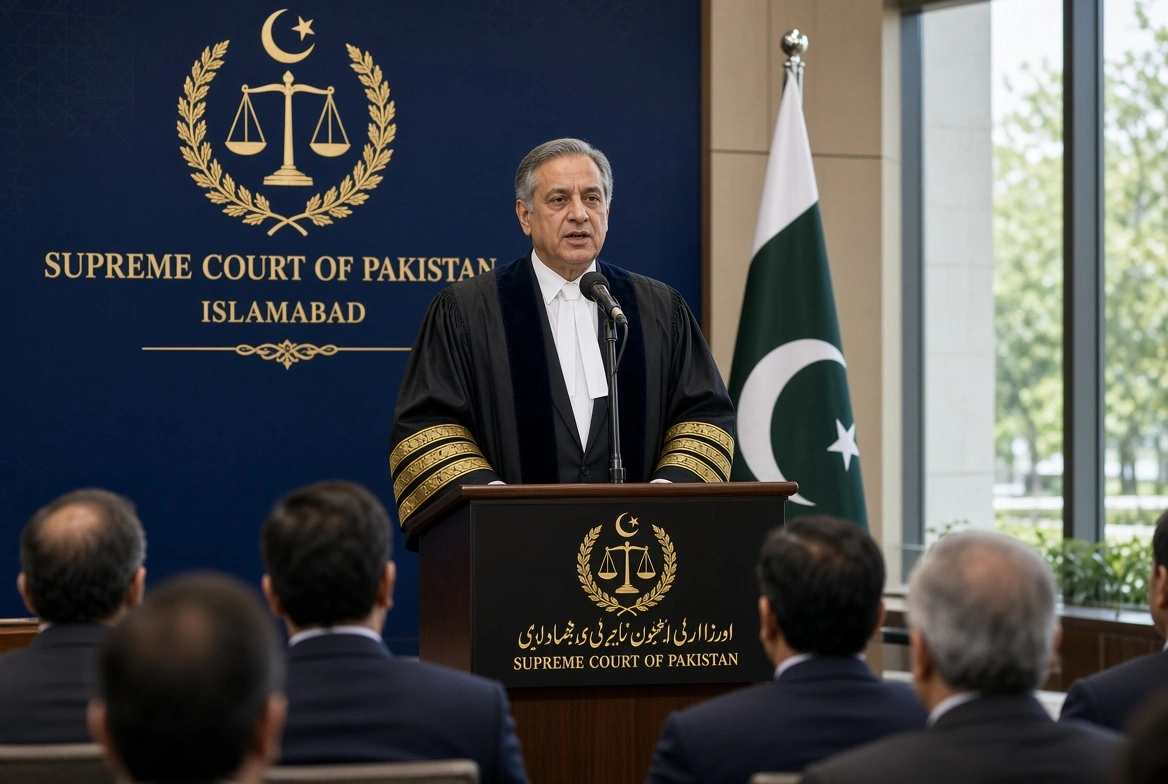

Chief Justice of Pakistan Yahya Afridi on Saturday made it clear that the entire judiciary stands firmly behind its judges to keep them free from any external pressure. Speaking at a conference in Islamabad, he stressed that the judiciary is fully united on this issue.
The Chief Justice explained that important changes have already been made in the judicial code of conduct. These changes aim to protect judges from outside influence and help rebuild public trust in the justice system. He said the goal is to create an environment where judges can work without fear or interference.
CJP Afridi described the district courts as the real backbone of the country’s justice system. He expressed pride in the district judiciary and praised judicial officers for continuing their duties even in difficult conditions. Empowering these judges, he noted, remains one of the top priorities so that people can regain confidence in the courts.
He called on every institution to perform its responsibilities properly and urged young judges to deliver the highest standard of justice. The Chief Justice also highlighted the need for stronger coordination between district courts and high courts to improve overall efficiency.
Talking about recent development work, CJP Afridi shared that basic facilities such as solar power, internet, clean water and e-libraries are being provided to the district judiciary. Provincial governments are actively supporting these efforts. In Balochistan, solar power, water and internet facilities have already reached 18 districts, while the remaining districts will get them within a month. Work on solar power systems is underway in all tehsils and districts of the province.
A decision has also been taken to offer health insurance facilities to judicial officers. This year more than Rs3 billion has been released for improvements in the judiciary. In comparison, only Rs900 million was released over 20 years under the previous Access to Justice Programme.
CJP Yahya Afridi paid tribute to those judges who lost their lives while serving the cause of justice. He concluded by saying that the rule of law is the need of the hour and that every institution must play its part honestly.