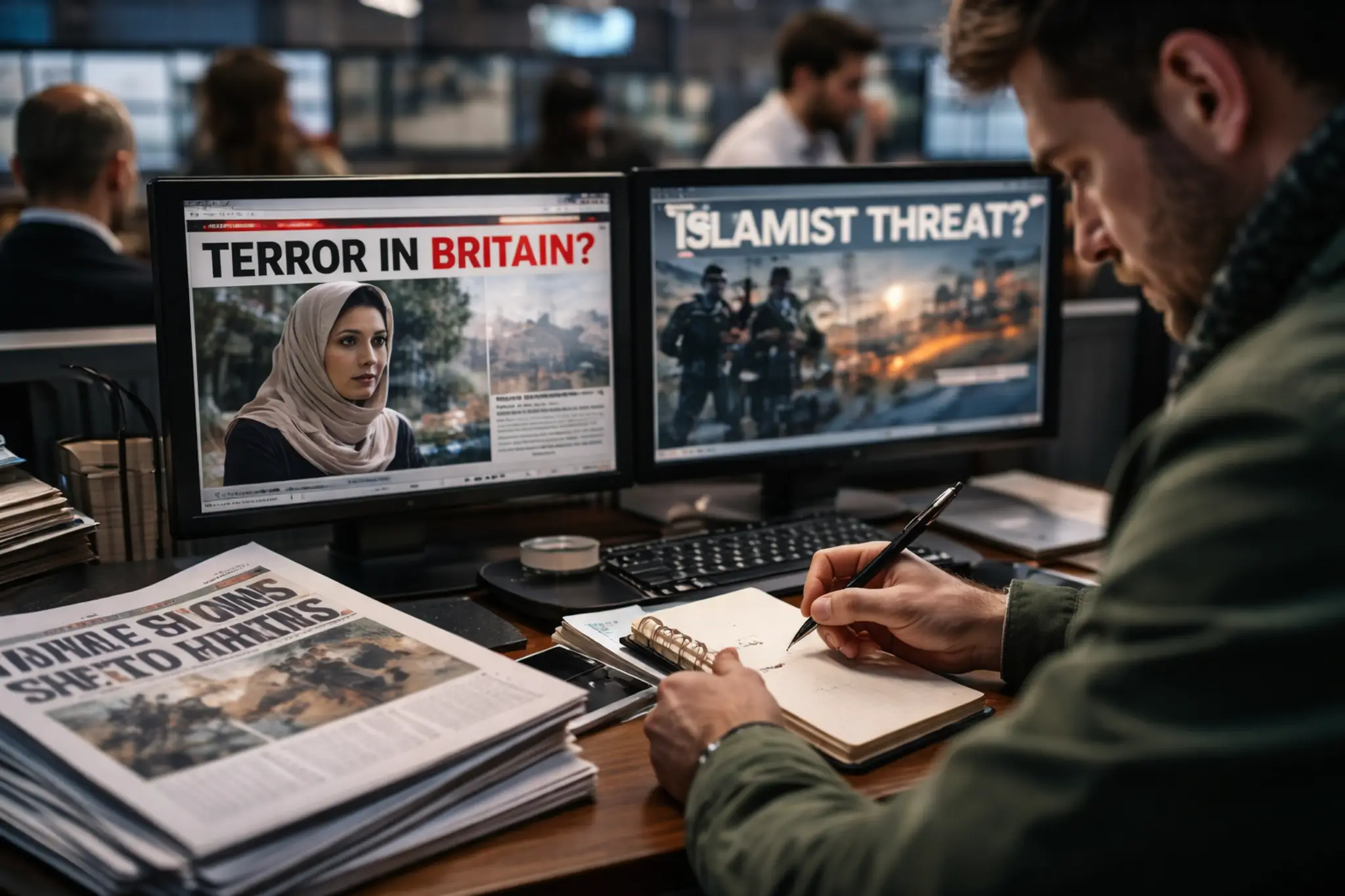

A major media analysis has revealed that nearly half of all UK news coverage about Muslims in 2025 contained bias, raising serious concerns about how British media portrays Muslim communities. The report, published by the Centre for Media Monitoring (CfMM), highlights widespread structural issues in how Muslims and Islam are discussed across mainstream news outlets.
Titled “The State of British Media 2025: Reporting on Muslims and Islam,” the study examined 40,913 news articles published across 30 major UK media organisations. Researchers found that around 50 percent of these articles contained measurable bias, suggesting a systemic pattern rather than isolated incidents.
According to the report, roughly 70 percent of all articles referencing Muslims or Islam linked them with negative themes, including conflict, security threats, and controversy. Experts warn that such portrayals can influence public attitudes, political debates, and social behaviour toward Muslim communities.
The study identified several forms of problematic reporting. These included generalisations about Muslims, misrepresentation of facts, omission of context, sensational headlines, and negative associations. Articles containing multiple indicators of these practices were categorised as biased or severely biased.
Researchers also found that right wing media outlets produced the highest levels of biased coverage. Publications such as The Spectator, GB News, The Telegraph, Daily Express, Daily Mail, The Sun, Jewish Chronicle, and The Times were among the outlets that frequently published negative portrayals of Muslims.
Among them, The Spectator recorded the highest proportion of highly biased articles, while The Telegraph and Daily Mail produced the largest number of severely biased stories overall. Analysts believe that repeated negative framing contributes to the public perception that Muslims are primarily associated with controversy or conflict.
The study also identified contextual omission as the most common problem, appearing in 44 percent of biased articles. This means important background information or diverse viewpoints were often left out, creating incomplete narratives about Muslim communities.
However, the report noted that some outlets performed better. Public broadcasters such as the BBC recorded the lowest levels of bias, suggesting that stronger editorial guidelines can help ensure more balanced reporting.
Researchers concluded that improving fair representation and responsible journalism is essential to prevent misinformation and reduce prejudice toward the UK Muslim community.