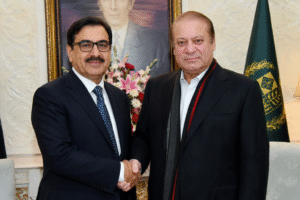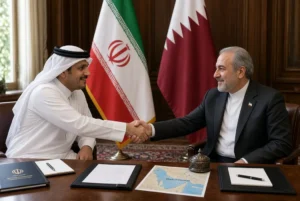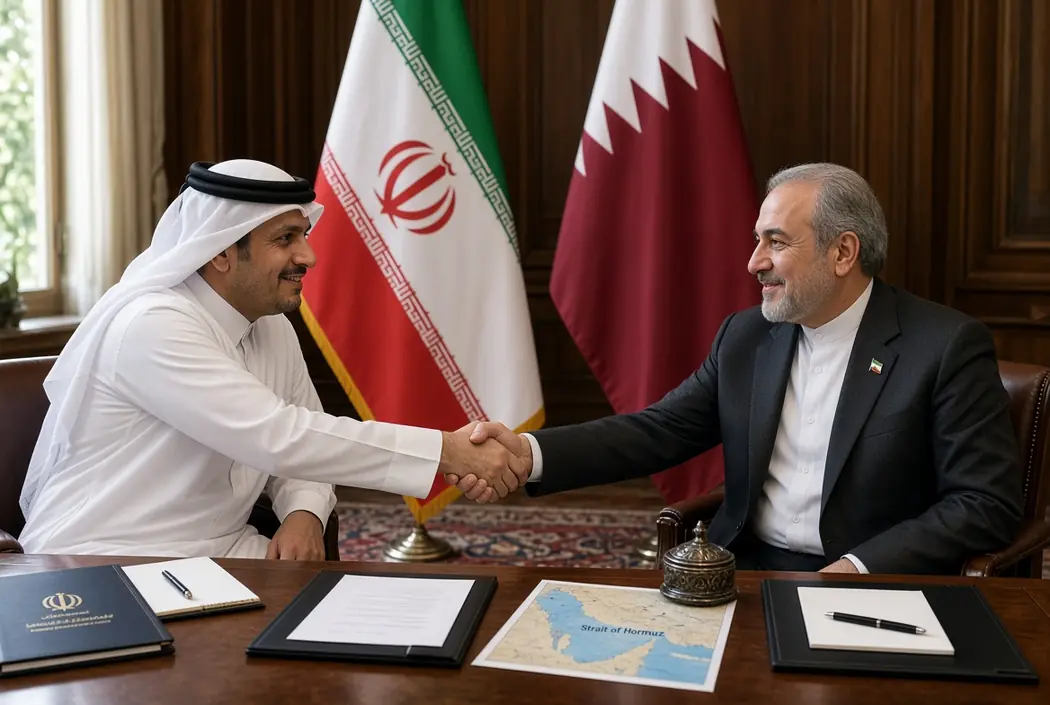

Qatar has stepped up diplomatic efforts to restore free passage through the Strait of Hormuz as the United States intensifies economic pressure on Iran. On Thursday Qatari Prime Minister and Foreign Minister Sheikh Mohammed bin Abdulrahman Al Thani held talks in Tehran with senior Iranian officials, including Parliament Speaker Mohammad Bagher Ghalibaf.
The Qatari leader stressed the need to respect freedom of navigation in the vital waterway under international law. The Strait of Hormuz, the narrow passage between Iran and Oman, once carried about 20 percent of the world’s oil. After the conflict that began six months ago, Iran threatened ships that sailed without its approval. Traffic dropped sharply and oil prices rose.
Iranian officials responded by saying they are preparing a list of conditions for fully reopening the strait. Mohsen Rezaei, secretary of Iran’s Supreme National Security Council, confirmed that Tehran has agreed with Oman on a shared shipping corridor. Parts of the route would lie in Omani waters and parts in Iranian waters. Ships would use a central channel once Iran’s demands are met.
In the past Iran has called for an end to the US blockade of its ports, compensation, and the lifting of sanctions. It is still unclear whether those terms will change. Tehran continues to insist on returning to the June memorandum of understanding that created a temporary ceasefire. That deal later collapsed after disagreements over shipping rules, and President Trump declared the agreement over.
Meanwhile US military commanders report progress on the ground. Admiral Brad Cooper, head of US Central Command, said American forces have cleared mines previously laid by Iran’s Revolutionary Guards. He noted that US forces have already helped 1,500 commercial vessels carrying nearly 750 million barrels of oil pass through the strait. Cooper declared that international shipping lanes are open and momentum is growing.
Despite these claims, ship tracking data shows traffic remains only 5 to 15 percent of normal levels. Many vessels still avoid the area because of lingering Iranian threats. The United Nations International Maritime Organisation has recorded 70 incidents in the strait since the war began, resulting in 19 deaths among seafarers.
With direct US-Iran talks stalled, third-party mediators such as Qatar and Pakistan continue to play a central role. Iran and Oman are also working out details of a joint traffic management and revenue-sharing plan. The coming days will show whether Tehran’s new list of conditions can reopen the Strait of Hormuz and ease global oil market tension.