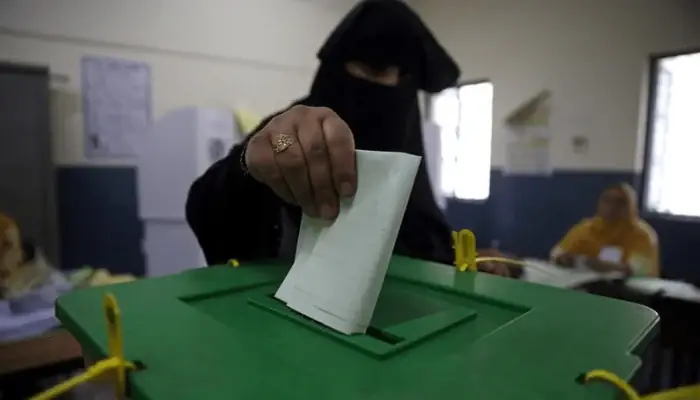

The first phase of the Azad Jammu and Kashmir (AJK) Legislative Assembly elections officially began on Monday as voters across Mirpur Division headed to polling stations to elect their representatives. Election authorities opened polling at 8:00 AM, and the voting process will continue until 5:00 PM, allowing citizens to exercise their democratic right in a peaceful environment.
More than 1.4 million registered voters are eligible to participate in this phase of the elections. According to the Election Commission, the voter list includes 725,118 male voters and 675,628 female voters spread across 13 constituencies in the districts of Mirpur, Kotli, and Bhimber.
A total of 296 candidates are contesting for the 13 assembly seats. The race includes nominees from major political parties such as the Pakistan Peoples Party (PPP), Pakistan Muslim League Nawaz (PML-N), Istehkam e Pakistan Party (IPP), along with several independent candidates. Political observers expect strong competition in several constituencies due to the presence of experienced politicians and emerging local leaders.
To facilitate smooth voting, election authorities have established 2,454 polling stations throughout Mirpur Division. These include 597 polling stations in Mirpur district, 1,107 in Kotli district, and 608 in Bhimber district. Officials stated that all polling stations have been equipped with the necessary facilities to ensure an organised voting process.
Security arrangements have been significantly strengthened to maintain law and order during polling. Security personnel have been deployed across all constituencies, while law enforcement agencies remain on high alert to prevent any untoward incidents.
AJK Chief Election Commissioner Justice (Retd.) Ghulam Mustafa Mughal warned that strict legal action would be taken against anyone attempting to disrupt the electoral process. Meanwhile, AJK Chief Secretary Khushhal Khan expressed confidence that the people of Azad Kashmir would participate responsibly and peacefully. He reaffirmed that all government institutions were fully prepared to ensure free, fair, and transparent elections while maintaining public order throughout the polling process.