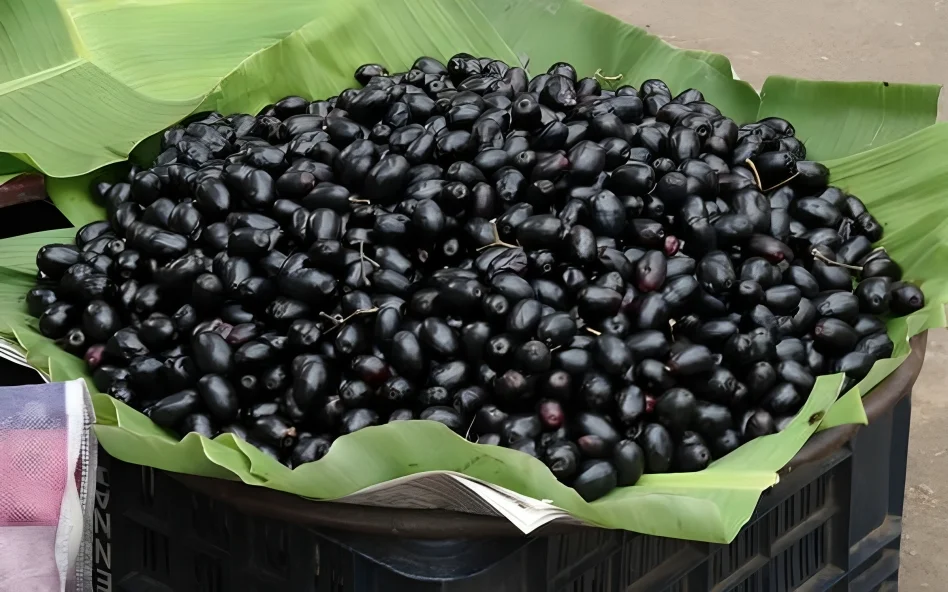

Every summer, South Punjab produces a large amount of jamun fruit, yet much of it goes to waste before reaching the market. This seasonal fruit, known for its deep purple color and health benefits, is often left to rot under trees because of poor marketing and weak supply chains.
In areas like Multan, Khanewal, and nearby villages, jamun trees are common in mango orchards, farmland, and rural boundaries. Despite producing heavy crops each year, many farmers do not see jamun as a profitable fruit. Unlike mangoes, citrus, and guavas, jamun has not developed a proper commercial system.
Farmers say the fruit is highly nutritious and has medicinal value, especially for managing blood sugar and improving digestion. However, due to its short harvesting season and delicate nature, jamun is difficult to handle and transport. Without proper storage facilities or quick transportation, the fruit spoils quickly.
Local orchard owner Muhammad Sadaqat shared that he has over 100 jamun trees but has never sold the fruit in the market. He explained that most of the fruit is consumed at home or shared with relatives, while the rest simply falls and rots.
Experts believe this situation highlights a missed economic opportunity. If the government and private sector invest in jamun processing, such as juices, jams, and health products, farmers could earn additional income and reduce waste.
Growers in the region are urging agricultural authorities to create awareness and build better market connections. With proper planning, jamun farming could become an important part of South Punjab’s agricultural economy, benefiting both farmers and consumers.