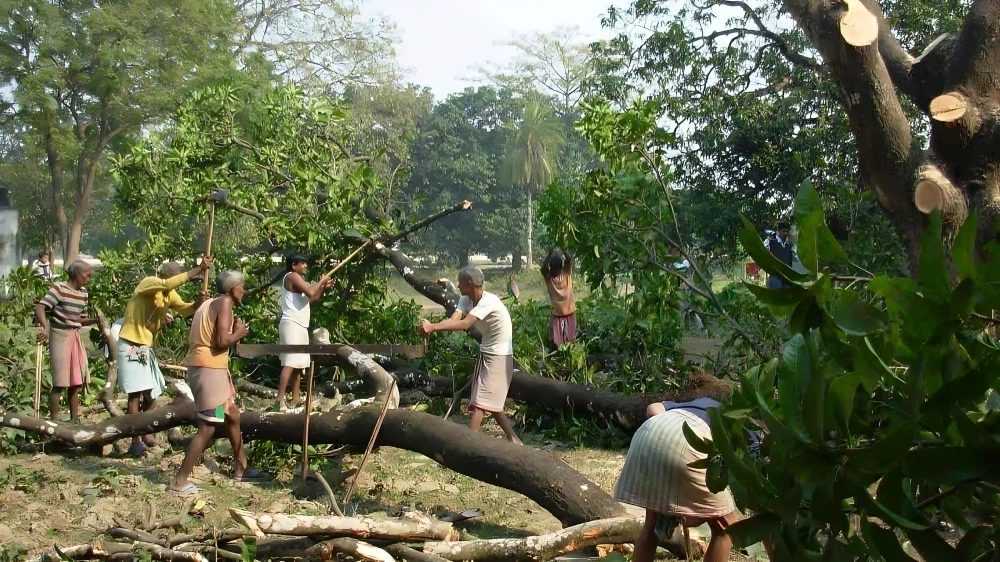

The rapid cutting of mango orchards in Multan is creating serious concerns for both the environment and the livelihoods of hundreds of workers who have depended on this sector for decades.
Known as the mango capital of Pakistan, Multan has long been famous for its vast orchards that provided jobs to thousands of people involved in plantation, irrigation, pruning, budding, and orchard maintenance. However, the increasing conversion of agricultural land into housing colonies and commercial projects is now changing the landscape of the city.
Local gardener Sajid, who has spent most of his life working in orchards near Nawabpur Road, said the number of mango farms in his area has dropped sharply over the years. He explained that many landowners are cutting down trees and selling their land for real estate development.
Sajid shared that gardening once offered him stable work throughout the year, but the shrinking number of orchards forced him to leave the profession and take a job as a school peon to support his family.
Another experienced gardener, Danish, said he had been working in orchard care since childhood and had developed specialized skills in nursery plantation and budding techniques. He added that the income from orchard work helped him complete his education and support his household.
Both workers highlighted that many gardeners are now unemployed because their expertise is deeply connected to orchard management and cannot easily be used in other professions.
Environmental experts have also warned that the loss of mango orchards could worsen climate change effects, reduce green cover, increase temperatures, and harm biodiversity in the region.
Affected workers are now urging the government to take action and introduce policies to protect mango orchards from unchecked urban expansion. They believe preserving these orchards is essential for environmental balance and for securing the livelihoods of skilled workers.