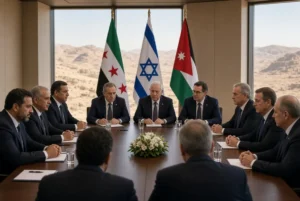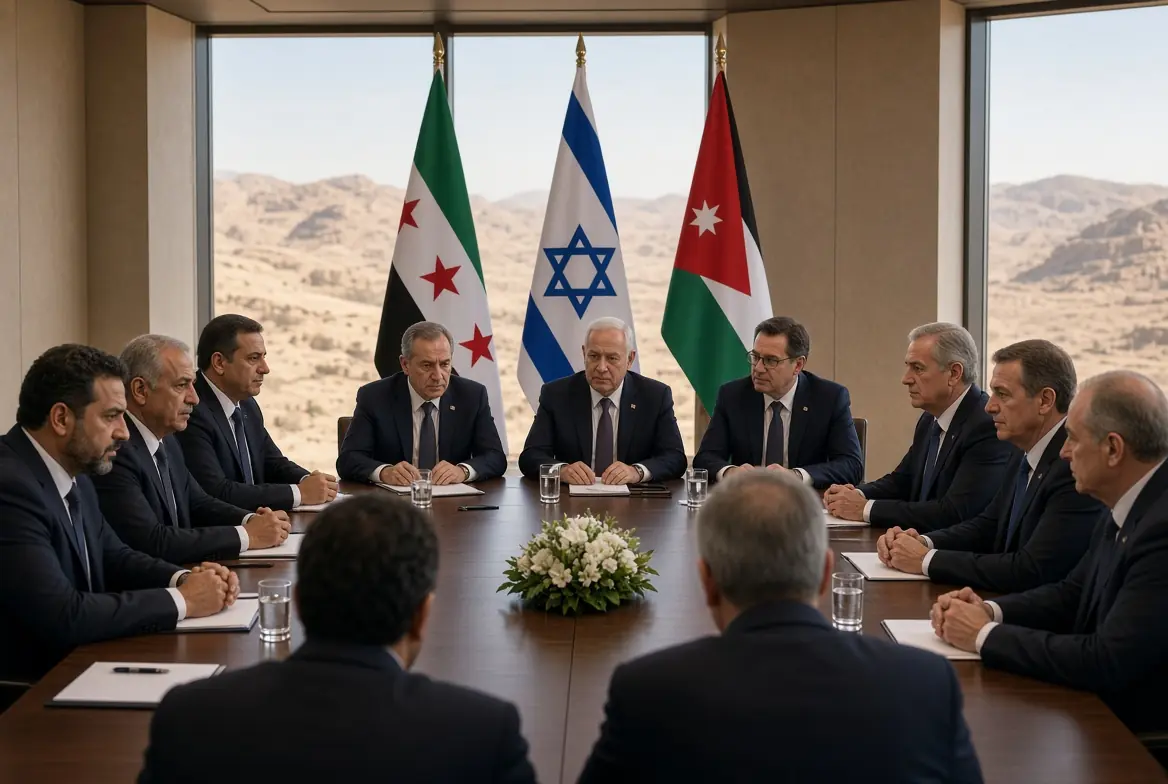

Syria and Israel held high level talks in Jordan on Sunday under US mediation as Damascus pressed for an end to Israeli strikes and a full withdrawal from recently advanced positions. The meeting aimed to cool rising tensions after repeated Israeli operations on Syrian soil.
According to Syria’s state news agency Sana, the discussions centered on practical steps to stop Israeli strikes, arrests, and targeted operations. Both sides also talked about restarting negotiations that could lead to a wider security deal. Officials further addressed ways to keep the rivalry between Israel and Turkey from spilling into Syrian territory.
Syrian Foreign Minister Asaad al-Shaibani had told Reuters a day earlier that security talks should resume soon, though deep distrust remains. Contact was cut after Israeli strikes on the Abu al-Duhur airbase last week, and earlier negotiations had paused when the Iran war began. Washington has spent more than a year trying to broker a lasting security arrangement between Israel and the government of President Ahmed al-Sharaa.
Shaibani noted that the two sides had nearly agreed on paper early this year, including security zones in southern Syria and a buffer area limited to United Nations forces. Yet Damascus still questions whether Israel will actually carry out any deal. At Sunday’s meeting, Syria made clear that its top priority is an Israeli pullback to positions held before the fall of Bashar al-Assad on December 8, 2024, and the full return of the 1974 disengagement agreement.
Damascus also rejected any limits on rebuilding its armed forces or choosing its own alliances. While Syria continues to call the Golan Heights Syrian land, it said talks on the area’s final status remain premature. Israel has launched multiple strikes on Syrian military sites since Assad’s departure, claiming they are needed for its own security. Syria denies any threat and demands an end to the raids and incursions.
The two countries have been technically at war since 1948. Israel seized the Golan Heights in the 1967 war and later annexed the territory, a step recognized by the United States but rejected by most of the world. With US mediation still active, both sides appear willing to keep talking, yet major gaps on withdrawal and trust continue to block real progress toward lasting calm.