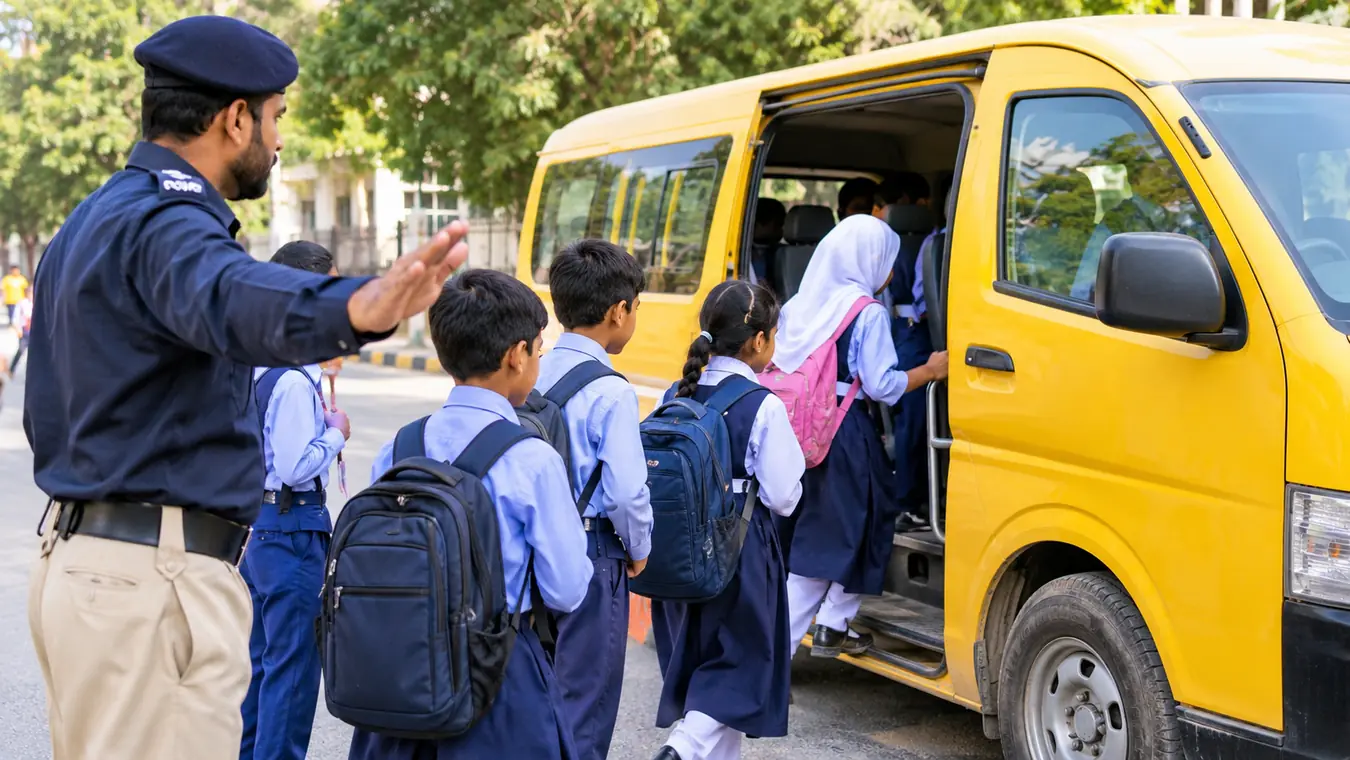

The Sindh Education Department has issued strict safety instructions to private schools across the province, warning that action will be taken against institutions that fail to follow student transportation rules. The directive aims to protect children from accidents and dangerous practices involving school vans and other vehicles used for daily transportation.
According to the department, CNG and LPG gas cylinders are strictly prohibited in all vehicles transporting students. The restriction applies to vehicles arranged by schools as well as those managed by parents. Authorities have highlighted the potential dangers associated with using gas cylinders in vehicles carrying children.
The department has also banned the practice of supplying petrol directly to vehicle engines through bottles, cans, or other temporary containers. Schools and vehicle operators must use designated fuel tanks instead of unsafe methods that could increase the risk of fire or other accidents.
Another important instruction concerns the seating capacity of school vans. Transport operators must not carry more students than the number of seats officially authorised for their vehicles. Children are also prohibited from travelling while standing on footboards, hanging outside vehicles, or occupying other unsafe positions.
The education authorities have further made it compulsory for all vehicles used for student transportation to possess valid fitness certificates issued by the Sindh Transport Department. A copy of the certificate must remain inside each vehicle so that officials can inspect it whenever required.
The latest instructions were issued following directions from the provincial education minister. The department has asked private educational institutions to ensure that their transportation arrangements comply with all applicable safety regulations.
Authorities have warned that schools failing to follow these requirements will face serious consequences under the relevant rules. School administrations may also be held responsible for negligence involving student transportation.
The move highlights the importance of school transport safety and the responsibility of educational institutions to provide children with secure transportation facilities. Parents and school managements are expected to ensure that vehicles meet the required safety standards.