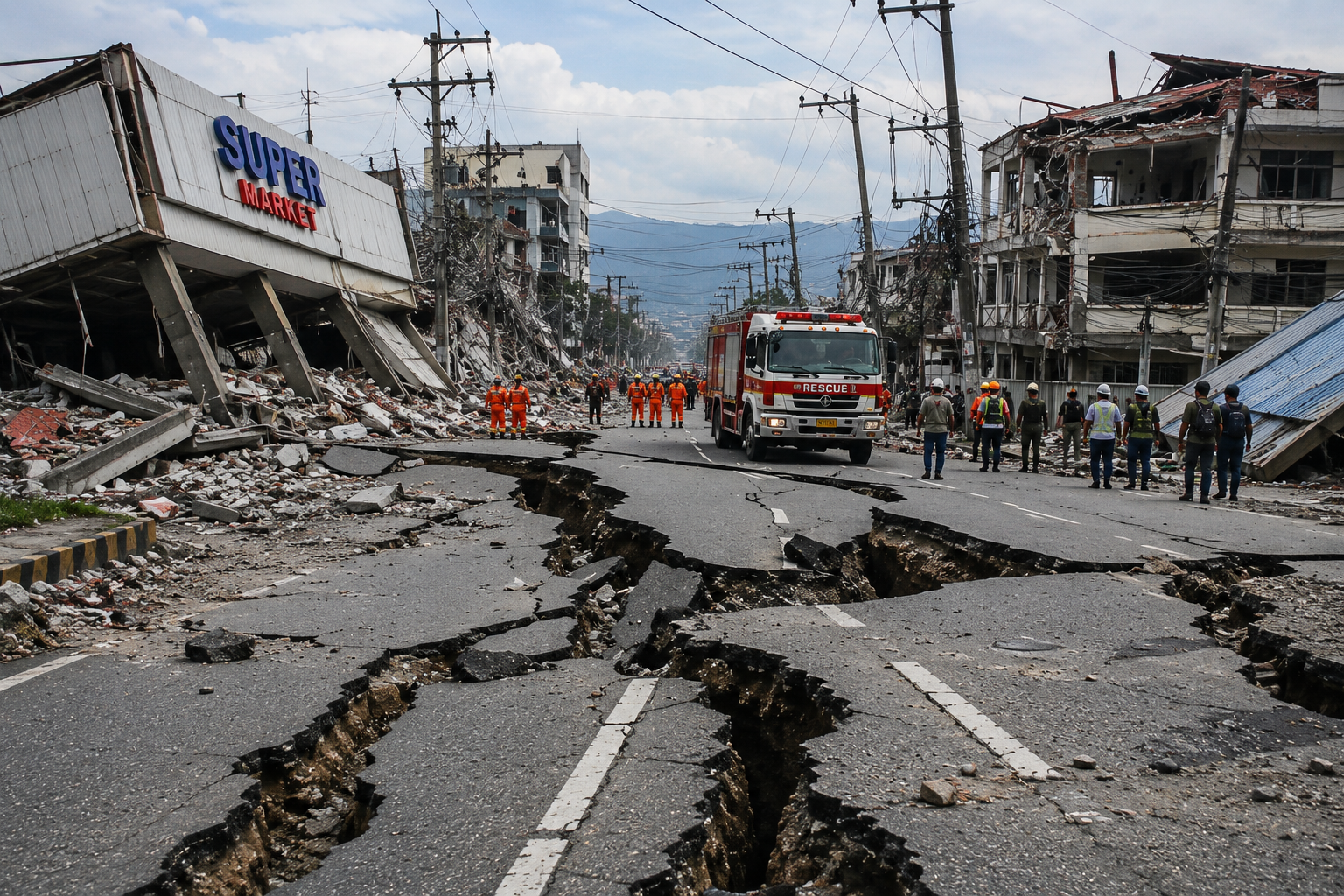

The death toll from the devastating 7.8 magnitude earthquake that struck the southern Philippines has risen to 46, as emergency teams continue search and recovery operations across the affected region. Authorities have also reported an increase in the number of missing persons, raising concerns that the casualty count could climb further in the coming days.
The powerful earthquake struck off the coast of Mindanao on Monday, causing widespread destruction across several provinces. The tremor triggered landslides, damaged roads, collapsed buildings, and prompted tsunami warnings throughout parts of the southern island. Rescue workers have been racing against time to locate survivors trapped beneath debris while dealing with the ongoing threat of aftershocks.
One of the most challenging rescue operations took place at a collapsed supermarket in General Santos City, where emergency teams spent hours searching for missing workers. Rescuers initially detected signs that suggested a possible survivor might still be trapped beneath the rubble. However, when teams finally reached the location, they discovered the body of an employee pinned under fallen concrete and steel structures.
Officials confirmed that many of the fatalities resulted from landslides and building collapses, particularly in Davao Occidental province, one of the hardest-hit areas. Several communities remain isolated due to damaged infrastructure, making rescue and relief operations more difficult.
The national disaster management agency has reported that the number of missing individuals has increased significantly, highlighting the scale of the disaster. Emergency responders, military personnel, and local volunteers continue to search affected areas while providing assistance to displaced residents.
Authorities have urged citizens to remain vigilant as aftershocks continue to be recorded across the region. Temporary shelters have been established for families who lost their homes, while engineers assess the safety of damaged buildings and public infrastructure.
The earthquake is among the strongest to hit the Philippines in recent years and serves as another reminder of the country’s vulnerability to natural disasters due to its location along the Pacific Ring of Fire. Recovery efforts are expected to continue for weeks as affected communities begin rebuilding their lives.