
Market hopes for calm in the Iran conflict are fading fast as fresh attacks on tankers turn the Strait of Hormuz into a dangerous maritime war zone. Oil supplies remain under serious threat while dozens of vessels continue to burn or suffer damage in the vital waterway that normally carries about one fifth of the world’s crude and liquefied natural gas.
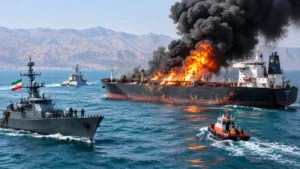
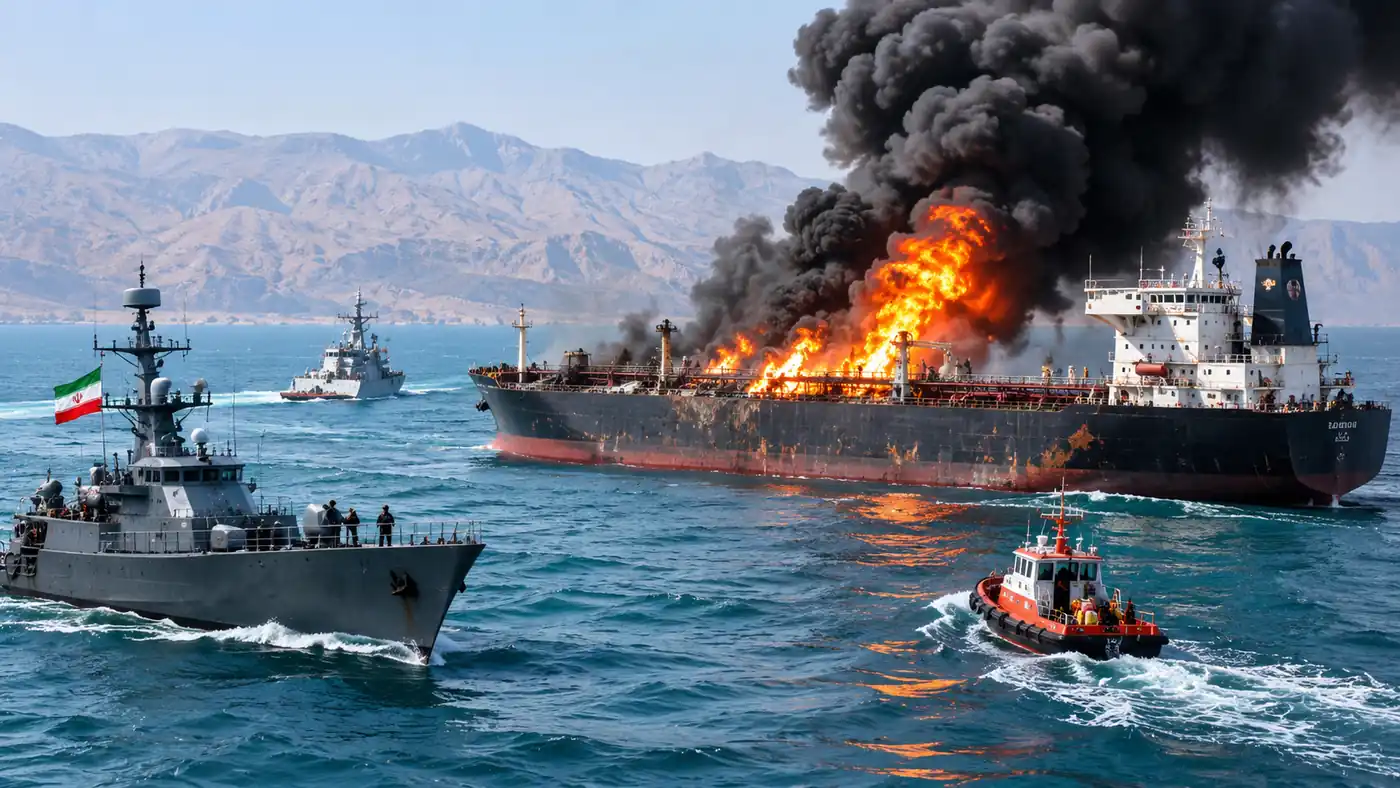
October saw 37 ships attacked, the highest monthly total since the war began, according to data from the Washington Institute for Near East Policy. The pace has not slowed in November. On Sunday three tankers were targeted for using what Iran called unauthorised routes through the strait. Videos verified by Reuters showed the Singapore-flagged Navig8 Messi on fire off the coast of Oman, with thick black smoke rising into the sky. Iranian state media said the Islamic Revolutionary Guard Corps Navy carried out the strikes.
US forces are also enforcing a naval blockade of Iranian ports. In the latest incident a military aircraft fired on and disabled a St Kitts-flagged cargo ship that had visited an Iranian port and then tried to leave regional waters. The attacks have created growing environmental problems. Oil from damaged vessels has reached Omani shores, and satellite images show pollution spreading off the coasts of Oman and the United Arab Emirates.
Energy infrastructure further inland has not been spared. Iranian forces and their allies struck targets that included a Saudi Aramco office building in Riyadh. Video confirmed limited damage from falling debris after a missile attack claimed by Yemen’s Houthis, though no injuries were reported.
The human and commercial cost keeps rising. The International Maritime Organisation has recorded 133 confirmed incidents involving commercial vessels as of November 10, with 25 seafarers killed since the conflict started. Thousands of crew members remain trapped or at risk inside the Persian Gulf. On Tuesday a tanker was hit by an unidentified projectile near Oman’s Lima, though its crew escaped unharmed. Separately, Iran’s Revolutionary Guards said two more tankers caught fire after striking naval mines on an unauthorised route.
With ships still ablaze and oil flows disrupted, the Strait of Hormuz remains one of the most dangerous stretches of water in the world. Global energy markets are watching every new attack closely as the risk of wider supply shortages continues to grow.