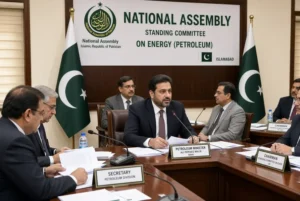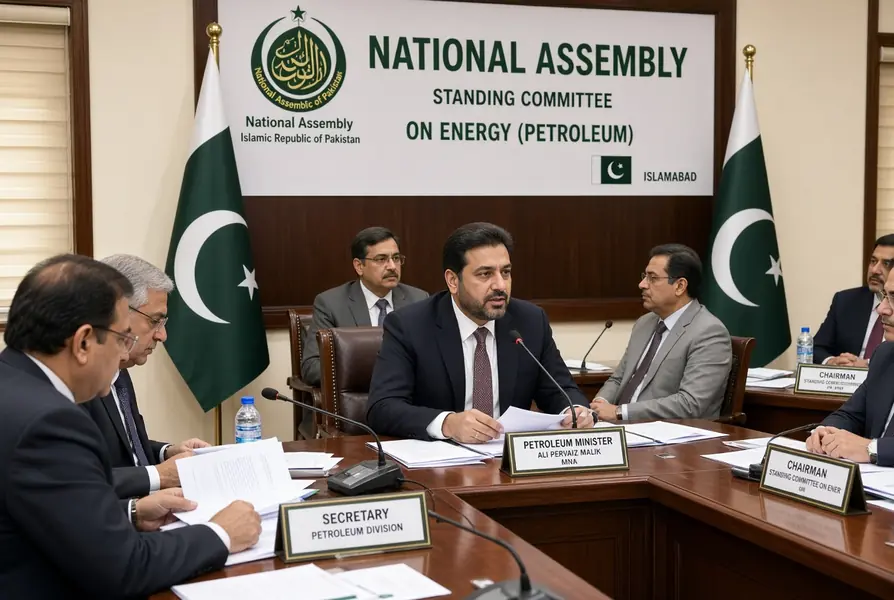

Petroleum Minister Ali Pervaiz Malik has made it clear that the government cannot alter the petroleum levy targets set in the budget without first consulting its multilateral partners. He shared this position during a meeting of the National Assembly Standing Committee on Petroleum held in Islamabad.
The minister explained that the petroleum levy targets form part of the official budget allocations. Any change would require formal discussion and approval from the international financial partners supporting Pakistan’s economic programme. He stressed that the government remains bound by these commitments.
Committee Chairman Mustafa Mahmood highlighted that diesel availability holds greater importance than petrol. He noted that agriculture and the transport of goods across the country depend heavily on diesel. Without a steady supply of this fuel, both farming and commercial activity would face serious disruption.
Lawmaker Saif-ul-Mulook Khokhar raised strong concerns about the high rate of the petroleum levy. He called it a very heavy burden on ordinary citizens and described it as an easy method for the government to collect revenue. The minister acknowledged the difficulties faced by the public and pointed to regional tensions as a major reason for the current high prices of petrol, diesel and crude oil.
Ali Pervaiz Malik said the world has never seen diesel at such expensive levels. He informed the committee that the government has improved the fuel supply chain and taken steps to stop profiteering. Around 70 percent of diesel is now refined inside Pakistan. PARCO is running at full capacity, while Pakistan Refinery and National Refinery are operating at 84 percent and 85 percent respectively.
The minister added that four refineries have already signed agreements to produce Euro V compliant fuel. Discussions continue with another refinery. He also confirmed that the Oil and Gas Regulatory Authority determines petroleum product prices and that all relevant data remains available on the OGRA website.
Regarding gas supplies, the minister said the government is working on a daily winter plan and has managed to maintain gas availability for consumers during meal times despite challenging conditions. The fuel supply chain is also being fully digitalised to improve transparency and efficiency.
The meeting reflected the ongoing challenges of balancing revenue needs with public relief while managing international commitments and regional supply disruptions.