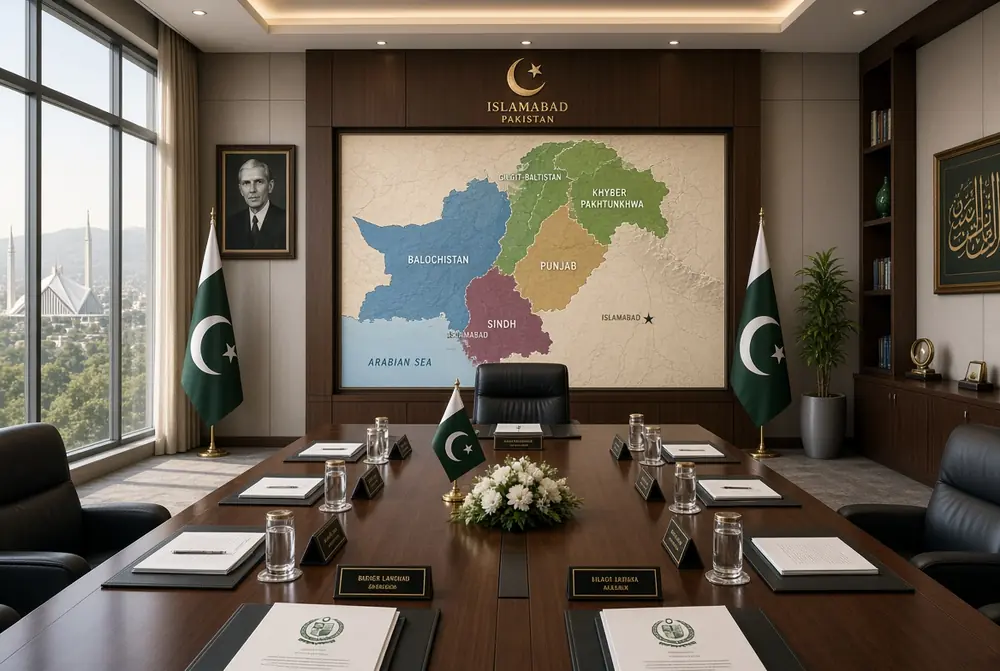

Planning Minister Ahsan Iqbal has suggested creating between 12 and 15 new provinces in Pakistan. He has urged Prime Minister Shehbaz Sharif to form a special committee that can begin a serious national debate on the country’s administrative structure.
Speaking to the media, Iqbal said the existing four provinces have become too centralised over the years. This centralisation, he argued, has hurt the delivery of basic services such as health and education. He proposed dividing each of the current provinces into three so that governance can move closer to the people. At the same time, he stressed that any change must follow an equitable formula so that representation in the Senate does not shift too sharply in one direction.
Iqbal is waiting for the prime minister to return from Kyrgyzstan before formally raising the matter. He made it clear that political consensus is essential and that no step can be taken without broad agreement among all stakeholders.
Other officials, however, say no formal decision has been taken yet. Rana Ihsaan Afzal Khan, coordinator to the prime minister, confirmed that no committee has been formed at the federal level and that the issue is not under official discussion at present. Even if new provinces are eventually created, he noted, they would only come into effect for the next election cycle.
The idea of creating additional provinces is not new. It has resurfaced several times over the decades, with recent comments from Interior Minister Mohsin Naqvi and the ISPR director general adding fresh momentum. Supporters believe smaller units can improve governance and accountability. Critics, especially in Sindh, strongly oppose any division of their province and have already started public campaigns against the idea.
Creating new provinces would also bring significant financial and administrative costs. Each new unit would need its own assembly, high court, bureaucracy and infrastructure at a time when Pakistan’s fiscal space remains limited. Questions over the division of water, natural resources and federal funds would further complicate the process.
For now, the proposal has restarted an important conversation about how Pakistan should organise its governance for the future.