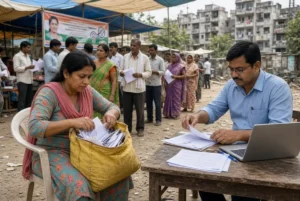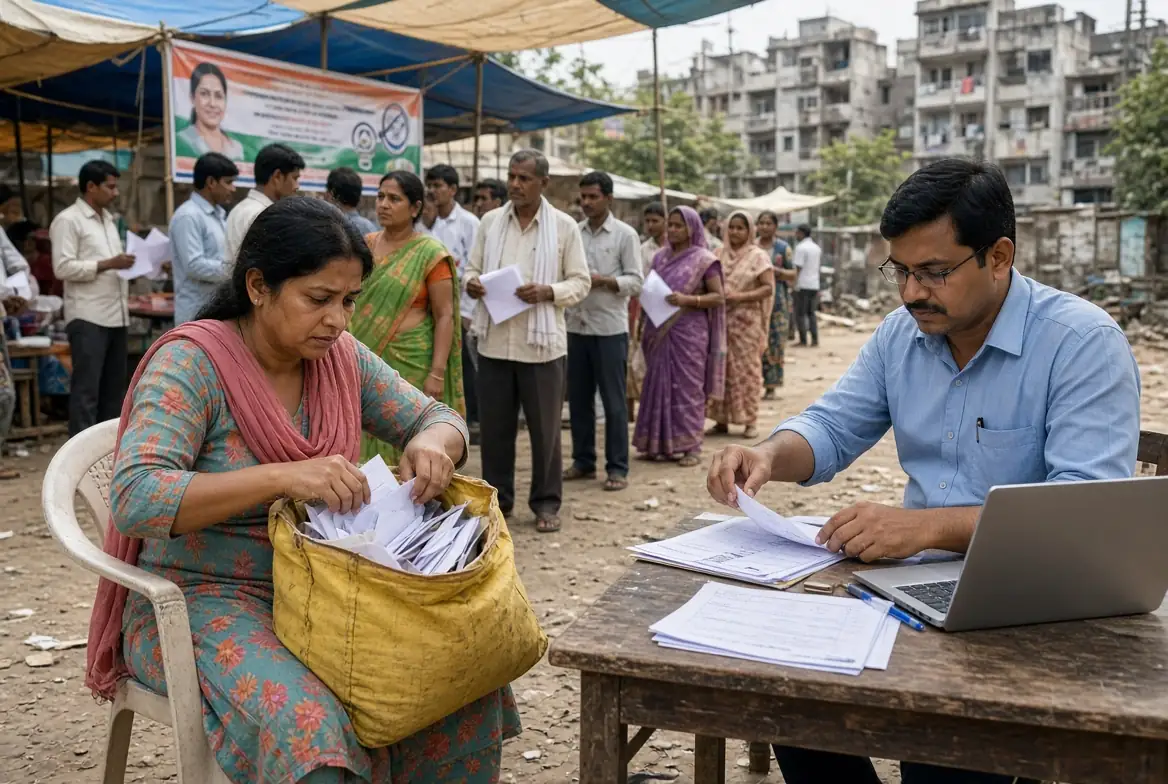

Laddli Khatun sat at a verification camp in New Delhi, pulling papers one by one from a yellow bag. She hoped at least one document would keep her name on India’s electoral rolls. Across the country the Election Commission of India is carrying out a Special Intensive Revision of voter lists. Millions of people who have voted for years now face fresh checks.
More than 133 million names have already been removed, including 28 million listed as dead. The new process asks voters to link themselves or their parents and grandparents to the 2002-03 rolls. Laddli Khatun, 39, was too young then. Her parents died when she was a baby and left no papers. “They were poor and unlettered,” she said. Many women, minorities and the poorest face the same problem because they struggle to produce old records.
Former election commissioner Ashok Lavasa noted that earlier the Commission enrolled people through door-to-door visits. Now the burden of proof has shifted onto citizens. Surajmukhi, made homeless after her slum was demolished, was marked “untraceable.” She has voted several times yet cannot connect herself to the 2002 lists because her parents are long gone.
Automated systems also flagged millions for “logical discrepancies” such as mismatched names or age gaps. Independent studies show Muslims appear in higher numbers among those flagged. In Delhi they formed about 20 percent of the marked voters while making up only 13.6 percent of the electorate. Street cleaner Shahida received a notice because her mother was only fifteen years older than her. National rugby player Aslam was flagged because six people were linked to his late father.
The BJP supports the revision and has long claimed that undocumented migrants entered the rolls. Opposition parties and protesters in New Delhi say the exercise risks mass disenfranchisement and demand the chief election commissioner’s resignation. The Commission insists the process follows the law. For people like Laddli Khatun the fear remains: “I have given every document I have. What if they still ask us to leave the country?”