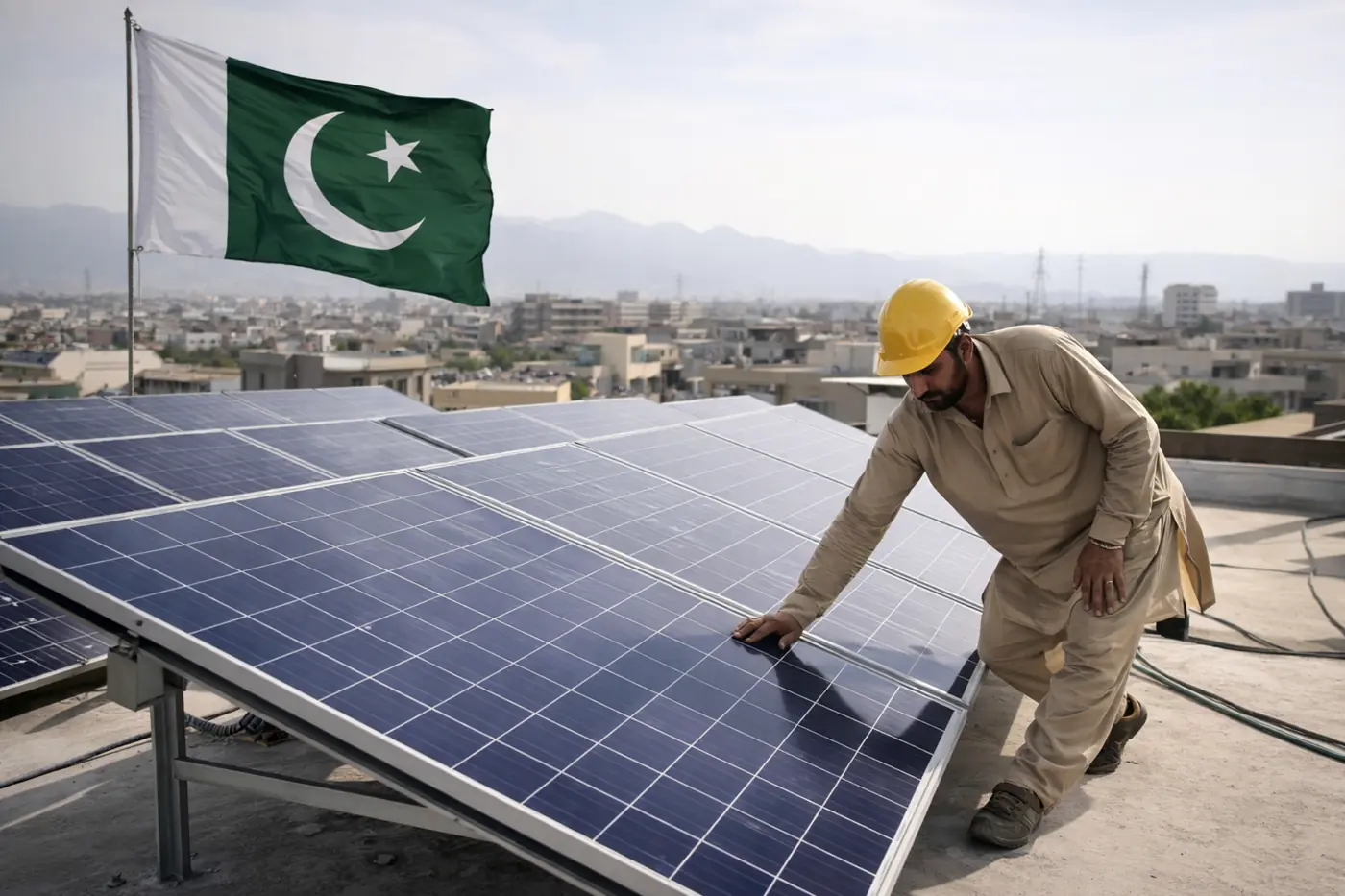

Pakistan’s rapid shift towards solar energy is emerging as a major shield against global energy shocks, especially amid rising tensions in the Middle East. According to recent analysis, the country’s growing reliance on solar power has already helped avoid more than 12 billion dollars in fuel imports, significantly reducing its exposure to volatile oil and gas markets.
The ongoing conflict in the region, particularly disruptions around the Strait of Hormuz, has caused global fuel prices to surge. Since Pakistan depends heavily on imported oil, liquefied natural gas, and petroleum products, such disruptions typically put immense pressure on the national economy. However, the recent Pakistan Solar Boom has played a crucial role in softening this impact.
Experts say that the expansion of solar capacity has reduced the country’s dependence on fossil fuels. Between 2022 and 2024, Pakistan’s fossil fuel imports dropped by 40 percent, while solar panel imports surged dramatically, reaching over 51 gigawatts by early 2026. Installed solar capacity alone is estimated to have reached around 33 gigawatts, reflecting one of the fastest clean energy transitions in the world.
This shift has also helped stabilize the country’s electricity demand, reducing pressure on the national grid and minimizing the risk of load shedding during peak hours. Analysts note that without the growth of solar energy, Pakistan would have faced significantly higher fuel costs and deeper economic strain during the current crisis.
The government has also introduced several austerity measures, including fuel conservation strategies, a four day work week, and increased fuel prices to manage the situation. However, the role of solar energy remains central in reducing long term energy vulnerability.
Interestingly, the rise in solar adoption has largely been driven by economic factors, not subsidies. High electricity tariffs and rising fuel costs encouraged households, businesses, and farmers to invest in solar panels independently.
Looking ahead, experts estimate that the Pakistan Solar Boom could save an additional 6.3 billion dollars by the end of 2026, further strengthening the country’s resilience against global energy disruptions. This transition is not only reducing costs but also reshaping Pakistan’s energy future toward sustainability and independence.