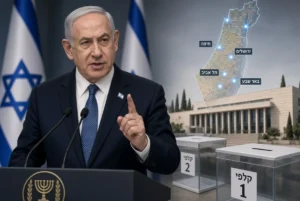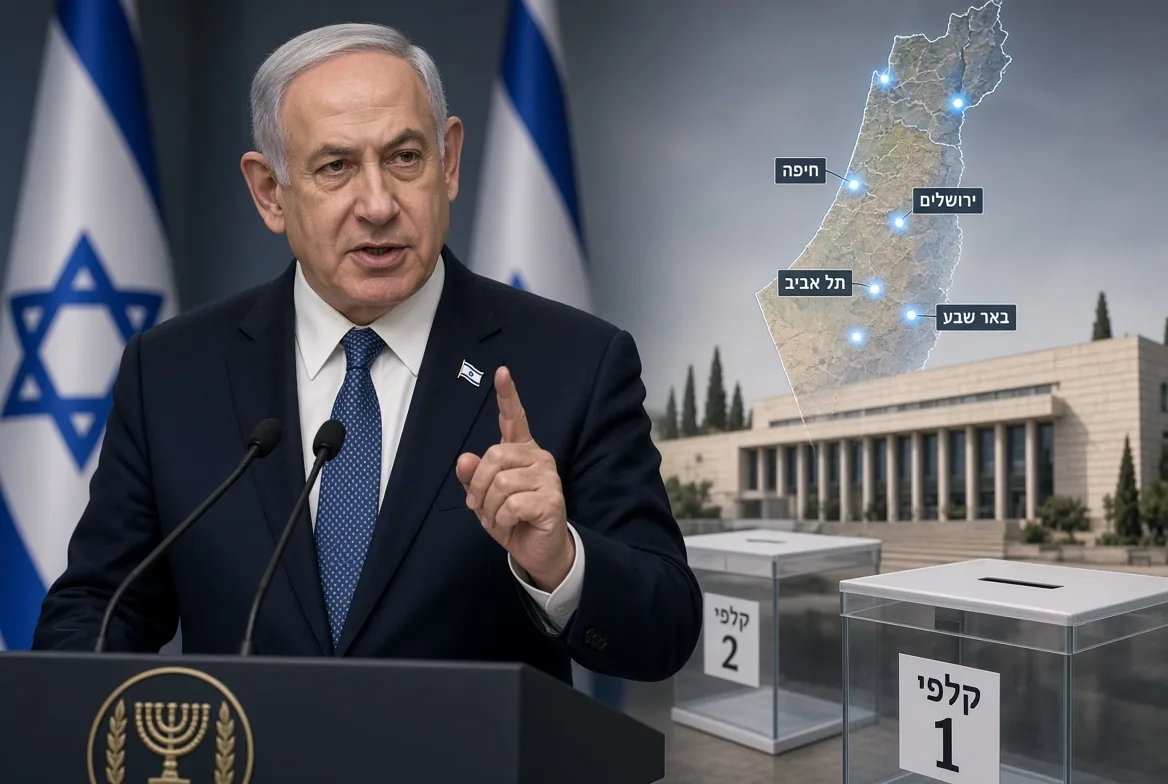

Israel’s Central Elections Committee has firmly rejected claims of electoral fraud promoted by Prime Minister Benjamin Netanyahu. The allegations targeted Arab parties that could prove decisive in deciding who forms the next government after the October 27 vote.
Electoral authorities audited 9,069 polling stations after receiving complaints and declared the published results accurately reflect the will of the voters. “All complaints submitted by political factions have been reviewed and there were no findings indicating harm to the integrity of the election,” the committee stated.
President Isaac Herzog will officially receive the results at noon and begin consultations with political parties. Neither Netanyahu nor his main rival, former military chief Gadi Eisenkot, holds the 61 seats needed for a majority in the 120-member parliament. Netanyahu’s bloc currently stands at 53 seats while Eisenkot’s camp has 48.
Netanyahu repeatedly alleged fraud by Arab-majority parties, citing arrests of people carrying cash envelopes on election day and later claiming lawmakers received money from Qatar. Attorney General Gali Baharav-Miara refused to open investigations without evidence, prompting Likud to accuse her of obstructing probes into foreign interference. Eisenkot condemned the accusations as an attack on democracy.
Arab parties increased their seats to 19, giving them potential influence. Some opposition figures remain reluctant to rely on non-Jewish lawmakers’ support. Netanyahu has called for a broad national government under his leadership, while Eisenkot seeks to unite centrists and end Netanyahu’s long polarising rule.
Former prime minister Yair Lapid noted that recent US midterm results and security service actions remove any chance of a unity government led by Netanyahu. Herzog, whose role is largely ceremonial yet decisive, has spoken of encouraging fresh thinking and avoiding another election. Israel has already endured multiple deadlocks and five elections between 2019 and 2022.
Once tasked, a candidate receives 28 days to form a government, with a possible 14-day extension. Failure could lead to another round of voting. Netanyahu, Israel’s longest-serving prime minister, faces ongoing corruption charges and the risk of losing immunity if he leaves office. Arab party leader Yousef Jabareen urged the opposition to accept political reality and work together to remove Netanyahu from power.