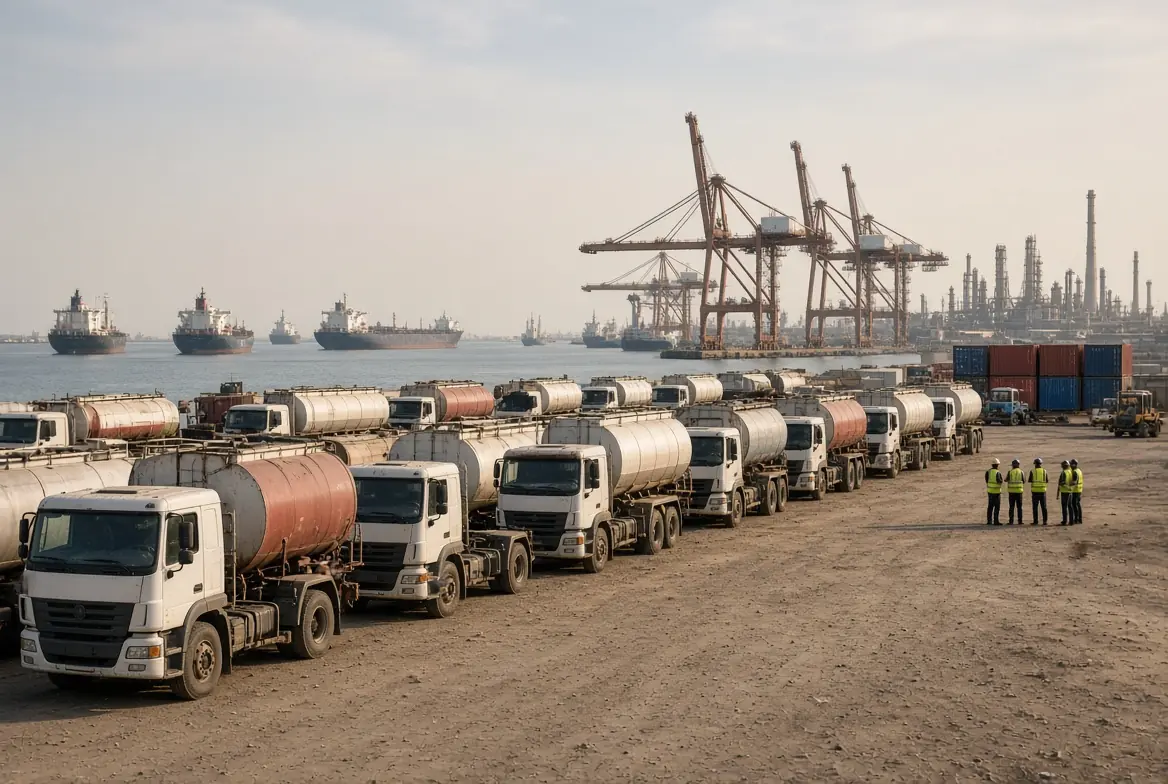

In the southern Iraqi city of Basra, life has slowed to a near standstill. Maintenance contractor Fawzi spends most of his days waiting for work that rarely arrives. The Middle East conflict has choked the once busy oil hub, leaving fuel trucks empty and workers facing pay cuts or job losses.
Basra has long powered Iraq’s economy. Almost 90 percent of the country’s foreign revenue comes from crude oil exports that normally sail through the Strait of Hormuz. When Iran tightened its blockade, storage tanks filled quickly and production had to be cut. Before the fighting began in late February, Iraq produced about four million barrels a day and exported 3.4 million. Now the numbers have fallen sharply.
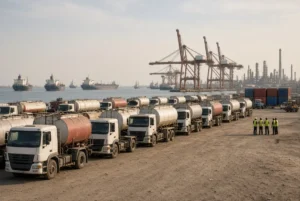
Fawzi’s company first reduced salaries by 20 percent, then by half, and finally laid off dozens of staff. He reports for duty only 15 days a month. Parking lots around the city overflow with idle oil trucks. Some sit empty; others wait weeks for ships that never come.
Umm Qasr, Iraq’s main Gulf port, looks almost deserted. Only a handful of vessels dock there, including an Iranian flagged cargo ship. Three new wharves stand empty, their cranes silent. Captain Salem Hussein, who oversees the northern sector, said real work will resume only when Hormuz reopens. State port workers have already lost monthly incentives tied to cargo volume.
The pain spreads beyond the docks. Electronics seller Zaid Hadi watched sales drop by half. Customers hesitate to spend, worried about delayed salaries and harder times ahead. Another contractor named Amir saw his pay cut by 40 percent. “In Basra we depend on the port and the oil, and now both have come to a halt,” he said.
Iraq has tried alternative routes through Syria and Turkey, yet they move only a fraction of the usual volume. Exports through Hormuz recovered slightly in early September, but the oil sold at discounted prices. Average shipments this month stand at 2.6 million barrels a day. Foreign currency reserves have dropped by 20 billion dollars, forcing the government to borrow internally just to pay civil servants.
Economic expert Ali al Mawlawi notes that the partial rebound has bought a little time. Still, he warns that Iraq needs a lasting resolution to the conflict before the end of the year if it hopes to keep salaries flowing and the economy from sliding further.