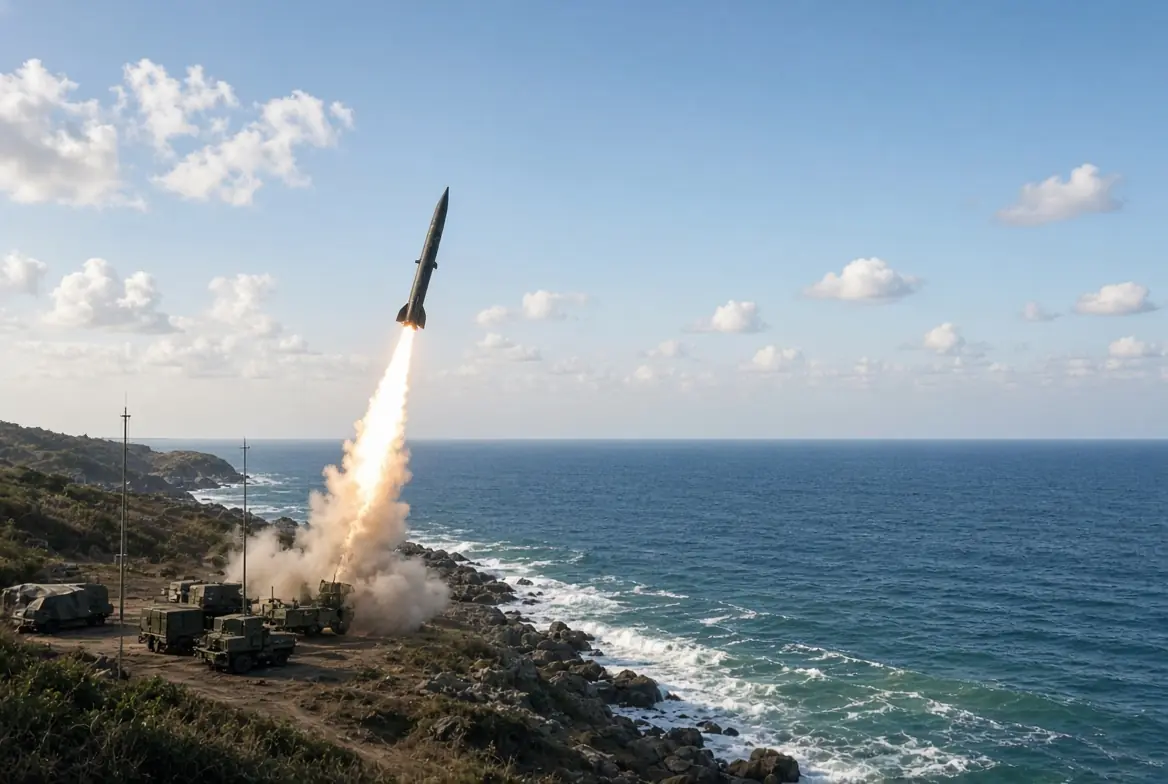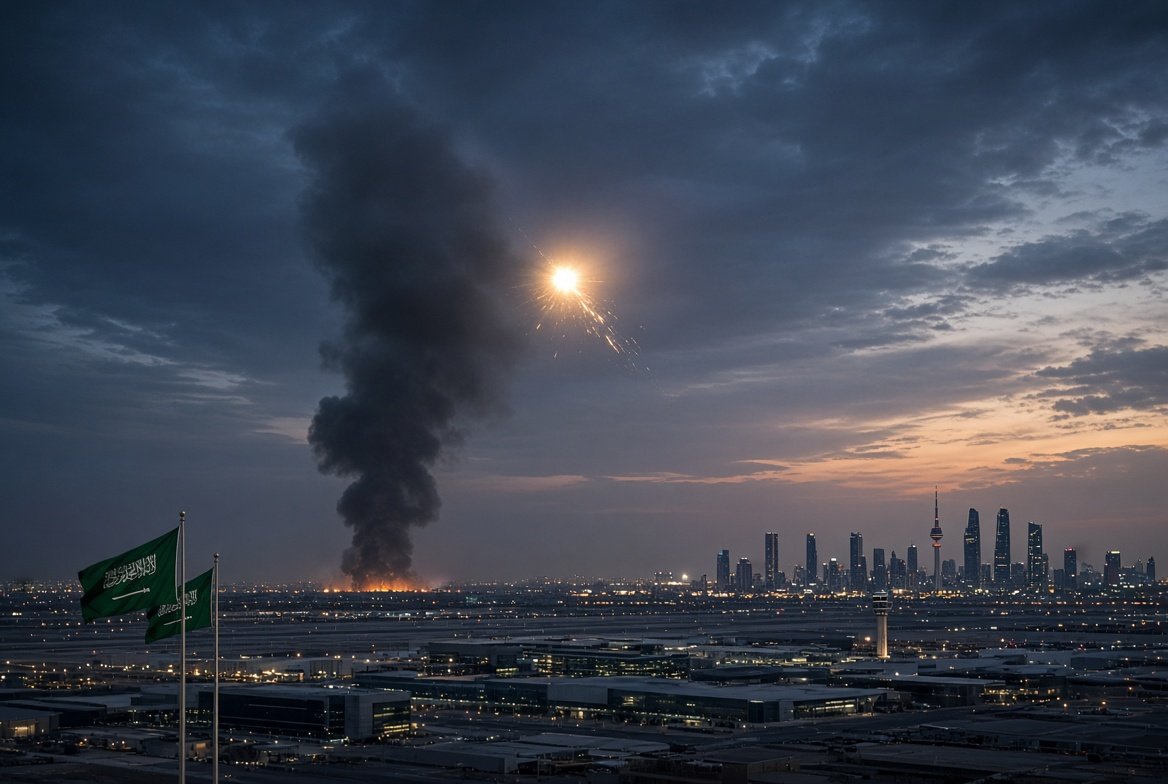

Saudi air defences successfully intercepted a ballistic missile fired toward the capital early on Saturday. Coalition spokesman Turki al-Malki confirmed that the projectile launched by Yemen’s Houthi forces was destroyed before it could reach Riyadh.
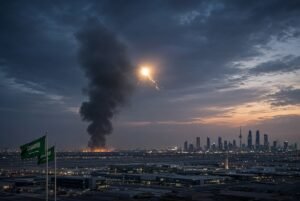
A fire later broke out at a fuel depot near King Khalid International Airport. Firefighters quickly brought the blaze under control on a tank marked with the Aramco logo. Black smoke rose above the airport area and was visible in videos verified by journalists.
The Houthis claimed responsibility for two separate operations. Their military spokesman said the group used ballistic missiles, cruise missiles and drones. One operation targeted sensitive sites inside Riyadh. The second aimed at Aramco facilities in the Red Sea city of Yanbu.
Saudi authorities said the same night attacks against other locations including Bisha, Taif and Farasan were also stopped by air defence systems. Residents in the capital reported hearing explosions and feeling windows shake after an air raid alert was issued just before 3 a.m. Flight tracking data showed temporary major disruption at the airport before operations returned to normal.
This incident marks the first direct threat to the Saudi capital since the latest surge in fighting in Yemen. In recent weeks the Houthis have advanced rapidly along the Red Sea coast, taking control of key territory and increasing pressure on the Saudi-backed government.
Saudi Arabia has answered with repeated airstrikes, yet the group continues to launch missiles and drones. The United States issued a regional security alert warning that the conflict could escalate quickly. Washington also approved a large sale of F-35 fighter jets to the kingdom to strengthen its defences.
Analysts note that both sides appear locked in a cycle of escalation even though many believe only negotiations can end the fighting. The renewed clashes have already forced more than 112,000 people from their homes inside Yemen.
The early morning events in Riyadh have raised fresh concerns about regional stability and the safety of civilian infrastructure. Saudi officials continue to stress that their air defences remain ready to protect the capital and other cities from further attacks.