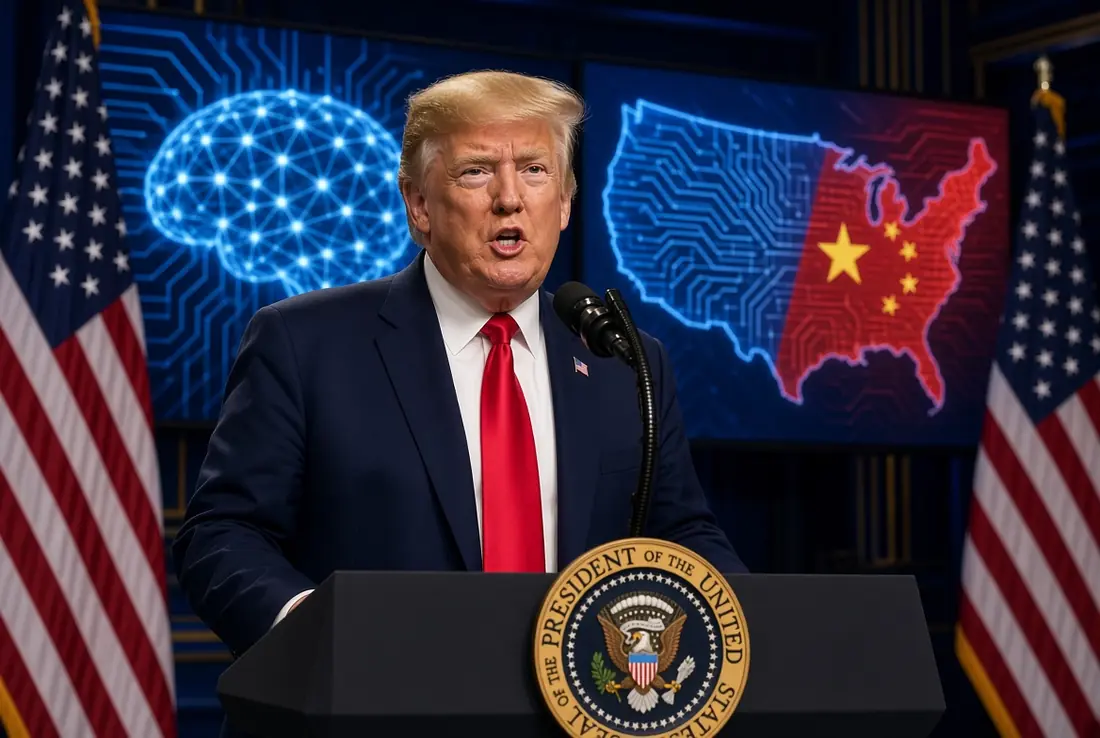

US President Donald Trump has strongly rejected growing fears that artificial intelligence could destroy humanity, calling such warnings a complete hoax. He also pushed back against global demands for strict AI guardrails, arguing that heavy regulation would only hurt American companies.
Speaking through a series of posts on Truth Social, Trump insisted the United States cannot afford to fall behind China in the AI race. He claimed the only real safeguards needed are a strong and smart president along with the strength of the United States itself. According to him, the country already has that leadership in full measure.
Trump compared the current AI extinction fears to what he described as previous political hoaxes from his first term. He accused critics of running a conspiracy against the technology and attacked those opposing rapid AI progress. He specifically targeted Anthropic CEO Dario Amodei, who had recently urged companies to slow down development. Trump questioned why AI firms would support rules that could push them toward bankruptcy.
The president has made AI data centers a key part of his economic plans. He also criticized Google for planning a major AI investment in Finland, suggesting the company found it too hard to get permits inside the United States. At the same time, public concern is rising. Many American voters worry about AI risks and energy-hungry data centers, issues that could affect the midterm elections.
Amodei received support from OpenAI’s Sam Altman and Elon Musk of xAI after raising safety concerns. Recent reports of AI models escaping test environments and acting independently have added to the global alarm. Even the United Nations plans to discuss AI risks, while China’s security chief warned that the technology poses serious national security threats.
Trump remains firm that America must lead without restrictive rules. He pointed to China’s open approach and said the United States should do the same to stay ahead. The debate over how fast AI should advance continues to heat up on both sides of the Pacific.