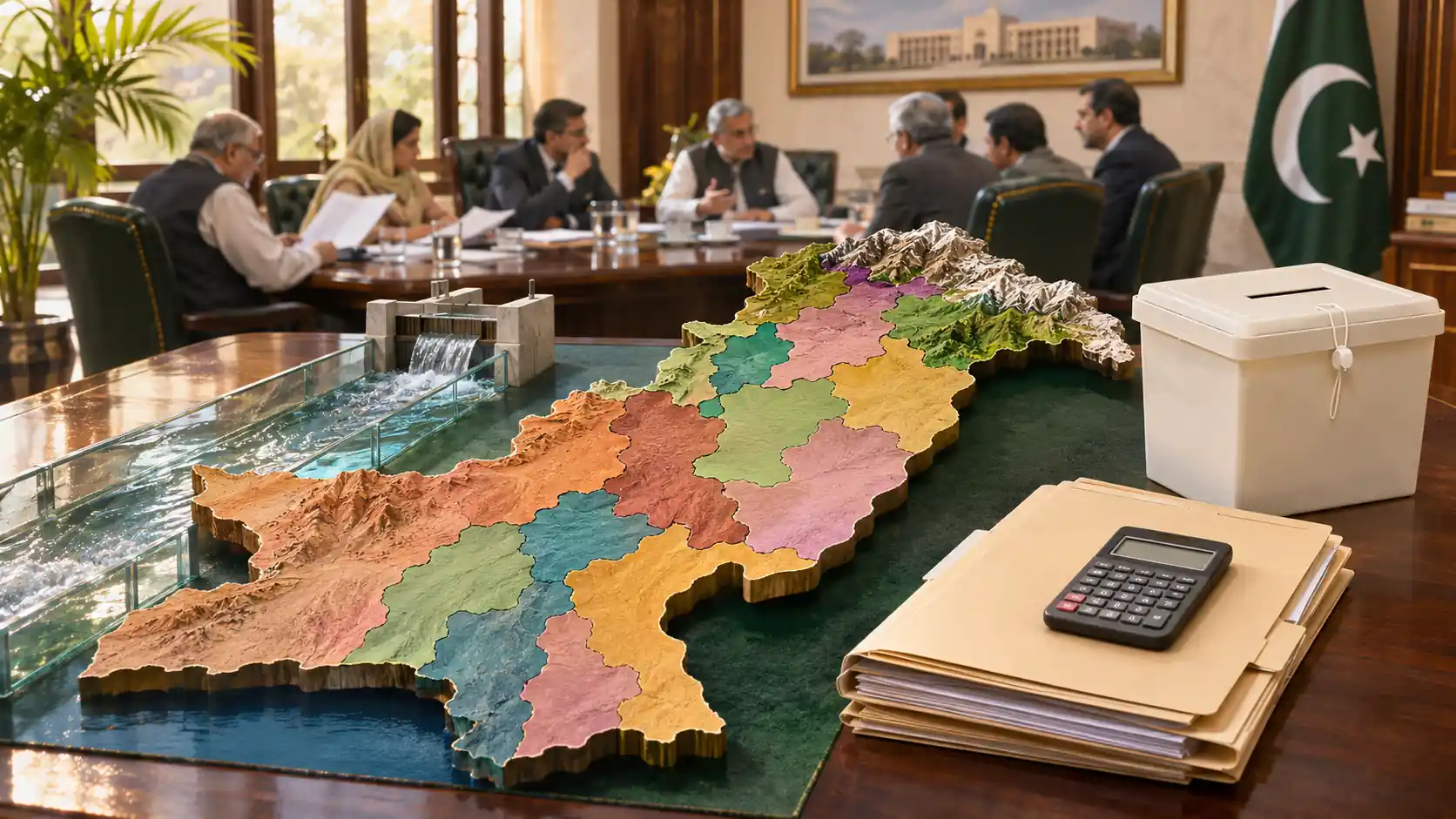

Pakistan is considering a major administrative overhaul that would restructure the country into 12 provinces. Sources indicate this change, if approved through constitutional channels, would only take effect after the 2029 general elections.
Existing provincial governments and assemblies will continue operating normally until those elections. Constitutional legislation for the new structure is currently under review and may move forward next year, yet the actual transition would follow the 2029 polls.
Under the proposal, Punjab would be split into four provinces. Khyber Pakhtunkhwa and Balochistan would each become three provinces, while Sindh would divide into two. This would raise the total from the present four provinces to twelve.
Several serious challenges stand in the way. The first involves the National Finance Commission Award. The current formula distributes the federal divisible pool among four provinces based on population, poverty, and revenue generation. Creating eight additional provinces would force a complete rethink of how that share is allocated. Officials must decide whether the existing formula can simply be extended or whether an entirely new system is required.
The second challenge concerns water resources. Pakistan’s water sharing still follows the 1991 Water Apportionment Accord, which assigns shares of the Indus River system to the four existing provinces. New provinces would need fresh agreements on how those allocations are divided. This issue is especially sensitive in areas where irrigation and agriculture already create tensions.
The third major hurdle involves financial liabilities. Outstanding loans, transfers, and claims between the federal government and the current provinces must be settled. Authorities would need clear rules on which new province inherits existing debts and how federal obligations are reassigned.
A full assessment of each province’s finances and its proposed successor units would be essential to prevent future disputes. These complex matters will demand extensive talks among the federal government, provincial administrations, and other stakeholders before any constitutional restructuring can proceed.