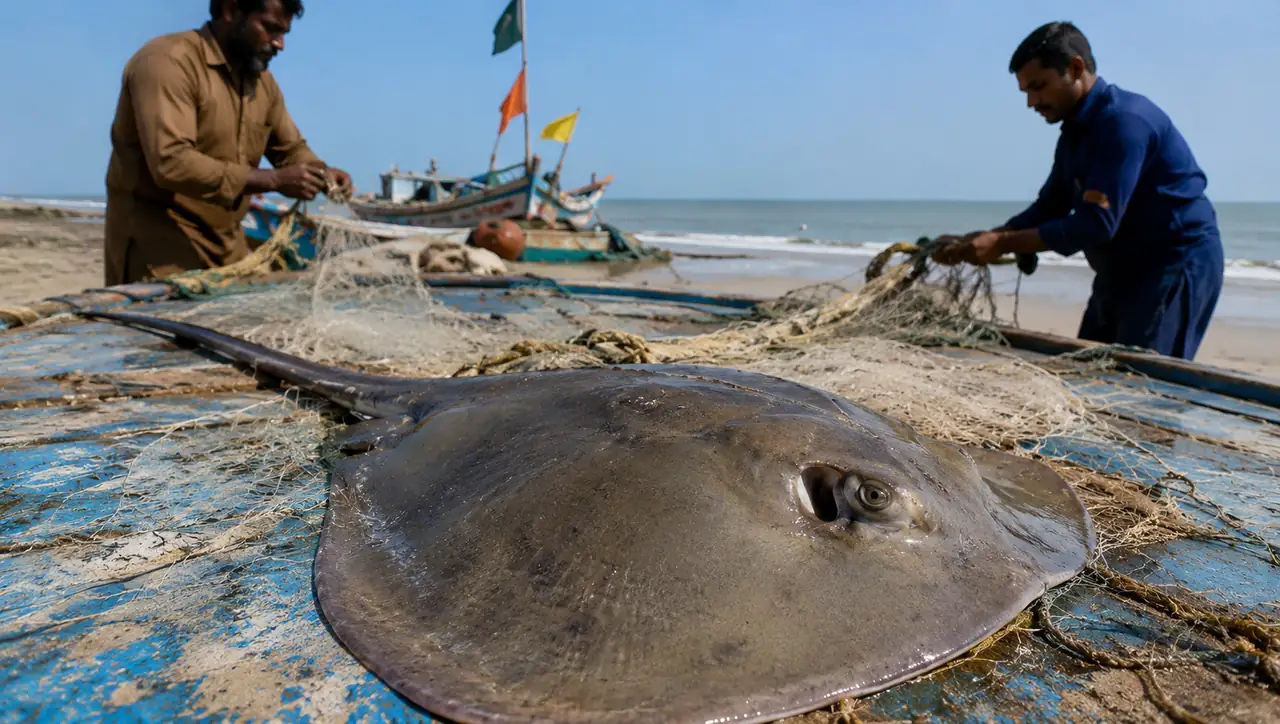

Large-scale stingray hunting along the Karachi coastline has raised concerns among marine experts, who fear continued fishing could put local stingray populations under pressure, particularly during the breeding season.
Locally known as pittan, stingrays are increasingly being caught by fishermen using nets close to the shoreline rather than travelling into deeper waters. Experts say several factors may be bringing these marine animals into shallow coastal areas.
During the monsoon season, strong waves can push marine life closer to the shore. Stingrays may also move into shallow waters for breeding and to protect themselves and their young from larger predators that live in deeper areas.
Their natural colouring provides another advantage. The sandy appearance of stingrays helps them camouflage themselves along the seabed, making them difficult to notice.
Food availability is also believed to attract them closer to the coast. During monsoon weather, cockles and other shellfish can be washed towards the shoreline, while ghost crabs provide another source of food for stingrays.
Experts have reported a noticeable increase in stingray numbers in the waters of Sindh and Balochistan over recent years. However, they warn that uncontrolled fishing could threaten the population if large numbers are captured during their breeding period.
The coastal environment is facing additional pressure from plastic pollution and marine waste, with bottles, wrappers and other rubbish frequently found along the shoreline. Dead marine animals, including a turtle, have also been observed in coastal areas.
WWF-Pakistan Technical Adviser Moazzam Khan said large-scale stingray hunting is taking place along the Karachi and Balochistan coasts. He warned that stingrays with leopard-like markings could face the risk of local extinction.
Although stingrays are generally not eaten in Pakistan because of their unpleasant taste, their wings are exported to countries including Thailand, Malaysia and Indonesia. Khan said exports of stingray wings have increased over the past 12 years.
Experts warn that indiscriminate hunting could eventually disrupt marine biodiversity and the coastal ecosystem, making conservation efforts increasingly important.