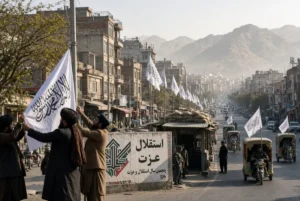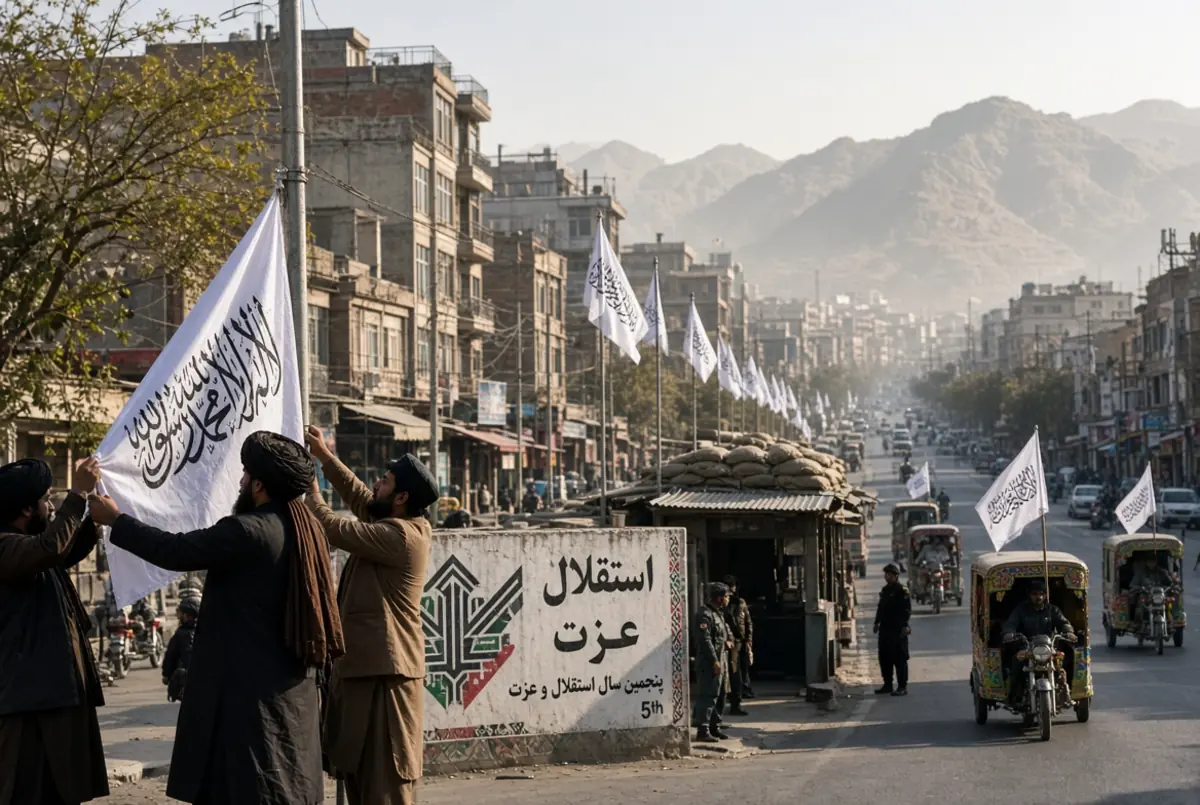

Taliban Five Years of rule in Afghanistan is being marked this Saturday with flags, murals and public events across Kabul. Supporters ride rickshaws and motorbikes decorated with banners while new wall paintings declare independence a source of dignity and pride. The authorities plan cricket matches and other sports gatherings that women and girls are not allowed to attend. Five years ago the group entered the capital unopposed after a rapid advance that ended the previous government following the withdrawal of foreign forces.
Taliban officials present the period as one of restored security and growing opportunity. A university student named Pirooz Mirzaie said the government has improved safety, started infrastructure work and opened doors for entrepreneurs, though he noted that jobs remain scarce for many young people. Officials speak of laying the foundations of the economy and ask for patience. Real economic growth has been estimated near five percent, yet GDP per capita has declined amid the return of more than six million Afghans from neighboring countries.
Critics and international observers describe a very different reality. A United Nations human rights official stated that people face the consolidation of suffocating restrictions that reach almost every part of daily life and cause real harm. Women have been barred from most public parks, many forms of employment and education beyond the age of twelve. A young woman who asked to remain anonymous said the past five years have left her with a profound sense of suffocation, feeling as if she has aged centuries under the weight of the rules.
Press freedom has also come under heavy pressure. The Committee to Protect Journalists reports that media workers have been watched, detained, beaten, censored or forced into exile. Although the Taliban have built contacts with several countries, including some in Europe, formal recognition remains limited. Russia is currently the only nation to have recognized the government.
As celebrations continue in the streets of Kabul, the contrast between official claims of freedom and the lived experience of many Afghans remains stark. The fifth anniversary highlights both the group’s firm hold on power and the ongoing debate over the cost of that control for ordinary citizens, especially women and independent voices.