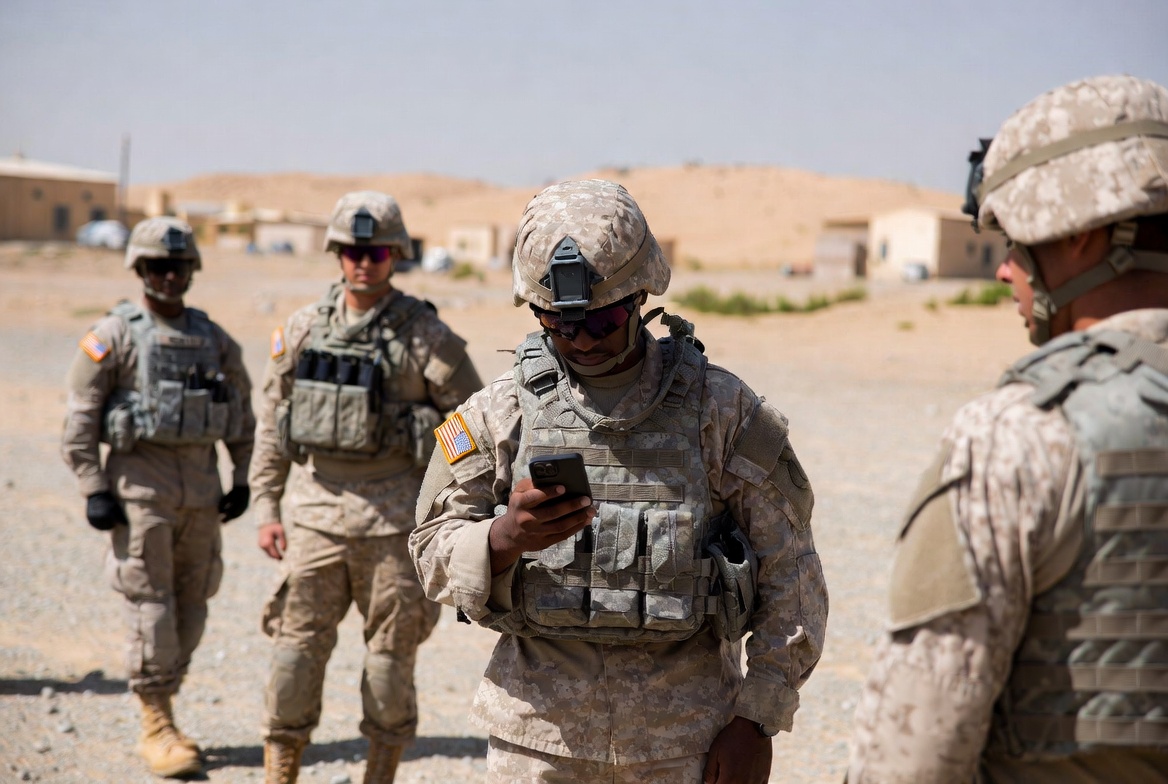

The top US commander for the Middle East has warned that cellphone videos shared online are helping Iran judge the success of its strikes almost in real time. Sources say some American troops deployed in the region could soon be ordered to hand over their phones.
Admiral Brad Cooper, head of US Central Command, wrote in a July 28 letter that Iran benefits from seeing the results of its attacks by searching news reports and social media posts that contain reactions, photos and footage taken on the cellphones of US service members. He said the cost of this open-source information could be measured in American lives and the lives of civilians in targeted Gulf countries. Cooper urged troops to strengthen their focus on operational security.
Any decision to limit mobile phones would create new challenges for the thousands of US personnel in the region. Many still use their devices to send occasional messages home and reassure family members that they are safe.
In Jordan, a frequent target of Iranian attacks, some troops have already been told their phones will be taken in the coming days, according to two sources familiar with the plans. A third source said the idea is under active discussion across the region because of security worries, though it is not yet certain.
US Central Command described the letter as a general reminder about the importance of operational security.
One recent video posted online showed a service member recording as soldiers ran for cover during a deadly Iranian attack on the Muwaffaq Salti Air Base in Jordan on July 17. Cooper noted that the footage was captured on Meta smart glasses with a built-in camera and later appeared on Instagram.
Without such videos and detailed news reports, Iran would normally struggle to know whether its missiles and drones hit their targets or missed by a wide margin. Cooper explained that electronic jamming and other protective measures make accurate battle damage assessment difficult for the other side. Publicly available accounts effectively give Iran free intelligence on what was hit.
Around 18 US troops have died and more than 600 have been wounded since the conflict began on February 28. Rules on cellphone use already vary across the military, but the possible seizure of devices has increased anxiety among some family members who follow reports of strikes on bases throughout the Middle East.
Cooper warned that detailed public information can also give Iran a green light to launch a second, more powerful wave of attacks.