
Indian activists have launched a legal challenge against Prime Minister Narendra Modi’s government over the use of AI powered surveillance during one of the country’s biggest youth protests in recent years. The case, now before the Delhi High Court, could shape future rules on how authorities use facial recognition technology during public demonstrations.
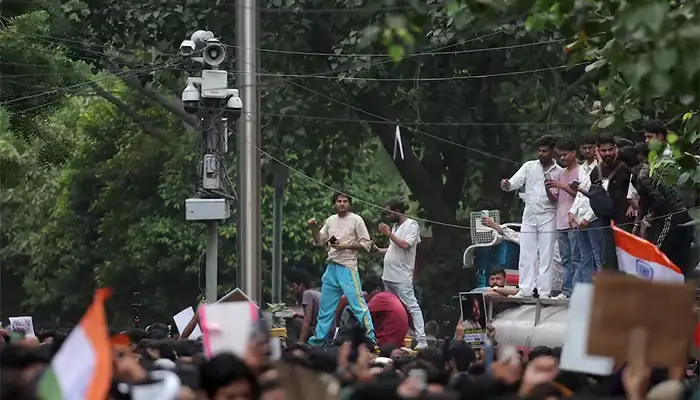
The controversy began after students protesting against exam paper leaks noticed a mobile police surveillance vehicle equipped with cameras mounted on a telescopic mast that provided a full view of the protest site. Images of the vehicle quickly spread across social media, raising concerns about privacy and government monitoring.
Student activist Aishe Ghosh has filed a petition asking the court to declare the large scale surveillance of protesters unconstitutional. She is also requesting that all personal information collected during the demonstrations be permanently deleted and that the government establish clear guidelines governing the use of surveillance technology during protests.
Although the demonstrations ended after Education Minister Dharmendra Pradhan resigned and the government announced reforms to the examination system, the legal challenge continues. Activists argue that the issue goes beyond the protest itself and concerns the protection of citizens’ privacy rights.
The Indian government has defended its actions, stating that the surveillance measures were introduced to maintain public safety and ensure law and order. During court proceedings, Solicitor General Tushar Mehta argued that privacy expectations at a public gathering were limited and that the use of surveillance technology served a legitimate state interest.
Digital rights groups, including the Internet Freedom Foundation, have criticized the collection of biometric information and demanded the deletion of any facial recognition data gathered during the protest. They argue that India currently lacks a specific law regulating police use of facial recognition technology, making such monitoring legally questionable.
Reports also revealed that police officers recorded the Instagram handles of some protesters. Authorities claimed these checks were conducted to prevent individuals with criminal backgrounds from entering the protest area. Meanwhile, legal experts have stressed that if facial recognition technology is used to monitor protesters, similar transparency should apply to law enforcement officers to ensure accountability and protect democratic rights.