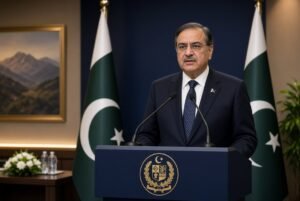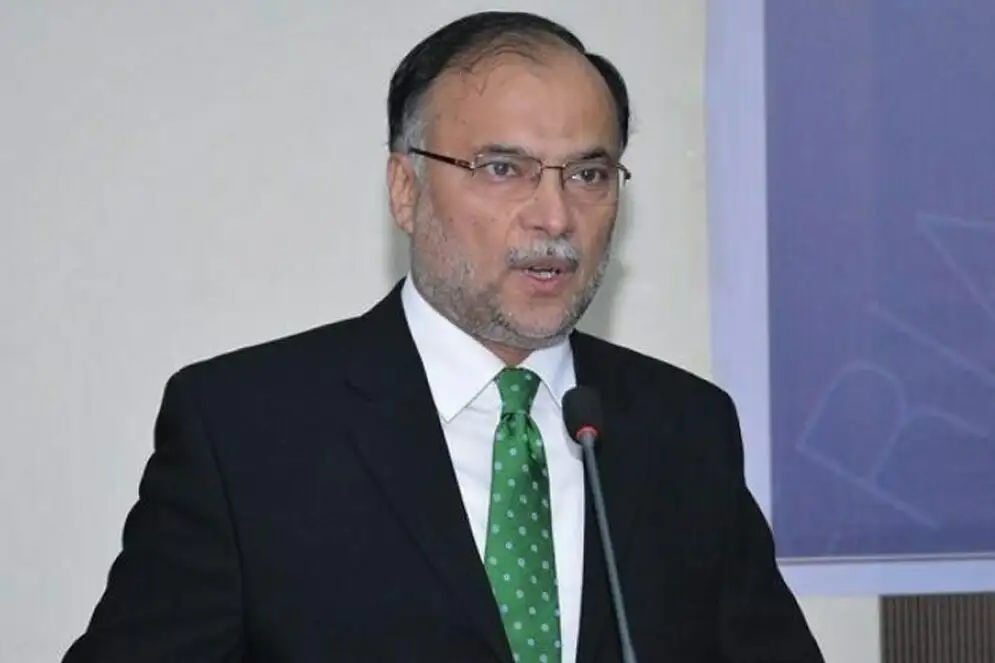

Federal Planning Minister Ahsan Iqbal has stated that no hybrid system exists in Pakistan, emphasizing that all national institutions are working together with a shared commitment to the country’s progress and stability. He made these remarks while speaking to Pakistani journalists in Houston, Texas, after attending a reception hosted by the Pakistan Consulate and community leader Tahir Javed.
The minister explained that the current institutional harmony has strengthened Pakistan’s position on the diplomatic, economic, and defence fronts. According to him, cooperation between the political leadership and state institutions should be viewed as a national strength rather than a weakness. He stressed that Pakistan cannot afford unnecessary institutional conflicts at a time when economic recovery and national development remain top priorities.
Discussing the country’s governance structure, Ahsan Iqbal expressed concern that the goals of the 18th Constitutional Amendment have not been fully achieved. While powers were transferred from the federal government to the provinces, he noted that provincial governments have not effectively delegated authority to local administrations. He proposed establishing nearly 160 empowered district governments across Pakistan to improve the delivery of education, healthcare, and other essential public services. He also warned that if genuine decentralization is not implemented, demands for creating new provinces may increase in the future.
Speaking about his recent visit to the United States, the minister described it as highly productive. Meetings with leading technology companies, artificial intelligence experts, and top American universities focused on expanding cooperation in AI, research, innovation, higher education, startups, and robotic surgery. He said discussions with institutions including the University of Illinois Chicago, Illinois Institute of Technology, University of Chicago, and Cornell University produced encouraging outcomes under the US Pakistan Knowledge Corridor initiative.
During his visit to NASA’s Space Center Houston, Ahsan Iqbal highlighted Pakistan’s growing interest in space technology and climate research. He said Pakistan aims to strengthen space education at the school level while pursuing its ambitious lunar mission by 2035 through SUPARCO. He added that modern space technology would play an important role in addressing climate change and scientific advancement.
The minister also called for a broader Pakistan US relationship, saying future cooperation should focus on trade, investment, technology, education, innovation, and geoeconomics, rather than security matters alone. He urged overseas Pakistanis to act as economic ambassadors, promoting Pakistani products, attracting investment, expanding exports, and presenting a positive image of the country internationally.
Ahsan Iqbal concluded by expressing confidence that political stability, institutional cooperation, modern technology, and export led economic growth will help Pakistan become a stronger, more prosperous, and self reliant nation in the years ahead.